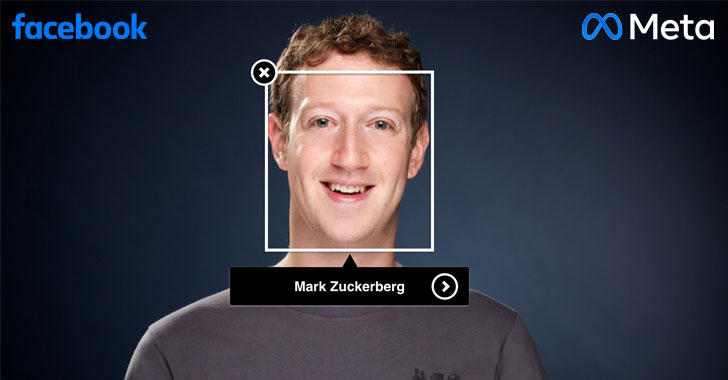
Facebook’s newly-rebranded[1]
parent company Meta on Tuesday announced plans to discontinue its
decade-old “Face Recognition” system and delete a massive trove of
more than a billion users’ facial recognition templates as part of
a wider initiative to limit the use of the technology across its
products.
The Menlo Park tech giant described[2]
the about-face as “one of the largest shifts in facial recognition
usage in the technology’s history.”
The shutdown, which is expected to take place over the coming
weeks, will mean users who have previously opted into the setting
will no longer be automatically recognized in Memories, photos and
videos or see suggested tags with their name in photos and videos
they may appear in. Furthermore, the company’s Automatic Alt Text
(AAT) tool, which creates image descriptions for visually impaired
people, will no longer include the names of people identified in
photos.
Facebook’s discontinuing of the program comes in the wake of
sustained privacy and ethical concerns[3] raised by the use of
facial recognition that it could be abused to target marginalized
communities, further racial bias, and normalize intrusive
surveillance, leading to government bans across a number of cities
in the U.S. such as Boston, San Francisco, New Orleans, and
Minneapolis, among others. In May 2021, Amazon announced[4]
it would indefinitely extend a moratorium on law enforcement’s use
of its facial recognition systems.
The company said it’s making the change because of a need to
“weigh the positive use cases for facial recognition against
growing societal concerns, especially as regulators have yet to
provide clear rules.” That said, Facebook said it will maintain the
use of face recognition in “services that help people gain access
to a locked account, verify their identity in financial products or
unlock a personal device.”
Facebook introduced[5]
facial recognition in 2010 as a means to automatically tag photos and
videos[6] with names based on a
“face recognition template” it generates from users’ profile
pictures as well as photos and videos that they have been already
tagged in, alongside notifying users when they appear in multimedia
content posted by other users and providing recommendations for
whom to tag in the photos.
Although enabled by default at launch, the feature was scaled
back and made an explicit opt-in[7]
in September 2019, following which more than a third of Facebook’s
daily active users — about 640 million people — are said to have
opted to turn on the setting.
If anything, Meta’s decision to move away from facial
recognition appears to be a step designed to pre-empt any
regulatory scrutiny following years of legal woes, including a
lawsuit in the U.S. state of Illinois that took the company to court[8] for violating the
Biometric Information Privacy Act (BIPA) and using the tech to
identify Illinois residents photos without their consent. The
company, earlier this March, was ordered to pay $650 million to
settle the class-action suit.
The development also arrives as Facebook attempts to rebrand and
distance itself from a wide range of controversies that have
plagued its products in recent years, what with the company
recently coming under the lens[9]
for allegedly prioritizing engagement and profits over users’
safety and real-world harms exacerbated by its platforms.
“This is great news for Facebook users, and for the global
movement pushing back on this technology,” the Electronic Frontier
Foundation said[10] in a tweet.
References
- ^
newly-rebranded
(about.fb.com) - ^
described
(about.fb.com) - ^
privacy
and ethical concerns (www.eff.org) - ^
announced
(www.reuters.com) - ^
introduced
(www.theguardian.com) - ^
automatically tag photos and videos
(www.facebook.com) - ^
made an
explicit opt-in (about.fb.com) - ^
took the
company to court (www.chicagotribune.com) - ^
coming
under the lens (en.wikipedia.org) - ^
said
(twitter.com)
Read more http://feedproxy.google.com/~r/TheHackersNews/~3/uIwlGh64JAk/facebook-to-shut-down-facial.html