
Cybersecurity researchers on Tuesday disclosed “distinctive”
tactics, techniques, and procedures (TTPs) adopted by operators of
Hades ransomware that set it apart from the rest of the pack,
attributing it to a financially motivated threat group called
GOLD WINTER[1].
“In many ways, the GOLD WINTER threat group is a typical
post-intrusion ransomware threat group that pursues high-value
targets to maximize how much money it can extort from its victims,”
researchers from SecureWorks Counter Threat Unit (CTU) said in an
analysis[2]
shared with The Hacker News. “However, GOLD WINTER’s operations
have quirks that distinguish it from other groups.”
The findings come from a study of incident response efforts the
Atlanta-based cybersecurity firm engaged in the first quarter of
2021.
Since first emerging in the threat landscape in December 2020,
Hades has been classified as INDRIK SPIDER’s successor to WastedLocker[3]
ransomware with “additional code obfuscation and minor feature
changes,” per Crowdstrike[4]. INDRIK SPIDER[5], also known as GOLD DRAKE[6]
and Evil Corp, is a sophisticated eCrime group infamous for
operating a banking trojan called Dridex as well as distributing
BitPaymer ransomware between 2017 and 2020.
The WastedLocker-derived ransomware strain has been found to
have impacted at least three victims as of late March 2021,
according to research[7]
by Accenture’s Cyber Investigation and Forensic Response (CIFR) and
Cyber Threat Intelligence (ACTI) teams, including a U.S.
transportation and logistics organization, a U.S. consumer products
organization, and a global manufacturing organization. Trucking
giant Forward Air[8]
was revealed to be a target back in December 2020.
Then a subsequent analysis published by Awake Security raised the possibility[9]
that an advanced threat actor may be operating under the guise of
Hades, citing a Hafnium domain that was identified as an indicator
of compromise within the timeline of the Hades attack. Hafnium is
the name assigned by Microsoft to a Chinese nation-state actor that
the company has said is behind the ProxyLogon attacks[10] on vulnerable Exchange
Servers earlier this year.
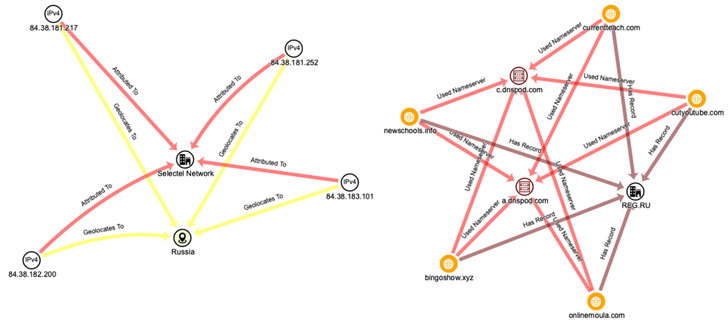
Stating that the threat group uses TTPs not associated with
other ransomware operators, Secureworks said the absence of Hades
from underground forums and marketplaces could mean that Hades is
operated as private ransomware rather than ransomware-as-a-service
(RaaS).
GOLD WINTER targets virtual private networks and remote desktop
protocols to gain an initial foothold and maintain access to victim
environments, using it to achieve persistence via tools such as
Cobalt Strike. In one instance, the adversary disguised the Cobalt
Strike executable as a CorelDRAW graphics editor application to
mask the true nature of the file, the researchers said.
In a second case, Hades was found to leverage SocGholish[11] malware — usually
associated with the GOLD DRAKE group — as an initial access vector.
SocGholish refers to a drive-by attack in which a user is tricked
into visiting an infected website using social engineering themes
that impersonate browser updates to trigger a malicious download
without user intervention.
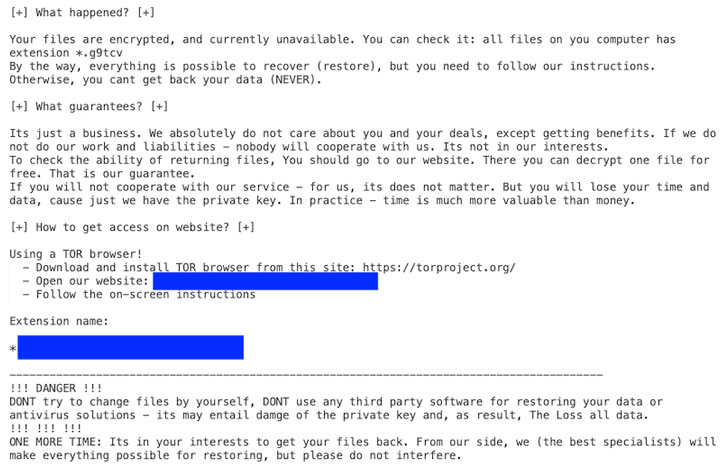
Interestingly, in what appears to be an attempt to mislead
attribution or “pay homage to admired ransomware families,” Hades
has exhibited a pattern of duplicating ransom notes from other
rival groups like REvil and Conti.
Another novel technique involves the use of Tox instant messaging[12] service for
communications, not to mention the use of Tor-based websites
tailored to each victim as opposed to utilizing a centralized leak
site to expose data stolen from its victims. “Each website includes
a victim-specific Tox chat ID for communications,” the researchers
said.
“Ransomware groups are typically opportunistic: they target any
organization that could be susceptible to extortion and will likely
pay the ransom,” the researchers noted. “However, GOLD WINTER’s
attacks on large North America-based manufacturers indicates that
the group is a ‘big game hunter’ that specifically seeks high-value
targets.”
References
- ^
GOLD
WINTER (www.secureworks.com) - ^
analysis
(www.secureworks.com) - ^
WastedLocker
(malpedia.caad.fkie.fraunhofer.de) - ^
Crowdstrike
(www.crowdstrike.com) - ^
INDRIK
SPIDER (malpedia.caad.fkie.fraunhofer.de) - ^
GOLD
DRAKE (www.secureworks.com) - ^
research
(www.accenture.com) - ^
Forward
Air (www.bleepingcomputer.com) - ^
raised
the possibility (awakesecurity.com) - ^
ProxyLogon attacks
(thehackernews.com) - ^
SocGholish
(www.menlosecurity.com) - ^
Tox
instant messaging (en.wikipedia.org)
Read more http://feedproxy.google.com/~r/TheHackersNews/~3/W4w0Wtf8xco/experts-shed-light-on-distinctive.html