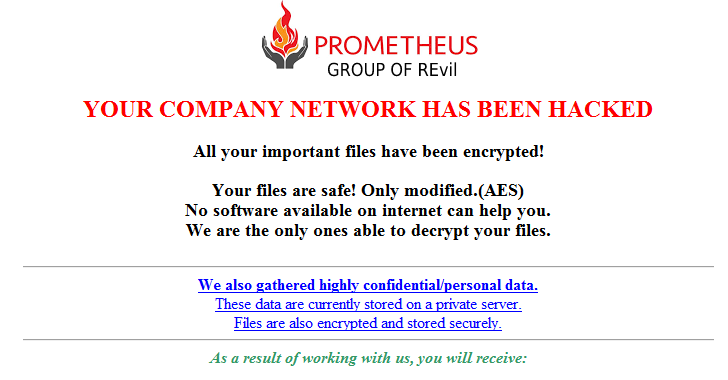
An emerging ransomware strain in the threat landscape claims to
have breached 30 organizations in just four months since it went
operational, riding on the coattails of a notorious ransomware
syndicate.
First observed in February 2021, “Prometheus[1]” is an offshoot of
another well-known ransomware variant called Thanos[2], which was previously
deployed against state-run organizations in the Middle East and
North Africa last year.
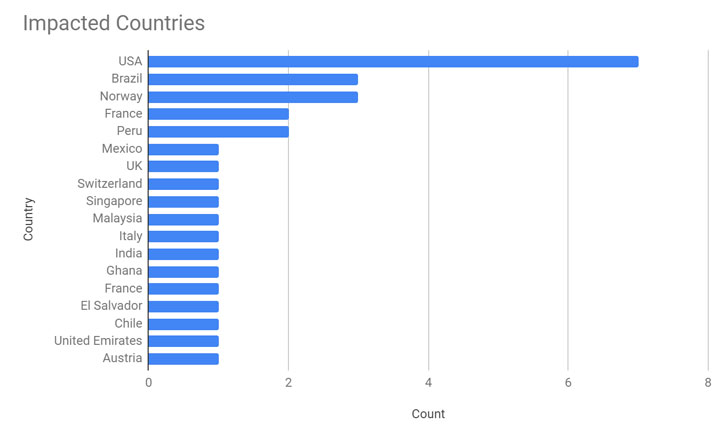
The affected entities are believed to be government, financial
services, manufacturing, logistics, consulting, agriculture,
healthcare services, insurance agencies, energy and law firms in
the U.S., U.K., and a dozen more countries in Asia, Europe, the
Middle East, and South America, according to new research published
by Palo Alto Networks’ Unit 42 threat intelligence team.
Like other ransomware gangs, Prometheus takes advantage of
double-extortion tactics and hosts a dark web leak site, where it
names and shames new victims and makes stolen data available for
purchase, at the same time managing to inject a veneer of
professionalism into its criminal activities.
“Prometheus runs like a professional enterprise,” Doel Santos,
Unit 42 threat intelligence analyst, said. “It refers to its
victims as ‘customers,’ communicates with them using a customer
service ticketing system that warns them when payment deadlines are
approaching and even uses a clock to count down the hours, minutes
and seconds to a payment deadline.”
However, only four of those 30 affected organizations opted to
pay ransoms to date, the cybersecurity firm’s analysis revealed,
including a Peruvian agricultural company, a Brazilian healthcare
services provider, and two transportation and logistics
organizations in Austria and Singapore.
It’s worth noting that despite Prometheus’ strong links to
Thanos, the gang professes to be a “group of REvil[3],” one of the most
prolific and infamous ransomware-as-a-service (RaaS) cartels in
recent years, which the researchers speculate could be an attempt
to deflect attention from Thanos or a deliberate ploy to trick
victims into paying up by piggybacking on an established
operation.
While the ransomware’s intrusion route remains unclear as yet,
it’s expected that the group purchased access to target networks or
staged spear-phishing and brute-force attacks to gain initial
access. Following a successful compromise, the Prometheus modus
operandi involves terminating backup and security software-related
processes on the system to lock the files behind encryption
barriers.
“The Prometheus ransomware operators generate a unique payload
per victim, which is used for their negotiation site to recover
files,” Santos said, adding the ransom demand ranges anywhere
between $6,000 and $100,000 depending on the victim organization, a
price that gets doubled if the victim fails to pay up within the
designated time period.
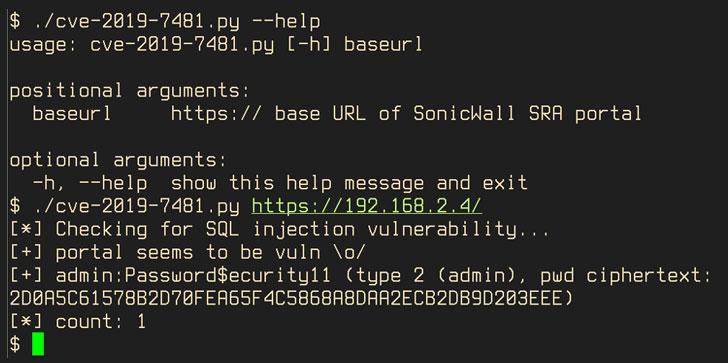
The development also comes as cybercrime groups are increasingly
targeting SonicWall devices to breach corporate networks and deploy
ransomware. A report published by CrowdStrike this week found[4]
evidence of remote access vulnerabilities (CVE-2019-7481) in
SonicWall SRA 4600 VPN appliances being exploited as an initial
access vector for ransomware attacks targeting organizations
worldwide.