Cybersecurity researchers have disclosed multiple
vulnerabilities in a third-party driver software developed by
Eltima that have been “unwittingly inherited” by cloud desktop
solutions like Amazon Workspaces, Accops, and NoMachine and could
provide attackers a path to perform an array of malicious
activities.
“These vulnerabilities allow attackers to escalate privileges
enabling them to disable security products, overwrite system
components, corrupt the operating system, or perform malicious
operations unimpeded,” SentinelOne researchers said[1] in a report shared with
The Hacker News.
The flaws have since been addressed in Amazon Nimble Studio AMI,
Amazon NICE DCV, Amazon WorkSpaces, Amazon AppStream, NoMachine,
Accops HyWorks, Accops HyWorks DVM Tools, Eltima USB Network Gate,
Amzetta zPortal Windows zClient, Amzetta zPortal DVM Tools,
FlexiHub, and Donglify.
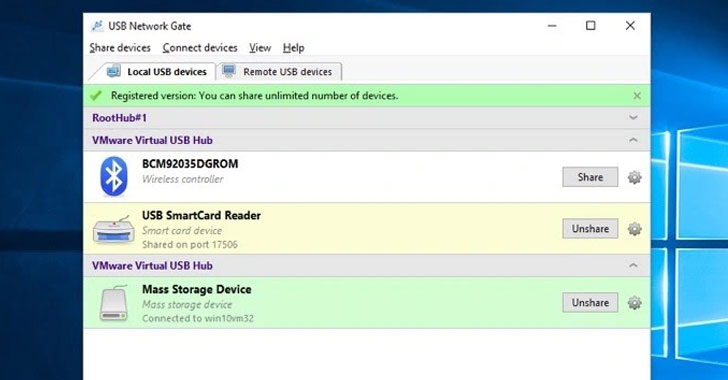
At its core, the issues reside in a product developed by Eltima
that offers “USB over Ethernet” capabilities, and enables desktop
virtualization services like Amazon WorkSpaces to redirect
connected USB devices such as webcams to their remote desktop.
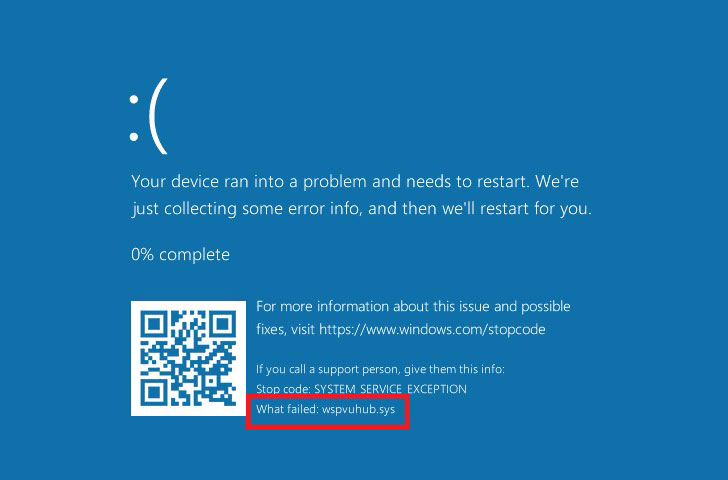
Specifically, the vulnerabilities can be traced back to two
drivers that are responsible for USB redirection — “wspvuhub.sys”
and “wspusbfilter.sys” — leading to a buffer overflow scenario that
could result in the execution of arbitrary code with kernel-mode
privileges.
 |
| BSoD Proof Of Concept |
“An attacker with access to an organization’s network may also
gain access to execute code on unpatched systems and use this
vulnerability to gain local elevation of privilege,” the
cybersecurity firm noted. “Attackers can then leverage other
techniques to pivot to the broader network, like lateral
movement.”
The discovery marks the fourth set of security vulnerabilities
affecting software drivers that have been uncovered by SentinelOne
since the start of the year.
Earlier this May, the Mountain View-based company disclosed a
number of privilege escalation vulnerabilities in Dell’s firmware
update driver named “dbutil_2_3.sys[2]” that went undisclosed
for more than 12 years. Then in July, it also made public a
high-severity buffer overflow flaw impacting “ssport.sys[3]” and used in HP, Xerox,
and Samsung printers that were found to have remained undetected
since 2005.
And in September, SentinelOne made public a high-severity flaw
in the HP OMEN driver software “HpPortIox64.sys[4]” that could allow threat
actors to elevate privileges to kernel mode without requiring
administrator permissions, allowing them to disable security
products, overwrite system components, and even corrupt the
operating system.
References
- ^
said (s1.ai) - ^
dbutil_2_3.sys
(thehackernews.com) - ^
ssport.sys
(thehackernews.com) - ^
HpPortIox64.sys
(thehackernews.com)
Read more https://thehackernews.com/2021/12/eltima-sdk-contain-multiple.html