
A security vulnerability has been found affecting several
versions of ThroughTek Kalay P2P Software Development Kit (SDK),
which could be abused by a remote attacker to take control of an
affected device and potentially lead to remote code execution.
Tracked as CVE-2021-28372 (CVSS score: 9.6) and discovered[1]
by FireEye Mandiant in late 2020, the weakness concerns an improper
access control flaw in ThroughTek point-to-point (P2P) products,
successful exploitation of which could result in the “ability to
listen to live audio, watch real time video data, and compromise
device credentials for further attacks based on exposed device
functionality.”
“Successful exploitation of this vulnerability could permit
remote code execution and unauthorized access to sensitive
information, such as to camera audio/video feeds,” the U.S.
Cybersecurity and Infrastructure Security Agency (CISA) noted[2]
in an advisory.
There are believed to be 83 million active devices on the Kalay
platform. The following versions of Kalay P2P SDK are impacted
–
- Versions 3.1.5 and prior
- SDK versions with the nossl tag
- Device firmware that does not use AuthKey for IOTC
connection - Device firmware using the AVAPI module without enabling DTLS
mechanism - Device firmware using P2PTunnel or RDT module
The Taiwanese company’s Kalay platform is a P2P
technology[3] that allows IP cameras,
light cameras, baby monitors, and other internet-enabled video
surveillance products to handle secure transmission of large audio
and video files at low latency. This is made possible through the
SDK – an implementation of the Kalay protocol – that’s integrated
into mobile and desktop apps and networked IoT devices.
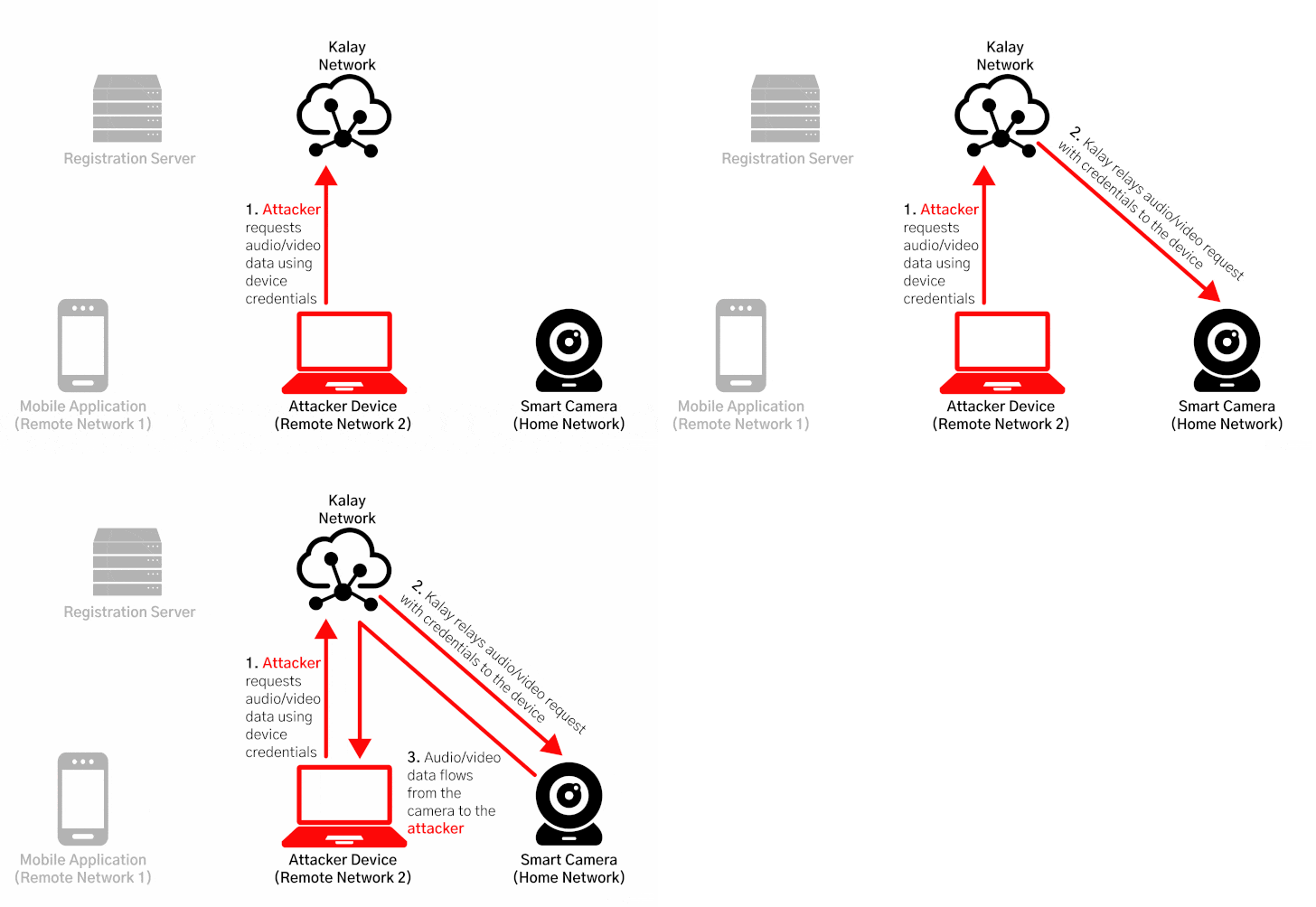
CVE-2021-28372 resides in the registration process between the
devices and their mobile applications, specifically how they access
and join the Kalay network, enabling attackers to spoof a victim
device’s identifier (called UID) to maliciously register a device
on the network with the same UID, causing the registration servers
to overwrite the existing device and route the connections to be
mistakenly routed to the rogue device.
“Once an attacker has maliciously registered a UID, any client
connection attempts to access the victim UID will be directed to
the attacker,” the researchers said. “The attacker can then
continue the connection process and obtain the authentication
materials (a username and password) needed to access the device.
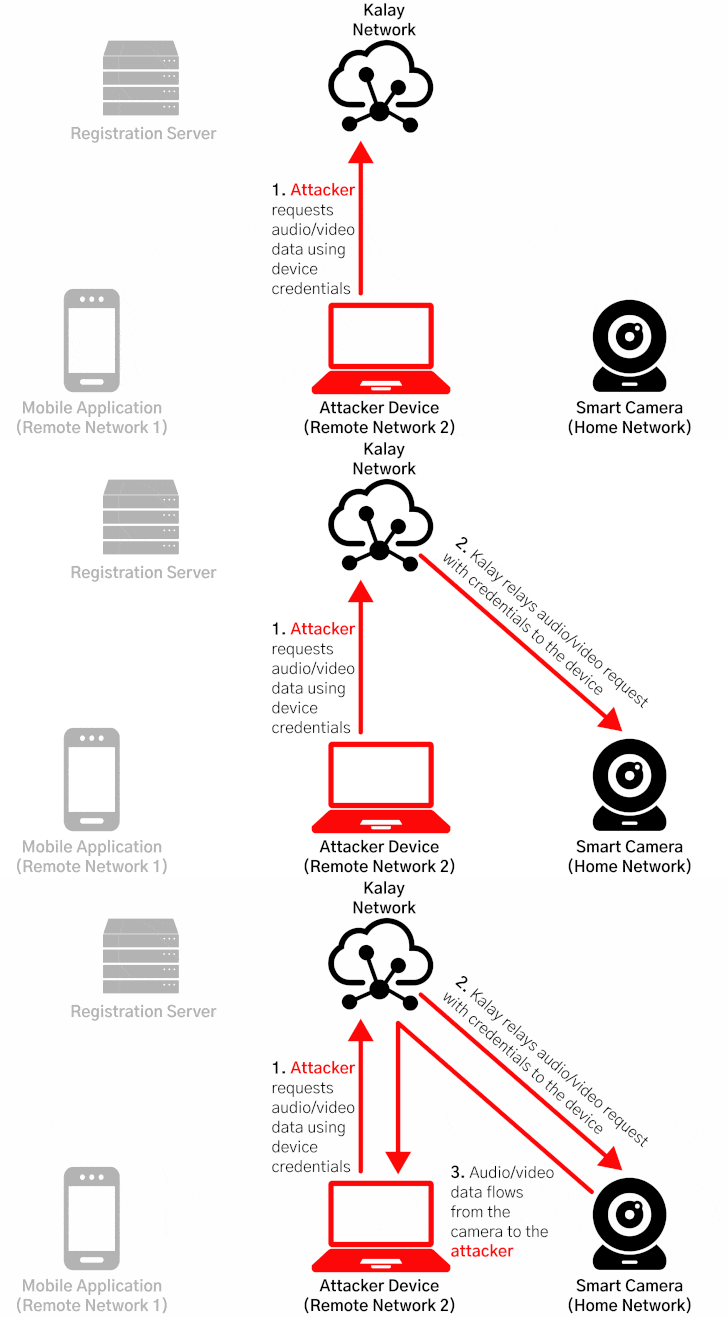
With the compromised credentials, an attacker can use the Kalay
network to remotely connect to the original device, access AV data,
and execute RPC calls.”
However, it’s worth pointing out that an adversary would require
“comprehensive knowledge” of the Kalay protocol, not to mention
obtain the Kalay UIDs through social engineering or other
vulnerabilities in APIs or services that could be taken advantage
of to pull off the attacks.
To mitigate against any potential exploitation, it’s recommended
to upgrade the Kalay protocol to version 3.1.10 as well as enable
DTLS and AuthKey to secure data in transit and add an additional
layer of authentication during client connection.
The development marks the second time a similar vulnerability
has been disclosed in ThroughTek’s P2P SDK. In June 2021, CISA
issued an alert warning of a critical flaw (CVE-2021-32934[4]) that could be leveraged
to access camera audio and video feeds improperly.
References
- ^
discovered
(www.fireeye.com) - ^
noted
(us-cert.cisa.gov) - ^
P2P
technology (www.throughtek.com) - ^
CVE-2021-32934
(thehackernews.com)