

Yasser Auda
Access Control Models are frameworks that explain how subjects access objects.
Every OS has a security kernel/reference monitor that enforces the access control model.
Access Control Models are:
- DAC (Discretionary access control) Model
- MAC (Mandatory Access Control) Model
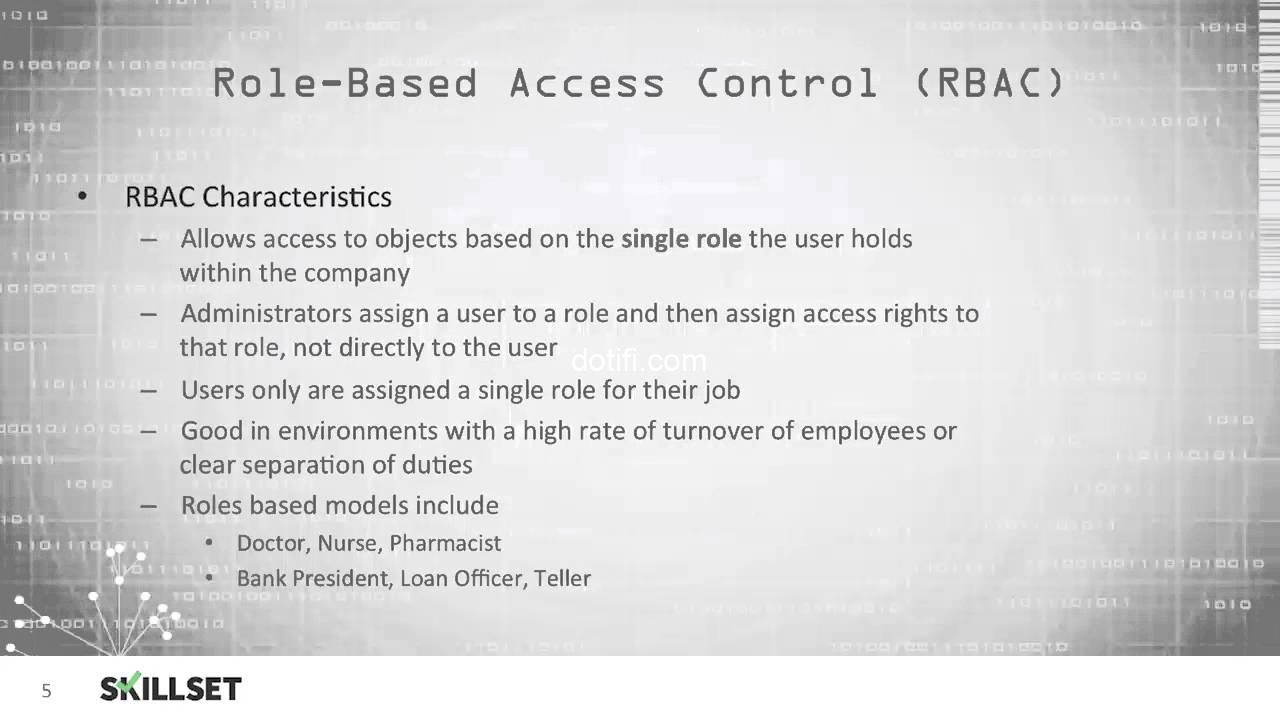
- RBAC (Role Based Access Control) Model
- ABAC (Attribute Based Access Controls) Model
DAC (Discretionary access control) Model
- -Most common used and user Friendly , enforced by ACL
- -User can be data owner and decide how can access it such as putting permissions to files you created or you had the ownership of it
- -it is based on Identity
-examples:
- File Permissions in Linux & Windows OS
- ACL and ACE in Windows & Cisco Routers
Each permission that exists can be assigned one of two ways:
•Explicitly means Rights & Permissions assigned directly to User.
•Implicitly means Rights & Permissions assigned to Group , and User just inherits it.
DAC permissions (Linux or Microsoft etc.)
- •Read
- •Write
- •Execute
- •Delete
- •Change -can do all permissions but can not take ownership or change owner
- •Full Control -can do all and everything
Linux Permissions

Microsoft Share Permissions

Microsoft NTFS permissions

MAC (Mandatory Access Control) Model
- -Most secure , based in Bila Model , enforced by Labels
- -Access based on Clearance of Subject & classification of object
- Subject has Profile include Clearance
- Object has Label contain Classification
–example 1 : SELinux
-example 2:
Clearance like “after deep investigation about Yasser , he can access TOP SECRET files”
Label like “files X,Y,Z these files are classified TOP SECRET”
If Yasser had the following clearance:
“TOP SECRET access Allowed + Need To Know “ Then Yasser can access files X,Y,Z since they are labeled as “TOP SECRET”
Need To Know here mean even if you are allowed to access TOP SECRET files , but that doesn’t mean you can access all files with this label and you should have Reason to access specific file to know something you approved to know .
RBAC (Role Based Access Control) Model
- -Non-discretionary access control
- -allow enforce enterprise security policy
- -in RBAC higher roles inherit permissions and rights of the lower roles
- -used to implement Separation of Duties
-example:
•Accounts we create in IPS ,ISE such as administrator , Operator , Viewer , service ….etc.
•Groups we create in Microsoft exchange
Note: you may hear about RBAC (Rule Based Access Control) this NOT a Model but Technique
-example:
Firewall Rules to allow or disallow inbound / outbound different types of traffic
ABAC (Attribute Based Access Controls) Model
- defines an access control paradigm whereby access rights are granted to users through the use of policies which combine attributes together.
- The policies can use any type of attributes (user attributes, resource attributes, object, environment attributes etc.).
- This model supports Boolean logic, in which rules contain “IF, THEN” statements about who is making the request, the resource, and the action.
- For example: IF the requester is a manager, THEN allow read/write access to sensitive data.
- one of the best standards that implement ABAC is XACML “eXtensible Access Control Markup Language”
- Rule Based access control can be consider special case of ABAC
So ABAC is authorization decision based on:
attributes assigned to subjects and objects , Environmental conditions
a set of Policies linked to these attributes & conditions
Subject attributes ex: name , nationality , role , security clearances
Object attributes ex: name , owner , data creation
Environmental conditions ex: location of access , time of access
Every Object should be associated with at least one policy which regulates which operations a subject with certain attributes and Environmental conditions can preform on the object.
Example [Source: Cisco Press]:
all “Engineers” who work in the “Security Business Unit” and are assigned to the “NGFW Project” are allowed to “R&W” all the “Design Documents” in “NGFW Project” folder when connecting from “Building A”
Subject attributes:
“Engineers” , “Security Business Unit” and assigned to the “NGFW Project”
Object attributes :
“Design Documents” in “NGFW Project” folder
Operations allowed:
“R&W”
Environmental conditions:
“Building A”
Yasser Ramzy Auda 07-01-18