
Cybersecurity researchers from FireEye unmasked additional
tactics, techniques, and procedures (TTPs) adopted by Chinese
threat actors who were recently found abusing Pulse Secure VPN
devices to drop malicious web shells and exfiltrate sensitive
information from enterprise networks.
FireEye’s Mandiant threat intelligence team, which is tracking
the cyberespionage activity under two threat clusters UNC2630 and
UNC2717, said[1]
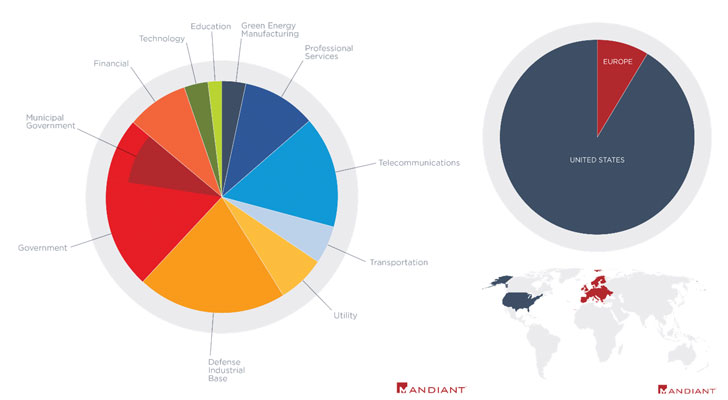
the intrusions lines up with key Chinese government priorities,
adding “many compromised organizations operate in verticals and
industries aligned with Beijing’s strategic objectives outlined in
China’s recent 14th Five Year Plan[2].”
On April 20, the cybersecurity firm disclosed[3]
12 different malware families, including STEADYPULSE and LOCKPICK,
that have been designed with the express intent to infect Pulse
Secure VPN appliances and put to use by several cyberespionage
groups believed to be affiliated with the Chinese government.
- UNC2630 – SLOWPULSE, RADIALPULSE, THINBLOOD, ATRIUM, PACEMAKER,
SLIGHTPULSE, and PULSECHECK - UNC2717 – HARDPULSE, QUIETPULSE, AND PULSEJUMP
FireEye’s continued investigation into the attacks as part of
its incident response efforts has uncovered four more malware
families deployed by UNC2630 — BLOODMINE, BLOODBANK, CLEANPULSE,
and RAPIDPULSE — for purposes of harvesting credentials and
sensitive system data, allowing arbitrary file execution, and
removing forensic evidence.
In addition, the threat actors were also observed removing web
shells, ATRIUM, and SLIGHTPULSE, from dozens of compromised VPN
devices between April 17 and April 20 in what the researchers
describe as “unusual,” suggesting “this action displays an
interesting concern for operational security and a sensitivity to
publicity.”
At the heart of these intrusions lies CVE-2021-22893[4], a recently patched
vulnerability in Pulse Secure VPN devices that the adversaries
exploited to gain an initial foothold on the target network, using
it to steal credentials, escalate privileges, conduct internal
reconnaissance by moving laterally across the network, before
maintaining long-term persistent access, and accessing sensitive
data.
“Both UNC2630 and UNC2717 display advanced tradecraft and go to
impressive lengths to avoid detection. The actors modify file
timestamps and regularly edit or delete forensic evidence such as
logs, web server core dumps, and files staged for exfiltration,”
the researchers said. “They also demonstrate a deep understanding
of network appliances and advanced knowledge of a targeted network.
This tradecraft can make it difficult for network defenders to
establish a complete list of tools used, credentials stolen, the
initial intrusion vector, or the intrusion start date.”
References
- ^
said
(www.fireeye.com) - ^
14th
Five Year Plan (en.wikipedia.org) - ^
disclosed
(thehackernews.com) - ^
CVE-2021-22893
(thehackernews.com)
Read more http://feedproxy.google.com/~r/TheHackersNews/~3/pal-DqduGaI/chinese-cyber-espionage-hackers.html