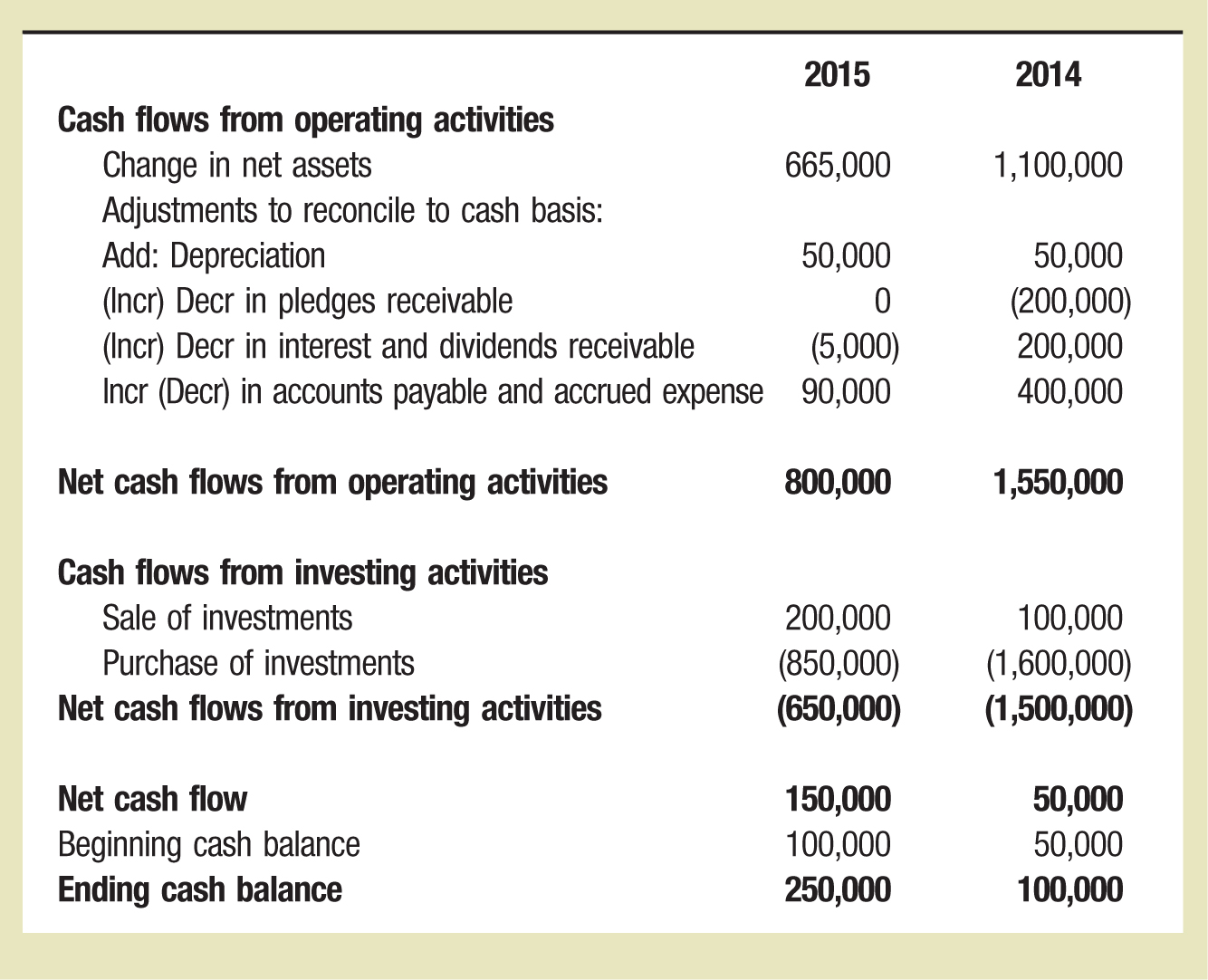
Accuracy of cash flow statement
The direct method is considered to be the more accurate of the two calculations, as it takes into account each cash transaction from the period, whereas the indirect method is largely based on estimated adjustments.
Related Courses
What is the Cash Flow Statement Direct Method?
The direct method of presenting the statement of cash flows presents the specific cash flows associated with items that affect cash flow. Items that typically do so include:
-
Cash collected from customers
-
Interest and dividends received
-
Cash paid to employees
-
Cash paid to suppliers
-
Interest paid
-
Income taxes paid
The advantage of the direct method over the indirect method is that it reveals operating cash receipts and payments.
The standard-setting bodies encourage the use of the direct method, but it is rarely used, for the excellent reason that the information in it is difficult to assemble; companies simply do not collect and store information in the manner required for this format. Using the direct method may require that the chart of accounts be restructured in order to collect different types of information. Instead, they use the indirect method, which can be more easily derived from existing accounting reports.
Example of the Statement of Cash Flows Direct Method
Lowry Locomotion constructs the following statement of cash flows using the direct method:
Lowry Locomotion
Statement of Cash Flows
for the year ended 12/31/x1
| Cash flows from operating activities | ||
| Cash receipts from customers | $45,800,000 | |
| Cash paid to suppliers | (29,800,000) | |
| Cash paid to employees | (11,200,000) | |
| Cash generated from operations | 4,800,000 | |
| Interest paid | (310,000) | |
| Income taxes paid | (1,700,000) | |
| Net cash from operating activities | $2,790,000 | |
| Cash flows from investing activities | ||
| Purchase of property, plant, and equipment | (580,000) | |
| Proceeds from sale of equipment | 110,000 | |
| Net cash used in investing activities | (470,000) | |
| Cash flows from financing activities | ||
| Proceeds from issuance of common stock | 1,000,000 | |
| Proceeds from issuance of long-term debt | 500,000 | |
| Principal payments under capital lease obligation | (10,000) | |
| Dividends paid | (450,000) | |
| Net cash used in financing activities | 1,040,000 | |
| Net increase in cash and cash equivalents | 3,360,000 | |
| Cash and cash equivalents at beginning of period | 1,640,000 | |
| Cash and cash equivalents at end of period | $5,000,000 |
Reconciliation of net income to net cash provided by operating activities:
| Net income | $2,665,000 | |
| Adjustments to reconcile net income to net cash provided by operating activities: | ||
| Depreciation and amortization | $125,000 | |
| Provision for losses on accounts receivable | 15,000 | |
| Gain on sale of equipment | (155,000) | |
| Increase in interest and income taxes payable | 32,000 | |
| Increase in deferred taxes | 90,000 | |
| Increase in other liabilities | 18,000 | |
| Total adjustments | 125,000 | |
| Net cash provided by operating activities | $2,790,000 | |