An analysis of new samples of BlackMatter ransomware for Windows
and Linux has revealed the extent to which the operators have
continually added new features and encryption capabilities in
successive iterations over a three-month period.
No fewer than 10 Windows and two Linux versions of the
ransomware have been observed in the wild to date, Group-IB threat
researcher Andrei Zhdanov said in a report[1] shared with The Hacker
News, pointing out the changes in the implementation of the
ChaCha20 encryption[2]
algorithm used to encrypt the contents of the files.
BlackMatter emerged[3]
in July 2021 boasting of incorporating[4]
the “best features of DarkSide, REvil, and LockBit” and is
considered the successor to DarkSide, which has since shut down
alongside REvil in the wake of law enforcement scrutiny. Operating
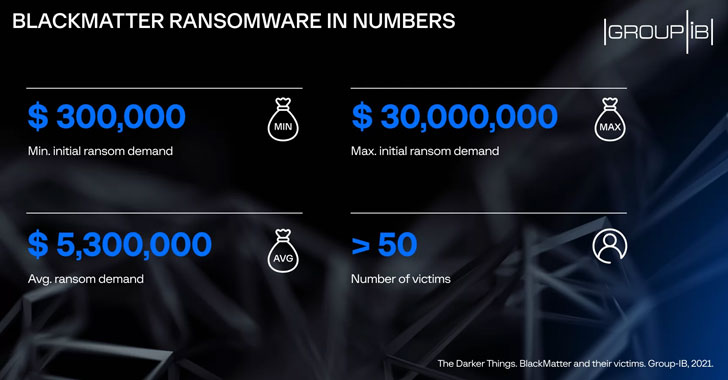
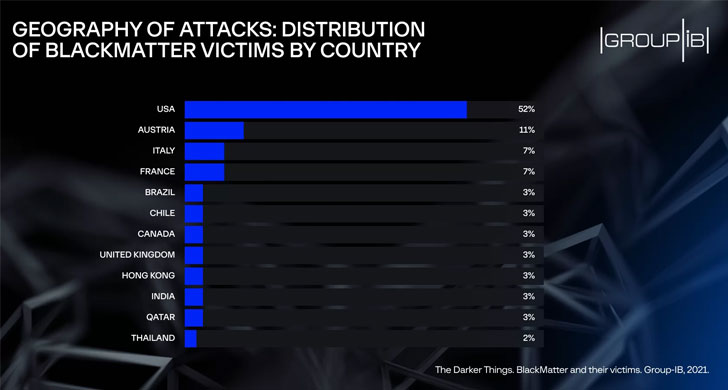
as a ransomware-as-a-service (RaaS) model, the BlackMatter is
believed to have hit more than 50 companies in the U.S., Austria,
Italy, France, Brazil, among others.
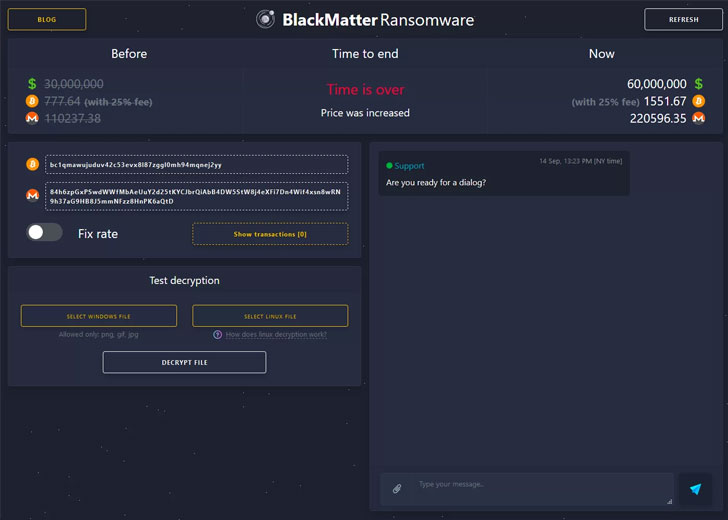
What’s more, the threat actor creates a unique Tor chat room for
communication for each victim, a link to which is attached to the
text file containing the ransom demand. BlackMatter is also known
to double the ransom amount when the ultimatum expires, before
moving to publish the stolen documents in the event the victim
refuses to pay up.
According to security researchers from Microsoft’s
counter-ransomware unit, DarkSide and its BlackMatter rebrand is
the handiwork of a cybercrime group tracked as FIN7[5], which was recently
unmasked operating a front company named Bastion Secure[6]
to lure tech professionals with the goal of launching ransomware
attacks.
“When other parameters are set or any parameters are absent, the
system is fully encrypted according to the configuration settings,”
Zhdanov noted. “Upon completing the encryption, the ransomware
creates a BMP image alerting that files have been encrypted, which
it then sets as the desktop wallpaper. Starting from version 1.4,
the ransomware can also print the text of the demand for ransom on
the victim’s default printer.”
The Linux variants, on the other hand, are designed to target
VMware ESXi servers, featuring the ability to terminate virtual
machines and kill specific processes, including the firewall, prior
to commencing data encryption.
The findings come as VX-Underground, a portal that hosts malware
source code, samples and papers, revealed[7]
that the group is pulling the plug on its operations “following
pressure from local authorities.” The post shared on the RaaS
website also noted that a “part of the team is no longer available,
after the latest news.”
It’s not immediately clear what the “latest news” could be
referring to, but it implies a strong link to the coordinated
international law enforcement operation late last month that saw
12 individuals arrested[8]
for orchestrating ransomware attacks against 1,800 victims across
71 countries since 2019.
In an advisory issued on October 18, 2021, the Cybersecurity and
Infrastructure Security Agency (CISA), the Federal Bureau of
Investigation (FBI), and the National Security Agency (NSA)
warned[9]
that the BlackMatter ransomware group has targeted “multiple”
organizations deemed critical infrastructure, including two
entities in the U.S. food and agriculture sector.
References
- ^
report
(blog.group-ib.com) - ^
ChaCha20
encryption (en.wikipedia.org) - ^
emerged
(thehackernews.com) - ^
incorporating
(blog.group-ib.com) - ^
FIN7
(www.wsj.com) - ^
Bastion
Secure (thehackernews.com) - ^
revealed
(twitter.com) - ^
12
individuals arrested (thehackernews.com) - ^
warned
(us-cert.cisa.gov)
Read more http://feedproxy.google.com/~r/TheHackersNews/~3/5UvtykUeXgE/blackmatter-ransomware-reportedly.html