The cyber espionage group known as Bahamut has been
attributed as behind a highly targeted campaign that infects users
of Android devices with malicious apps designed to extract
sensitive information.
The activity, which has been active since January 2022, entails
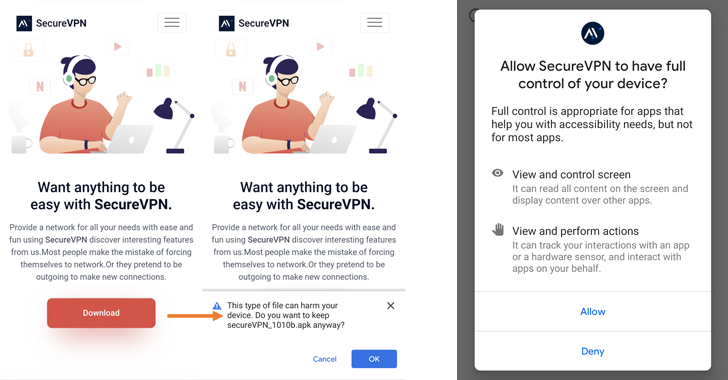
distributing rogue VPN apps through a fake SecureVPN website set up
for this purpose, Slovak cybersecurity firm ESET said[1]
in a new report shared with The Hacker News.
At least eight different variants of the spyware apps have been
discovered to date, with them being trojanized versions of
legitimate VPN apps like SoftVPN[2]
and OpenVPN[3].
The tampered apps and their updates are pushed to users through
the fraudulent website. It’s also suspected that the targets are
carefully selected, since launching the app requires the victim to
enter an activation key to enable the features.
This implies the use of an undetermined distribution vector,
although past evidence shows that it could take the form of
spear-phishing emails, SMS messages, or direct messages on social
media apps.
The activation key mechanism is also designed to communicate
with an actor-controlled server, effectively preventing the malware
from being accidentally triggered right after launch on a
non-targeted user device.
Bahamut was unmasked[4]
in 2017[5]
by Bellingcat as a hack-for-hire operation[6]
targeting government officials, human rights groups, and other
high-profile entities in South Asia and the Middle East with
malicious Android and iOS apps to spy on its victims.
“Perhaps the most distinctive aspect of Bahamut’s tradecraft
that BlackBerry discovered is the group’s use of original,
painstakingly crafted websites, applications and personas,”
BlackBerry noted[7]
in October 2020.
Earlier this year, Cyble detailed two sets of phishing[8]
attacks[9]
orchestrated by the group to push counterfeit Android apps
masquerading as chat applications.
The latest wave follows a similar trajectory, tricking users
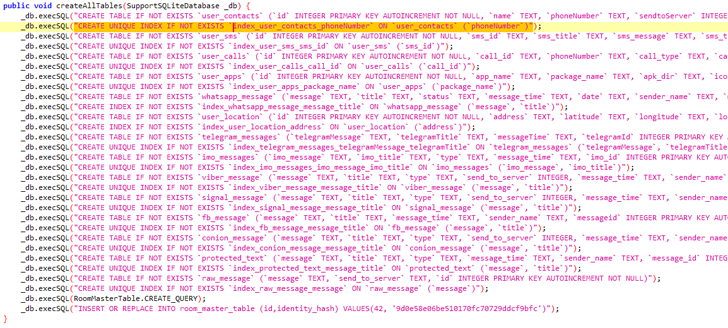
into installing seemingly innocuous VPN apps that can exfiltrate a
wide swathe of information, including files, contact lists, SMSes,
phone call recordings, locations, and messages from WhatsApp,
Facebook Messenger, Signal, Viber, Telegram, and WeChat.
“The data exfiltration is done via the keylogging functionality
of the malware, which misuses accessibility services,” ESET
researcher Lukáš Štefanko said.
In a sign that the campaign is well maintained, the threat actor
initially packaged the malicious code within the SoftVPN
application, before moving to OpenVPN, a shift explained by the
fact that the actual SoftVPN app stopped functioning and it was no
longer possible to establish a VPN connection.
“The mobile campaign operated by the Bahamut APT group is still
active; it uses the same method of distributing its Android spyware
apps via websites that impersonate or masquerade as legitimate
services, as has been seen in the past,” Štefanko added.
References
Read more https://thehackernews.com/2022/11/bahamut-cyber-espionage-hackers.html