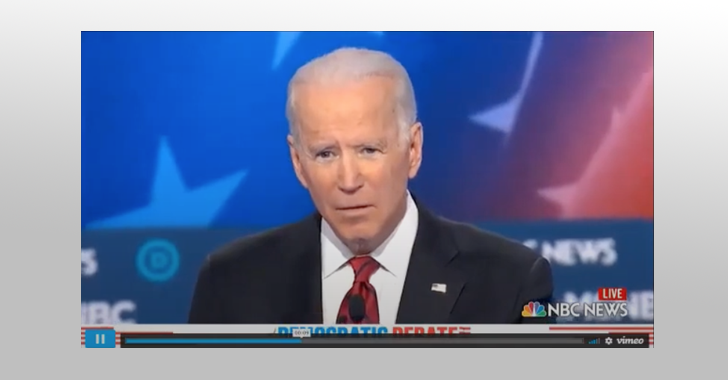
Deep fakes are expected to become a more prominent attack
vector. Here’s how to identify them.
What are Deep Fakes?
A deep fake is the act of maliciously replacing real images and
videos with fabricated ones to perform information manipulation. To
create images, video and audio that are high quality enough to be
used in deep fakes, AI and ML are required. Such use of AI, ML and
image replacement are unlike other types of information
manipulation, which use less extreme manipulation techniques, like
misrepresentation of information, isolating parts of the
information or editing it in a deceptive manner. Etay Maor, Senior
Director of Security Strategy at Cato Networks adds “To add
complications, the recent advancements and accessibility to AI
generated text, such as GPT3, have already been used in combination
with deepfakes (as a proof of concept) to create interactive, human
looking conversation bots”
What Do Deep Fakes Look Like?
Deep fakes come in all shapes and sizes. Some are simpler and
some are more advanced. Some of the most popular examples of deep
fakes are:
Face Swap
Face swapping is the act of replacing the face in a video or
image from one person to another. Face swapping requires dedicated
software, but it does not have to be based on advanced technology –
today one can even find mobile apps that support face swapping.
Face swapping that is available in mobile apps is usually limited
to simple use cases, like swapping between the user’s photos and
actors’ faces in movie scenes.

More advanced face swapping does exist, but it requires more
model training and code, and – as a result – GPUs, which is
expensive and resource-intensive. An example of a more advanced
face swapping deep fake can be see in this video, in which Tom
Cruise is swapped with the presenter’s face:
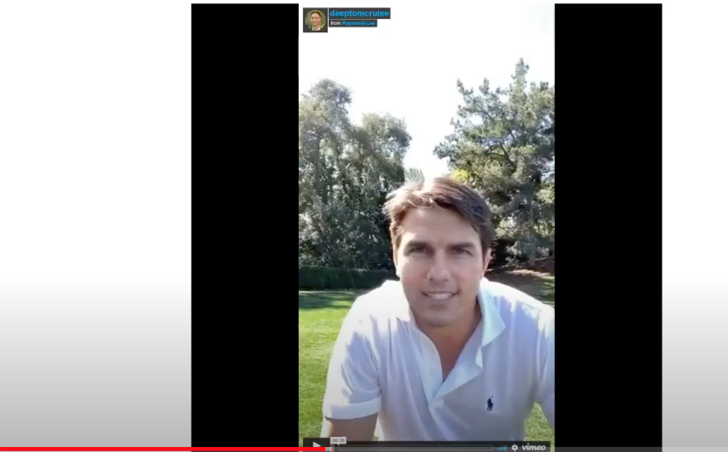
This Tom Cruise face swap[1]
required two hours of training on a GPU as well as days of
professional video editing post-processing. This might sound like a
lot, but it was also considered a simpler swap than others, because
the presenter had a similar haircut to Cruise and can impersonate
his voice, which means less training and post-processing were
required.
Puppet Master (Lip Sync)
The ‘Puppet Master’ deep fake is a technique in which the image
of a person’s mouth movements are manipulated, making it seem like
the person is saying something they haven’t actually said. Compared
to face swapping, which trains a model on the new, swapped face,
‘Puppet Master’ trains a model on the face of the original image,
and specifically on the mouth movements.
Here’s what it looks like:
[warning – explicit language]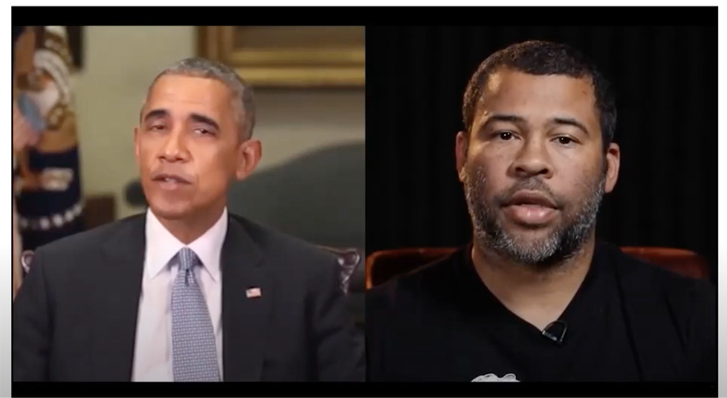
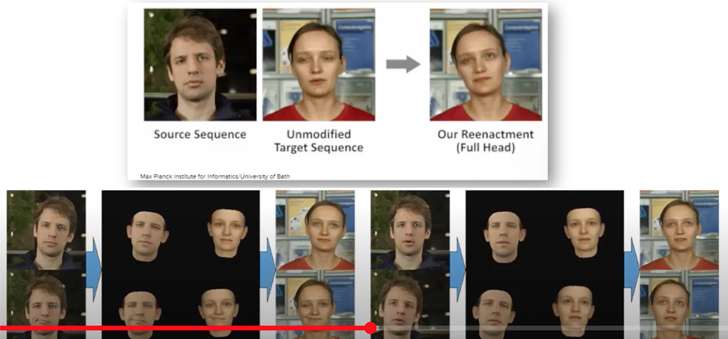
The technology behind the ‘Puppet Master’ is based on
synthesizing the mask, i.e. the original image, and placing it on
top of the model of the person who is impersonating and lip syncing
them.
Audio
The third prominent type of deep fake is audio-based. Audio deep
fakes are audio files that take a real person’s voice and make it
sounds like they’re saying something they had never said. Audio
deep fakes are created by taking audio files, allocating
annotations to the sounds, training an ML model based on the
annotations to associate sounds with text and then generating a new
audio file.
Here’s what is sounds like:
Deep Fakes vs. Cheap Fixes
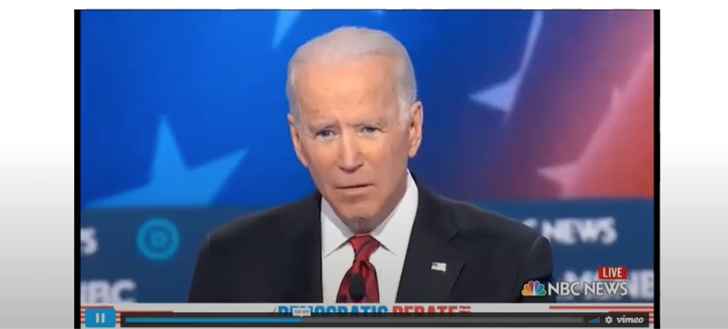
Not all modified images or audio are deep fakes. While deep
fakes are media synthesized or modified using AI, cheap fixes are
media synthesized or modified using low-tech methods, which are
easy to spot. They often have distortions and have been clearly
manipulated. Here’s what a cheap fix looks like:
The Cyber Risk of Deep Fakes
Deep fakes have become more realistic and accessible and they
are also faster to create than ever before. This makes them a
powerful tool for weaponization. As a result, they pose a risk for
businesses and for countries. They can be used for cyber crime,
social engineering, fraud, by threat actor nations to influence
foreign operations, and more.
For example, deep fake was used to mimic a CEO’s voice and
convince an executive to wire $243,000 to a scam account. Etay Maor
of Cato Networks “Business email comprise and phishing attacks are becoming harder and
harder to detect[2]
based on simple analysis of the language used. There is a need for
a holistic approach, such as the one offered by a single vendor
SASE solution[3], that can detect the
attack at different multiple choke points and not rely on isolated
point products that are doomed to fail”. In another case, a deep
fake was presented as evidence in a child custody case.
Deep fakes can also be used for spreading disinformation, i.e
false distribution of information to influence public opinion or
obscure the truth. For example, deep fakes could be used to
impersonate world leaders and ignite an attack, or to impersonate a
CEO and manipulate a company’s stock price. In other cases, deep
fakes enable plausible deniability, in which people could deny all
sources of media by claiming they are deep fakes, which creates a
social breach of trust.
Finally, deep fake can be used for defamation, i.e damaging
someone’s good reputation. For example, by creating revenge
porn.
How to Detect Deep Fakes
There are two main types of methods for accurately detecting
deep fakes:
- Low-level detection methods
- High-level detection methods
Low-level Detection Methods
Low-level detection methods rely on ML models that are trained
to identify artifacts or pixellations that were introduced through
the deep fake generation process. These artifacts may be
imperceptible to the human eye, but the models, which were trained
on real images and deep fake images, are able to detect them.

High-level Detection Methods
High-level detection methods use models that can identify
semantically meaningful features. These include unnatural
movements, like blinking, head-pose or unique mannerisms, and
phoneme-viseme mismatches.
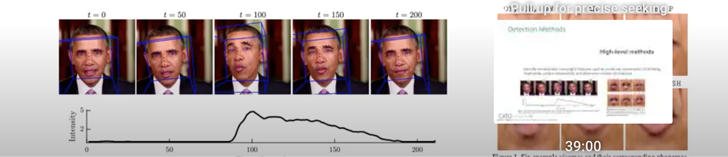
Today, these detection methods are considered accurate. However,
as deep fake technology improves and becomes more sophisticated,
they are expected to become less effective and will need to be
updated and improved. In addition to these techniques, each one of
us can help detect deep fakes by verifying the media source of
videos and images we receive.
To learn more about different types of cybersecurity attacks
and how to prevent them, Cato Networks’ Cyber Security Masterclass
series is available for your viewing.[4]
Found this article interesting? Follow us on Twitter [5]
and LinkedIn[6]
to read more exclusive content we post.
References
- ^
face
swap (www.tiktok.com) - ^
phishing
attacks are becoming harder and harder to detect
(www.catonetworks.com) - ^
a single
vendor SASE solution (www.catonetworks.com) - ^
Cato
Networks’ Cyber Security Masterclass series is available for your
viewing. (catonetworks.easywebinar.live) - ^
Twitter
(twitter.com) - ^
LinkedIn
(www.linkedin.com)
Read more https://thehackernews.com/2023/03/from-disinformation-to-deep-fakes-how.html