Feb 17, 2023Ravie Lakshmanan
Suspected North Korean nation-state actors targeted a journalist
in South Korea with a malware-laced Android app as part of a social
engineering campaign.
The findings come from South Korea-based non-profit Interlab,
which coined the new malware RambleOn.
The malicious functionalities include the “ability to read and
leak target’s contact list, SMS, voice call content, location and
others from the time of compromise on the target,” Interlab threat
researcher Ovi Liber said[1]
in a report published this week.
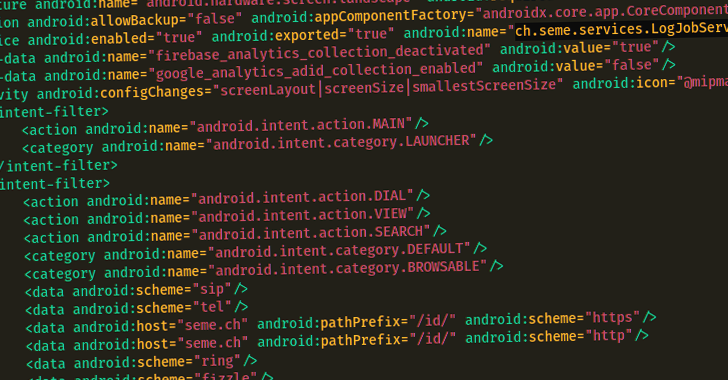
The spyware camouflages as a secure chat app called Fizzle[2]
(ch.seme), but in reality, acts as a conduit to deliver a
next-stage payload hosted on pCloud and Yandex.
The chat app is said to have been sent as an Android Package
(APK) file over WeChat to the targeted journalist on December 7,
2022, under the pretext of wanting to discuss a sensitive
topic.
The primary purpose of RambleOn is to function as a loader for
another APK file (com.data.WeCoin[3]) while also requesting
for intrusive permissions to collect files, access call logs,
intercept SMS messages, record audio, and location data.
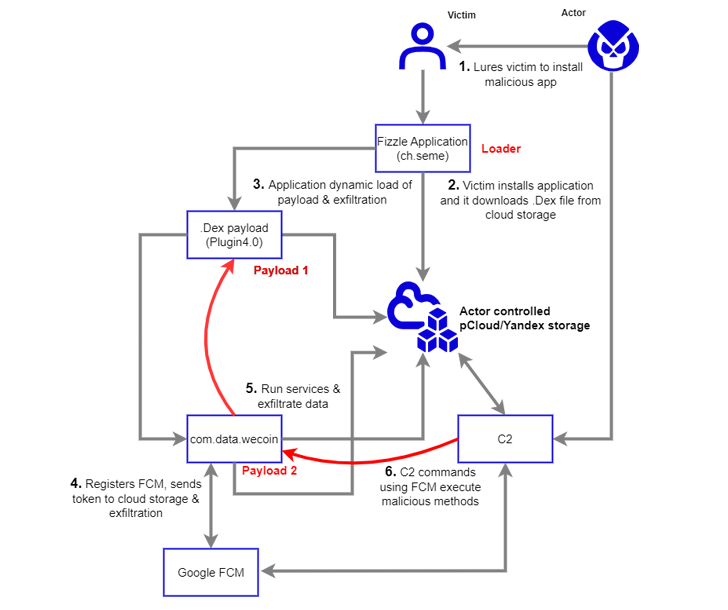
The secondary payload, for its part, is designed to provide an
alternative channel for accessing the infected Android device using
Firebase Cloud Messaging (FCM) as a command-and-control (C2)
mechanism.
Interlab said it identified overlaps in the FCM functionality
between RambleOn and FastFire[4], a piece of Android
spyware that was attributed to Kimsuky by South Korean
cybersecurity company S2W last year.
“The victimology of this event fits very closely with the modus
operandi of groups such as APT37[5]
and Kimsuky,” Liber said, pointing out the former’s use of pCloud
and Yandex storage for payload delivery and
command-and-control.
Found this article interesting? Follow us on Twitter [6]
and LinkedIn[7]
to read more exclusive content we post.
References
Read more https://thehackernews.com/2023/02/experts-warn-of-rambleon-android.html