Jan 19, 2023Ravie Lakshmanan
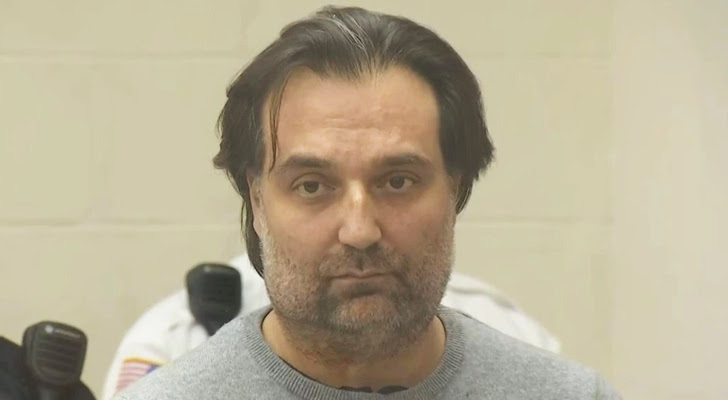
The U.S. Department of Justice (DoJ) on Wednesday announced the
arrest of Anatoly Legkodymov (aka Gandalf and Tolik), the
cofounder of Hong Kong-registered cryptocurrency exchange
Bitzlato for allegedly processing $700 million in
illicit funds.
The 40-year-old Russian national, who was arrested in Miami, was
charged in a U.S. federal court with “conducting a money
transmitting business that transported and transmitted illicit
funds and that failed to meet U.S. regulatory safeguards, including
anti-money laundering requirements,” the DoJ said[1].
According to court documents, Bitzlato is said to have
advertised itself as a virtual currency exchange with minimal
identification requirements for its users, breaking the rules
requiring the vetting of customers.
This lack of know your customer (KYC) enforcement led to the
service becoming a “haven for criminal proceeds” and facilitating
transactions worth more than $700 million on the illicit Hydra marketplace[2]
prior to its shutdown by law enforcement in April 2022, the
complaint alleged.
“The defendant helped operate a cryptocurrency exchange that
failed to implement anti-money laundering safeguards and enabled
criminals to profit from their wrongdoing, including ransomware and
drug trafficking,” Assistant Attorney General Polite stated.
What’s more, Legkodymov and other senior executives have been
accused of turning a blind eye to illicit activity taking place on
the platform despite being aware that its users were “known to be
crooks” and registered accounts using stolen identity
documents.
“An internal spreadsheet saved in Bitzlato’s shared management
folder encapsulated the company’s view of itself: ‘Positives: No
KYC. . . Negatives: Dirty money. . . ‘,” the DoJ said.
The U.S. Treasury Department’s Financial Crimes Enforcement
Network (FinCEN) described[3]
Bitzlato as a “primary money laundering concern” that enabled
ransomware actors such as Conti[4]
to launder the ill-gotten gains.
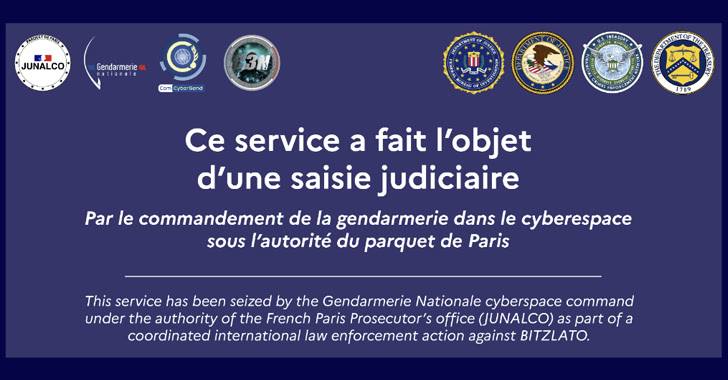
Concurrent with the arrest, Bitzlato’s digital infrastructure
has been seized and dismantled by authorities in France, Spain,
Portugal, and Cyprus as part of an international Europol-led
exercise.
“As alleged, Bitzlato sold itself to criminals as a
no-questions-asked cryptocurrency exchange, and reaped hundreds of
millions of dollars’ worth of deposits as a result,” U.S. Attorney
Breon Peace said.
Blockchain analytics firm Chainalysis, in February 2022,
revealed[5]
that Bitzlato[6]
“received $206 million from darknet markets, $224.5 million from
scams, and $9 million from ransomware attackers.”
Following the Russo-Ukrainian war last year, the high-risk
exchange also emerged[7]
as a “cashout destination” for Project Terricon, a terrorist group
soliciting cryptocurrency donation to support militia entities in
the Donbas region, the company noted.
In all, Bitzlato is estimated to have received $2.5 billion in
cryptocurrency between 2019 and 2023, 53% of which originated from
illegal and risky sources.
“If cybercriminals can’t reliably convert the cryptocurrency
generated by their activities into cash, the incentives to commit
those crimes plummet,” Chainalysis said[8], adding the takedown
“represents another disruption of a key money laundering
service.”
The development also comes a week after Europol took apart[9]
a network of call centers in Bulgaria, Cyprus, Germany, and Serbia
for luring victims into investing large amounts of money in
fraudulent cryptocurrency
schemes[10], incurring millions in
losses.
Found this article interesting? Follow us on Twitter [11] and LinkedIn[12] to read more exclusive
content we post.
References
- ^
said
(www.justice.gov) - ^
Hydra
marketplace (thehackernews.com) - ^
described
(www.fincen.gov) - ^
Conti
(thehackernews.com) - ^
revealed
(blog.chainalysis.com) - ^
Bitzlato
(dossier.center) - ^
emerged
(blog.chainalysis.com) - ^
said
(blog.chainalysis.com) - ^
took
apart (www.europol.europa.eu) - ^
fraudulent cryptocurrency schemes
(www.eurojust.europa.eu) - ^
Twitter
(twitter.com) - ^
LinkedIn
(www.linkedin.com)
Read more https://thehackernews.com/2023/01/bitzlato-crypto-exchange-founder.html