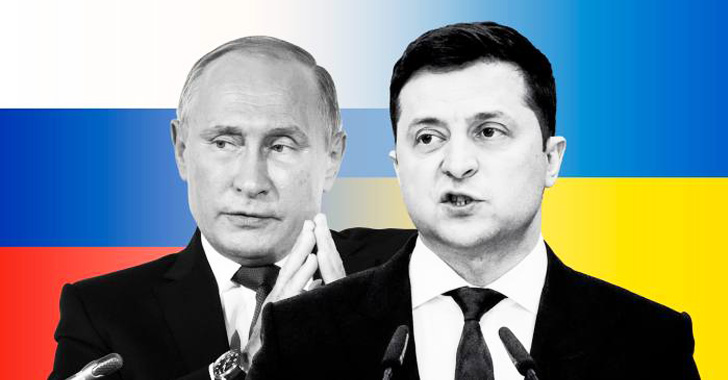
The Ukrainian government on Monday warned of “massive
cyberattacks” by Russia targeting critical infrastructure
facilities located in the country and that of its allies.
The attacks are said to be targeting the energy sector, the Main
Directorate of Intelligence of the Ministry of Defense of Ukraine
(GUR) said.
“By the cyberattacks, the enemy will try to increase the effect
of missile strikes on electricity supply facilities, primarily in
the eastern and southern regions of Ukraine,” the agency said[1]
in a brief advisory.
GUR also cautioned of intensified distributed denial-of-service
(DDoS) attacks aimed at the critical infrastructure of Ukraine’s
closest allies, chiefly Poland and the Baltic states of Estonia,
Latvia, and Lithuania.
It’s not immediately clear what prompted the intelligence agency
to issue the notice, but Ukraine has been at the receiving end of
disruptive and destructive
cyberattacks[2] since the onset of the
Russo-Ukrainian war earlier this February.
Even prior to that, a Russian state-sponsored group tracked as
Sandworm[3]
(aka Voodoo Bear) orchestrated the 2015 and 2016 targeting of the
Ukrainian power grids, causing over 225,000 Ukrainians to lose
electricity during the month of December.
While the first attack involved the use of a revamped variant of
a malware called BlackEnergy[4], the December 2016
intrusions notably made use of a custom malware known as Industroyer[5]
(aka CrashOverRide[6]) that’s specifically
designed to sabotage critical infra systems.
In the aftermath of the Russian military invasion of Ukraine,
the Computer Emergency Response Team (CERT-UA) disclosed in April
that it had fielded an attack targeting an unnamed energy provider
that utilized an updated version of the Industroyer
malware[7].
Sandworm, for its part, has been most recently observed masquerading as Ukrainian telecom
operators[8] such as Datagroup and
EuroTransTelecom to deliver payloads like Colibri loader and
Warzone RAT.
Microsoft, in June, also notified of rising Russian cyberattacks[9], stating that threat
actors were not only going after government systems, but also
prioritizing other sectors as part of its espionage efforts,
including think tanks, IT firms, and energy companies.
References
- ^
said
(gur.gov.ua) - ^
disruptive and destructive
cyberattacks (thehackernews.com) - ^
Sandworm
(thehackernews.com) - ^
BlackEnergy
(thehackernews.com) - ^
Industroyer
(thehackernews.com) - ^
CrashOverRide
(www.cisa.gov) - ^
updated
version of the Industroyer malware
(thehackernews.com) - ^
masquerading as Ukrainian telecom
operators (thehackernews.com) - ^
rising
Russian cyberattacks (thehackernews.com)
Read more https://thehackernews.com/2022/09/ukraine-says-russia-planning-massive.html