
Cybersecurity researchers have reiterated similarities between
the latest iteration of the LockBit ransomware and BlackMatter[1], a rebranded variant of
the DarkSide ransomware strain that closed shop in November
2021.
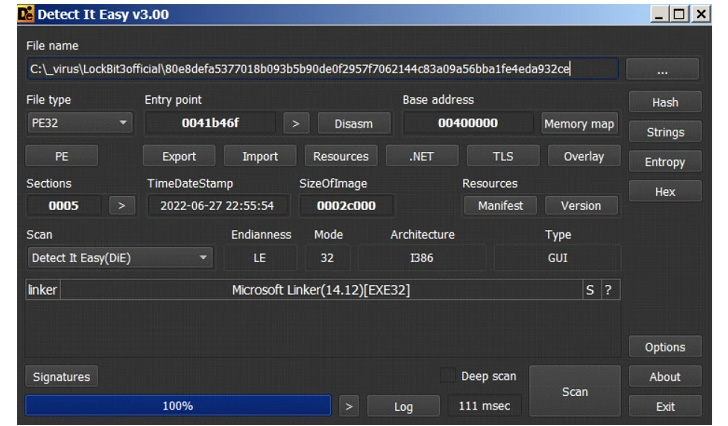
The new version of LockBit[2], called LockBit 3.0 aka
LockBit Black, was released in June 2022, launching a brand new
leak site and what’s the very first ransomware bug bounty program,
alongside Zcash as a cryptocurrency payment option.
Its encryption process involves appending the extension
“HLJkNskOq” or “19MqZqZ0s” to each and every file and changing the
icons of the locked files to that of the .ico file that’s dropped
by the LockBit sample to kick-start the infection.
“The ransomware then drops its ransom note, which references
‘Ilon Musk’ and the European Union’s General Data Protection
Regulation (GDPR),” Trend Micro researchers said[3]
in a Monday report. “Lastly, it changes the wallpaper of the
victim’s machine to inform them of the ransomware attack.”
LockBit’s extensive similarities to BlackMatter come from
overlaps in the privilege escalation and harvesting routines used
to identify APIs required to terminate processes and other
functions as well as the use of anti-debugging and threading
techniques designed to thwart analysis.
Also of note is its use of a “-pass” argument to decrypt its
main routine, a behavior seen in another defunct ransomware family
named Egregor[4], effectively making the
binary harder to reverse if the parameter is not available.
In addition, LockBit 3.0 is designed to check the victim
machine’s display language to avoid compromising systems associated
with the Commonwealth of Independent States (CIS) states.
“One notable behavior for this third LockBit version is its file
deletion technique: Instead of using cmd.exe to execute a batch
file or command that will perform the deletion, it drops and
executes a .tmp file decrypted from the binary,” the researchers
said.
This .tmp file then overwrites the contents of the ransomware
binary and then renames the binary several times, with the new file
names based on the length of the original file name, including the
extension, in an attempt to prevent recovery by forensic tools and
cover its tracks.
The findings come as LockBit infections have emerged as the
most active[5]
ransomware-as-a-service (RaaS) groups in 2022, the most recent
allegedly being[6]
the Italian Internal Revenue Service (L’Agenzia delle Entrate).
According to Palo Alto Networks 2022 Unit 42 Incident Response
Report[7] published today based on
600 cases handled between May 2021 and April 2022, the ransomware
family accounted for 14% of the intrusions, second only to Conti at
22%.
The development also highlights the continued success of the
RaaS business model, lowering the barrier to entry for
extortionists and expanding the reach of ransomware.
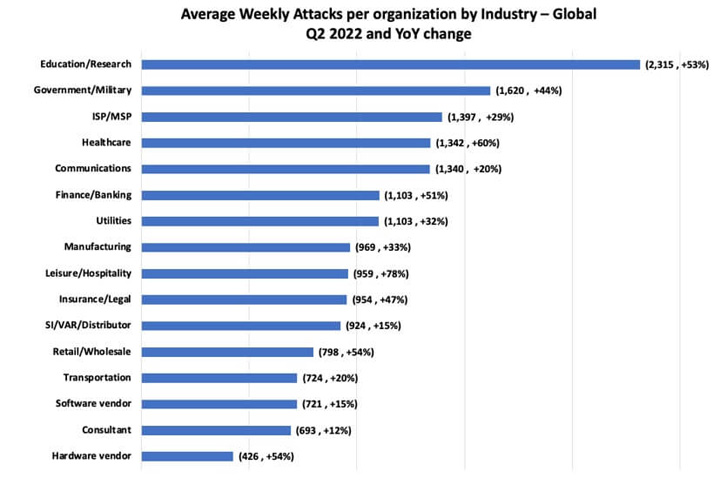
Check Point’s analysis of cyberattack trends for Q2 2022 shows
that the weekly average of impacted organizations by ransomware
reached one out of 40, a 59% increase YoY from one out of 64
organizations in Q2 2021.
“Latin America has seen the largest increase in attacks,
spotting one out of 23 organizations impacted weekly, a 43%
increase YoY, compared to one out of 33 in Q2 2021, followed by
Asia region that has seen a 33% increase YoY, reaching one out of
17 organizations impacted weekly,” the Israeli cybersecurity firm
said[8].
References
Read more https://thehackernews.com/2022/07/experts-find-similarities-between.html