Three restaurant ordering platforms MenuDrive, Harbortouch, and
InTouchPOS were the target of two Magecart skimming campaigns that
resulted in the compromise of at least 311 restaurants.
The trio of breaches has led to the theft of more than 50,000
payment card records from these infected restaurants and posted for
sale on the dark web.
“The online ordering platforms MenuDrive and Harbortouch were
targeted by the same Magecart campaign, resulting in e-skimmer
infections on 80 restaurants using MenuDrive and 74 using
Harbortouch,” cybersecurity firm Recorded Future revealed[1]
in a report.
“InTouchPOS was targeted by a separate, unrelated Magecart
campaign, resulting in e-skimmer infections on 157 restaurants
using the platform.”
Magecart actors have a history of infecting e-commerce websites[2] with JavaScript skimmers
to steal online shoppers’ payment card data, billing information,
and other personally identifiable information (PII).
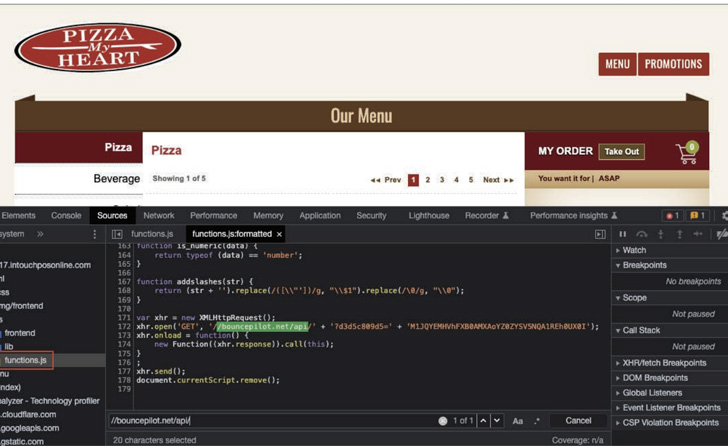
The first set of activities is believed to have started around
January 18, 2022, and continued until the malicious domain used in
the campaign was blocked on May 26. The InTouchPOS campaign, on the
other hand, has remained active since November 12, 2021.
It’s worth noting that the data exfiltration domain used in the
infections of MenuDrive and Harbortouch has also been identified by
the U.S. Federal Bureau of Investigation (FBI) in a May 2022 flash alert[3].
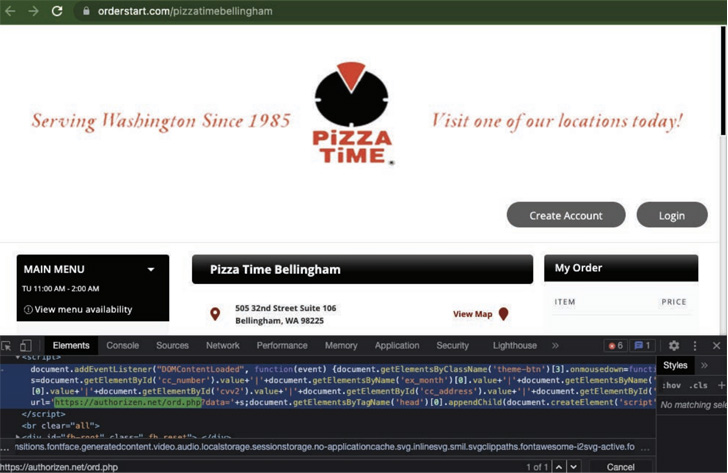
The attacks entail inserting malicious PHP code into the
businesses’ online checkout pages by taking advantage of known
security flaws in the services to scrape and transmit the customer
data to a server under the attacker’s control.
The idea is that by targeting online ordering platforms, it can
lead to a scenario where when even a single platform is attacked,
dozens or even hundreds of restaurants can have their transactions
compromised, which enables “cybercriminals to steal vast amounts of
customer payment card data disproportionate to the number of
systems they actually hack.”
The development is significant for a number of reasons. First,
the intrusions are a departure from the threat actor’s traditional
targeting of the Magento e-commerce platform, a fact exemplified by
the uptick in skimmer attacks aimed at a WordPress plugin named
WooCommerce.
Furthermore, it serves to highlight how Magecart campaigns are
now singling out small, local restaurants that rely on third-party
software from lesser-known online ordering services in lieu of
designing their own checkout web pages, effectively widening the
pool of attack vectors.
“Centralized ordering platforms servicing multiple merchants
offer a unique opportunity for Magecart threat actors to collect
customer PII and payment card data,” the researchers said.
“Cybercriminals’ increasing interest in targeting online ordering
platforms represents a new dimension of risk for restaurants.”
References
- ^
revealed
(www.recordedfuture.com) - ^
infecting e-commerce websites
(thehackernews.com) - ^
May 2022
flash alert (www.ic3.gov)
Read more https://thehackernews.com/2022/07/magecart-hacks-online-food-ordering.html