At least three different advanced persistent threat (APT) groups
from across the world have launched spear-phishing campaigns in
mid-March 2022 using the ongoing Russo-Ukrainian war as a lure to
distribute malware and steal sensitive information.
The campaigns, undertaken by El Machete, Lyceum, and SideWinder,
have targeted a variety of sectors, including energy, financial,
and governmental sectors in Nicaragua, Venezuela, Israel, Saudi
Arabia, and Pakistan.
“The attackers use decoys ranging from official-looking
documents to news articles or even job postings, depending on the
targets and region,” Check Point Research said[1]
in a report. “Many of these lure documents utilize malicious macros
or template injection to gain an initial foothold into the targeted
organizations, and then launch malware attacks.”
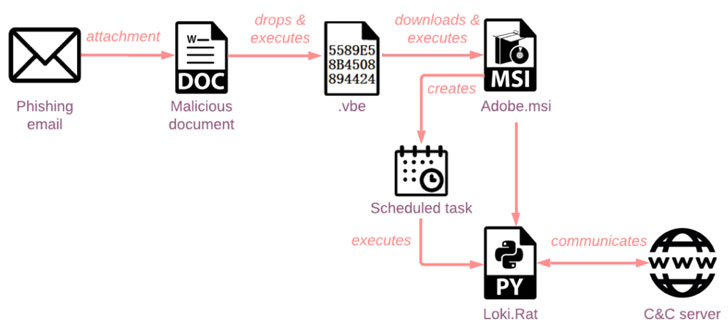
The infection chains of El Machete[2], a Spanish-speaking
threat actor first documented in August 2014 by Kaspersky, involve
the use of macro-laced decoy documents to deploy an open-source
remote access trojan called Loki.Rat[3] that’s capable of
harvesting keystrokes, credentials, and clipboard data as well as
carrying out file operations and executing arbitrary commands.
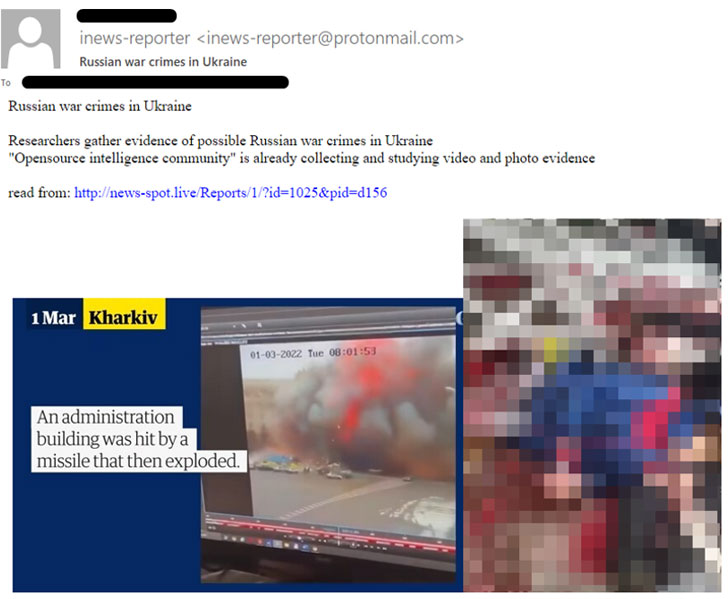
A second campaign is from the Iranian APT group known as
Lyceum[4]
that Check Point said launched a phishing attack using an email
purportedly about “Russian war crimes in Ukraine” to deliver
first-stage .NET and Golang droppers, which are then used to deploy
a backdoor for running files retrieved from a remote server.
Another example is SideWinder[5], a state-sponsored crew
that’s said to operate in support of Indian political interests and
with a specific focus on its neighbors China and Pakistan[6]. The attack sequence, in
this case, employs a weaponized document that exploits the Equation
Editor flaw in Microsoft Office (CVE-2017-11882[7]) to distribute
information stealing malware.
The findings echo similar warnings from Google’s Threat Analysis
Group (TAG), which disclosed[8]
that nation-state-backed threat groups from Iran, China, North
Korea, and Russia and numerous other criminal and financially
motivated actors are leveraging war-related themes in phishing
campaigns, online extortion attempts, and other malicious
activities.
“Although the attention of the public does not usually linger on
a single issue for an extended period, the Russian-Ukrainian war is
an obvious exception,” the Israeli company said. “This war affects
multiple regions around the world and has potentially far-reaching
ramifications. As a result, we can expect that APT threat actors
will continue to use this crisis to conduct targeted phishing
campaigns for espionage purposes.”
References
Read more https://thehackernews.com/2022/04/multiple-hacker-groups-capitalizing-on.html