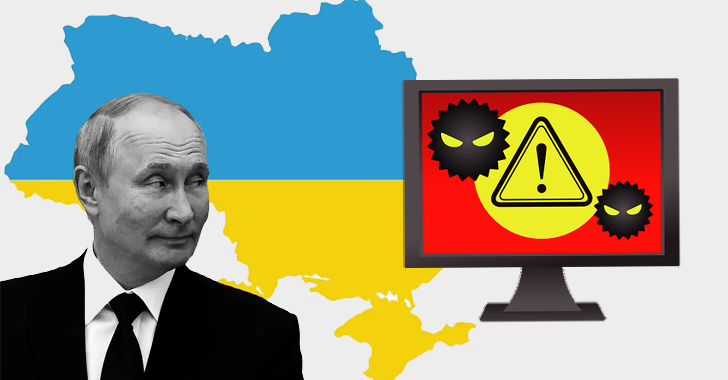
Microsoft on Monday disclosed that it detected a new round of
offensive and destructive cyberattacks directed against Ukraine’s
digital infrastructure hours before Russia launched its first
missile strikes last week.
The intrusions involved the use of a never-before-seen malware
package dubbed FoxBlade, according to the tech giant’s
Threat Intelligence Center (MSTIC), noting that it added new
signatures to its Defender anti-malware service to detect the
exploit within three hours of the discovery.
“These recent and ongoing cyberattacks have been precisely
targeted, and we have not seen the use of the indiscriminate
malware technology that spread across Ukraine’s economy and beyond
its borders in the 2017 NotPetya attack[1],” Microsoft’s President
and Vice Chair, Brad Smith, said[2].
Additional technical specifics pertaining to FoxBlade, including
the mode of initial access, are not known, but Microsoft in a
Security Intelligence advisory stated[3]
that “this trojan can use your PC for distributed denial-of-service
(DDoS) attacks without your knowledge.”
What’s more, the delivery of the trojan appears to be
facilitated by means of a second “downloader[4]” module that’s capable
of retrieving and installing the malware on the compromised
machines.
The disclosure comes as cyber assaults ranging from malicious data wipers[5]
to DDoS attacks[6]
have continued to rain down on Ukrainian government and banking
websites, even as the U.S. Cybersecurity and Infrastructure
Security Agency (CISA) warned[7]
of such attacks employed beyond the country’s borders.
“Destructive malware can present a direct threat to an
organization’s daily operations, impacting the availability of
critical assets and data,” CISA said[8]. “Further disruptive
cyberattacks against organizations in Ukraine are likely to occur
and may unintentionally spill over to organizations in other
countries.”
References
- ^
2017
NotPetya attack (thehackernews.com) - ^
said
(blogs.microsoft.com) - ^
stated
(www.microsoft.com) - ^
downloader
(www.microsoft.com) - ^
malicious data wipers
(thehackernews.com) - ^
DDoS
attacks (thehackernews.com) - ^
warned
(www.cisa.gov) - ^
said
(www.cisa.gov)
Read more https://thehackernews.com/2022/03/microsoft-finds-foxblade-malware-hit.html