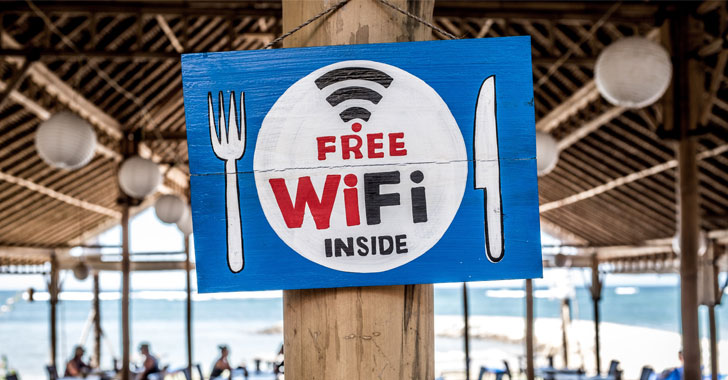
Providing public Wi-Fi is a great service to offer your
customers as it becomes more and more standard in today’s society.
I like the fact that I do not have to worry about accessing the
Internet while I am away, or spending a lot of money on an
international connection, or just staying offline while I am
away.
With public Wi-Fi, modern life has become a constant connection
to the Internet, whether we are on the bus, on the way to school or
work, waiting for our flight in the airport or during the flight
itself, or doing our homework or working on our projects in a
café.
We do business and communicate online in a variety of ways. We
check our work emails, chat with our friends, and even take
business calls online through the service.
According to recent statistics, there are about 410,000 public
Wi-Fi hotspots in the United States alone, in public places such as
parks, libraries, public transportation, and train stations.
Cons of using public Wi-Fi
Despite the many benefits that public Wi-Fi has to offer, there are
also some downsides that could be a reason to either avoid it
altogether or take precautions to be safe when using it.
When you use public Wi-Fi, it means that you are potentially
vulnerable to a lot of cyber threats such as malware, viruses,
hacking and other forms of intrusion. It also provides an
opportunity for cyber criminals to commit virtual crimes and harm
Internet users.
Compliances for public Wi-Fi
Governments and organizations have begun enforcing certain measures
that public Wi-Fi hotspot providers must take to ensure they are
complying with the law to keep hotspots secure. Examples include
CIPA, IWF, GDPR, and Friendly Wi-Fi compliances, to name a few.
They require public Wi-Fi providers to take certain precautions,
such as data protection and DNS filtering.
DNS filtering service for public Wi-Fi
Having a reliable DNS filtering service[1]
could add an extra layer of protection to your public Wi-Fi by
stopping cyber threats like malware, ransomware, phishing and
botnets before they can reach the network device. Besides, you’ll
be able to filter out undesirable content such as pornographic
material, violence and drug-related content to make sure your
network is family-friendly and you’ll receive fewer complaints. It
is also possible to block certain websites, such as Netflix,
torrents or other browsers that consume a lot of bandwidth so that
the Internet speed stays high.
In addition to these, you can also receive or check live reports
that list which websites are visited through your network, so you
can track what your clients are interested in and show them more
relevant advertisements.
SafeDNS
SafeDNS has been providing excellent cloud-based web filtering for
more than a decade. Their services include friendly 24/7 support,
affordable pricing, easy deployment and management (you can start
filtering in minutes), and many other features.
Visit the SafeDNS website[2]
to learn more about how to protect your family or business from
cyber threats and offensive content on the Internet.
References
- ^
DNS
filtering service (www.safedns.com) - ^
SafeDNS
website (www.safedns.com)
Read more https://thehackernews.com/2022/01/dont-use-public-wi-fi-without-dns.html