Cryptocurrency users in Ethiopia, Nigeria, India, Guatemala, and
the Philippines are being targeted by a new variant of the Phorpiex
botnet called Twizt that has resulted in the theft
of virtual coins amounting to $500,000 over the last one year.
Israeli security firm Check Point Research, which detailed the
attacks, said the latest evolutionary version “enables the botnet
to operate successfully without active [command-and-control]
servers,” adding it supports no less than 35 wallets associated
with different blockchains, including Bitcoin, Ethereum, Dash,
Dogecoin, Litecoin, Monero, Ripple, and Zilliqa, to facilitate
crypto theft.
Phorpiex[1], otherwise known as
Trik, is known for its sextortion spam and ransomware campaigns as
well as cryptojacking, a scheme that leverages the targets’ devices
such as computers, smartphones, and servers to secretly mine
cryptocurrency without their consent or knowledge.
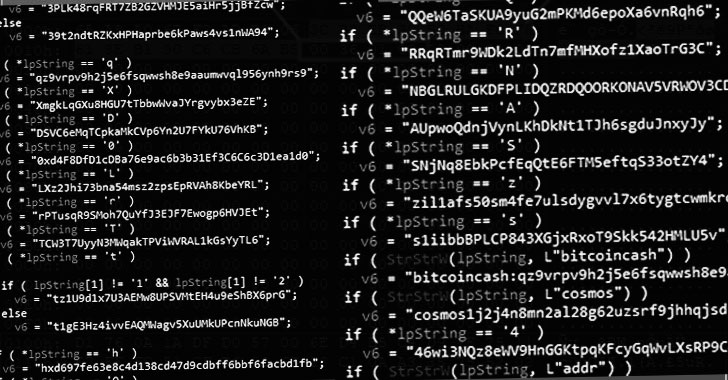
It’s also infamous for its use of a technique called cryptocurrency clipping[2], which involves stealing
cryptocurrency in the process of a transaction by deploying malware
that automatically substitutes the intended wallet address with the
threat actor’s wallet address. Check Point said it identified 60
unique Bitcoin wallets and 37 Ethereum wallets used by
Phorpiex.
While the botnet operators shut down and put its source code for
sale on a dark web cybercrime forum in August 2021, the
command-and-control (C&C) servers resurfaced a mere two weeks
later to distribute Twizt, a previously undiscovered payload that
can deploy additional malware and function in peer-to-peer mode,
thus eliminating the need for a centralized C&C server.
The clipping feature also comes with an added advantage in that,
once deployed, it can work even in the absence of any C&C
servers and siphon money from victims’ wallets. “This means that
each of the infected computers can act as a server and send
commands to other bots in a chain,” Check Point’s Alexey Bukhteyev
said[3]
in a report. “The emergence of such features suggests that the
botnet may become even more stable and therefore, more
dangerous.”
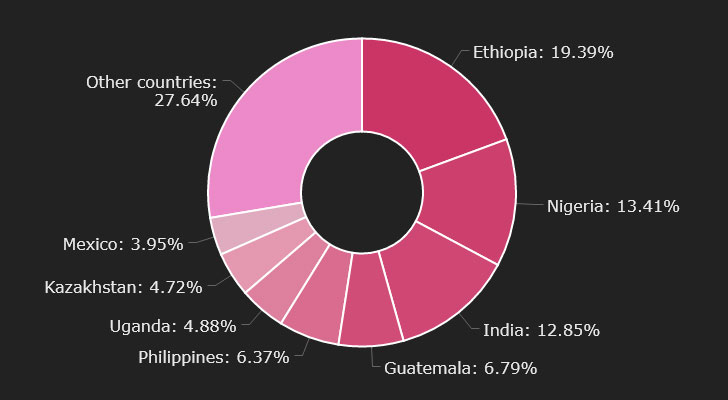
Phorpiex-infected bots have been spotted in 96 countries, topped
by Ethiopia, Nigeria, and India. The botnet is also estimated to
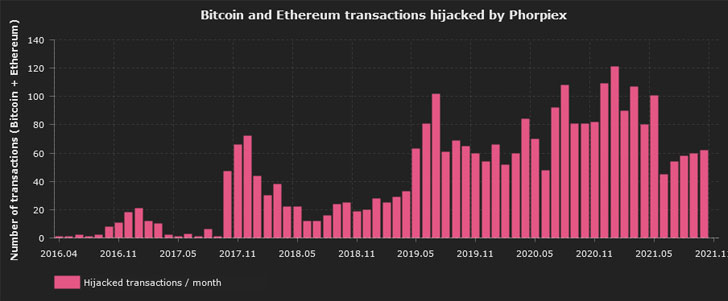
have hijacked roughly 3,000 transactions with a total value of
approximately 38 Bitcoin and 133 Ether. It’s, however, worth noting
that the botnet is designed to halt its execution should the
infected system’s locale be defaulted to Ukraine, suggesting that
the botnet operators are from the East European nation.
“Malware with the functionality of a worm or a virus can
continue to spread autonomously for a long time without any further
involvement by its creators,” Bukhteyev said. “In the past year,
Phorpiex received a significant update that transformed it into a
peer-to-peer botnet, allowing it to be managed without having a
centralized infrastructure. The C&C servers can now change
their IP addresses and issue commands, hiding among the botnet
victims.”
References
Read more https://thehackernews.com/2021/12/new-phorpiex-botnet-variant-steals-half.html