
The U.S. Cybersecurity and Infrastructure Security Agency (CISA)
has published[1]
a catalog[2]
of vulnerabilities, including from Apple, Cisco, Microsoft, and
Google, that have known exploits and are being actively exploited
by malicious cyber actors, in addition to requiring federal
agencies to prioritize applying patches for those security flaws
within “aggressive” timeframes.
“These vulnerabilities pose significant risk to agencies and the
federal enterprise,” the agency said[3] in a binding operational
directive (BOD) issued Wednesday. “It is essential to aggressively
remediate known exploited vulnerabilities to protect federal
information systems and reduce cyber incidents.”
About 176 vulnerabilities identified between 2017 and 2020, and
100 flaws from 2021 have made their way to the initial list, which
is expected to be updated with additional actively exploited
vulnerabilities as and when they become known provided they have
been assigned Common Vulnerabilities and Exposures (CVE)
identifiers and have clear remediation action.
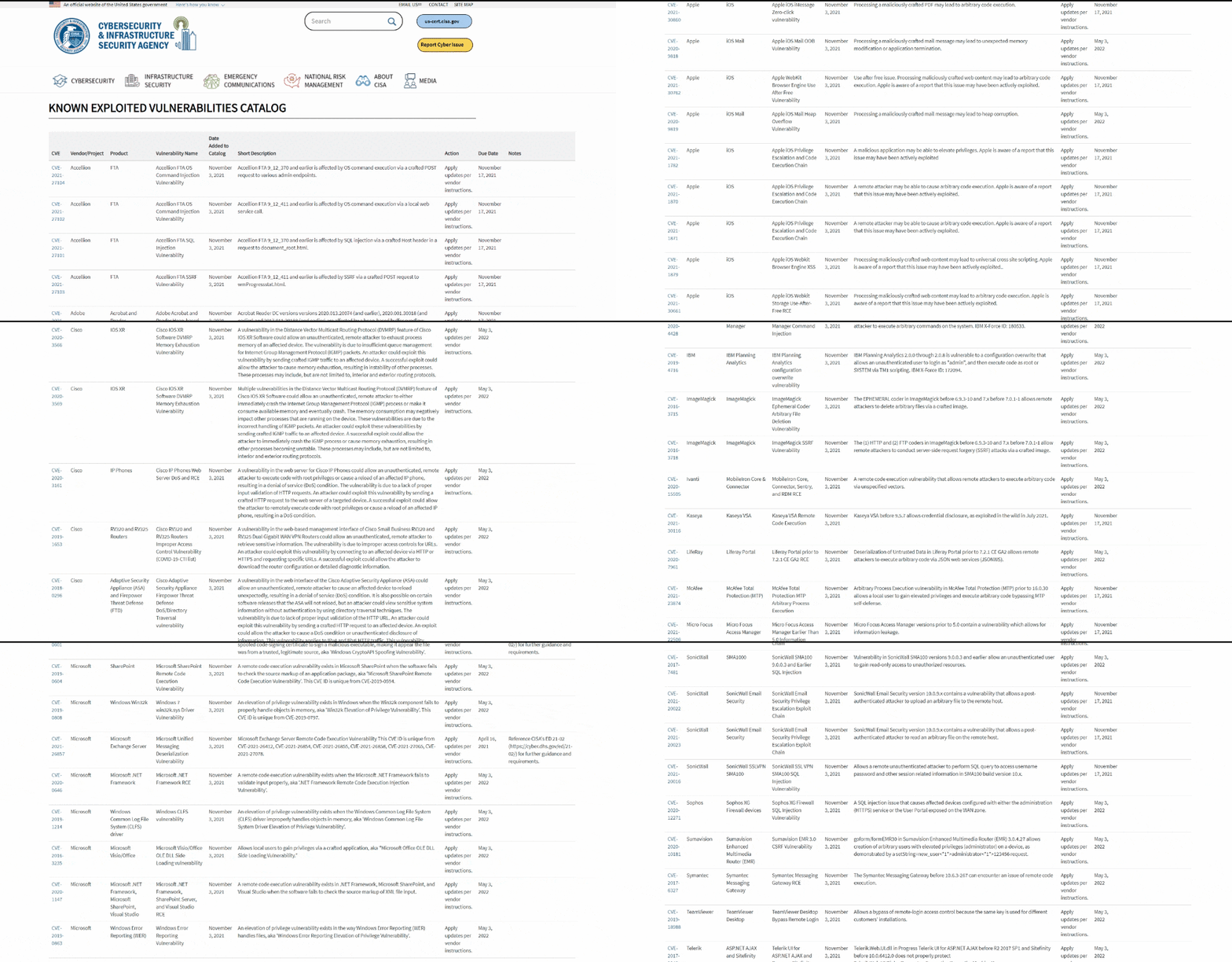
The binding directive mandates that security vulnerabilities
discovered in 2021 — those tracked as CVE-2021-XXXXX — be addressed
by November 17, 2021, while setting a patching deadline of May 3,
2022 for the remaining older vulnerabilities. Although the BOD is
primarily aimed at federal civilian agencies, CISA is recommending
private businesses and state entities to review the catalog and
remediate the vulnerabilities to strengthen their security and
resilience posture.
The new strategy also sees the agency moving away from
severity-based vulnerability remediation to those that pose
significant risk and are being abused in real-world intrusions in
light of the fact that adversaries do not always necessarily bank
only on ‘critical’ weaknesses to achieve their goals, with some of
the most widespread and devastating attacks chaining multiple
vulnerabilities rated ‘high,’ ‘medium,’ or even ‘low.’
“This directive does two things. First, it establishes an agreed
upon list of vulnerabilities that are being actively exploited,”
Tripwire’s VP of Strategy, said. “Second, it provides due dates for
remediating those vulnerabilities. By providing a common list of
vulnerabilities to target for remediation, CISA is effectively
leveling the playing field for agencies in terms of prioritization.
It’s no longer up to each individual agency to decide which
vulnerabilities are the highest priority to patch.”