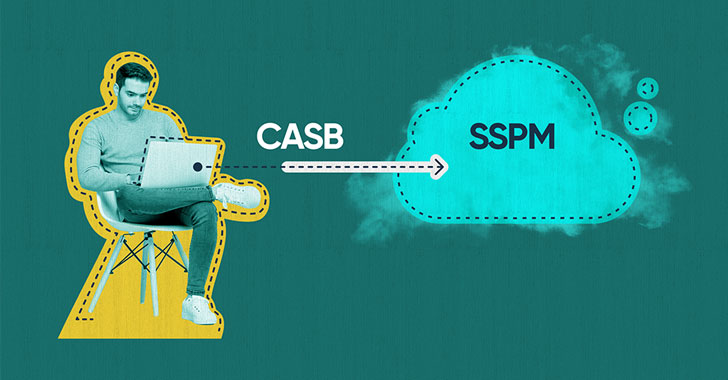
There is often confusion between Cloud Access Security Brokers
(CASB) and SaaS Security Posture Management (SSPM) solutions, as
both are designed to address security issues within SaaS
applications. CASBs protect sensitive data by implementing multiple
security policy enforcements to safeguard critical data. For
identifying and classifying sensitive information, like Personally
Identifiable Information (PII), Intellectual Property (IP), and
business records, CASBs definitely help.
However, as the number of SaaS apps increase, the amount of
misconfigurations and possible exposure widens and cannot be
mitigated by CASBs. These solutions act as a link between users and
cloud service providers and can identify issues across various
cloud environments. Where CASBs fall short is that they identify
breaches after they happen.
When it comes to getting full visibility and control over the
organization’s SaaS apps, an SSPM solution would be the better
choice, as the security team can easily onboard apps and get value
in minutes — from the immediate configuration assessment to its
ongoing and continuous monitoring. By fixing these configuration
weaknesses and misconfigurations in the SaaS stack, the security
team is actually preventing a leak or breach.
➤ How to ensure your company’s SaaS
security[1]
To fully understand why SSPM is the ideal solution for today’s
SaaS environment, it’s best to take a look at the challenges that
accompany these deployments.
Today eighty-five percent of InfoSecurity
professionals[2]
cite SaaS misconfigurations as one of the top three risks facing
today’s organizations. The challenge stems from what we like to
call the three V’s of SaaS Security:
- Volume: With an increasing number of apps to
manage, configure, and update – each with its own security settings
– security teams need to ensure each app is compliant with the
company’s policies. With hundreds of app setups and tens of
thousands of user roles and privileges, this quickly becomes an
impossible and unsustainable scenario. According to our2021 SaaS Security Survey Report[3] only 12% of companies
said they are able to check for SaaS misconfigurations weekly. - Velocity: The SaaS environment is dynamic and
continually changing. As employees are added or removed and new
apps are onboarded, security teams must continuously ensure that
all configurations are enforced company-wide. The dynamic nature of
the security environment adds even more pressure to already
overwhelmed security teams. - Visibility: Most SaaS apps are purchased by
and implemented in the departments that utilize them most. This
leaves security teams in the dark, unaware of the app owner’s usage
behavior and whether or not they stay on top of potential risks.
Employees with admin access or privileges can leave a company
exposed, as they are untrained in security matters and more focused
on their productivity, making it crucial for SaaS apps to be
configured correctly and regularly monitored by the organization’s
security team.
SaaS app providers build in robust security features that are
designed to protect company and user data, yet whether the features
are implemented correctly are another matter.
The configurations and enforcement fall under the responsibility
of the organization utilizing the app.
A SaaS Security Posture Managemen[4]t solution, like Adaptive
Shield, is critical to the security of today’s enterprise. Gartner
predicts SSPM will increase its impact over the next five to ten
years. With its ability to effectively manage this chaotic SaaS
environment, SSPM can continuously assess and manage the security
risk and posture of SaaS apps and prevent configuration errors and
advanced attacks. While CASBs do address an organization’s security
gaps at the SaaS layer, they are, as mentioned earlier, primarily
reactive, focusing on the detection of breaches once they have
occurred.
When it comes to preventing misconfigurations, proactive
identification is key, making SSPM the best option to ensure a
secure and safe SaaS environment.
➤ Learn more about how to ensure your
company’s SaaS security[5]
References
- ^
How to
ensure your company’s SaaS security
(www.adaptive-shield.com) - ^
eighty-five percent of InfoSecurity
professionals (www.adaptive-shield.com) - ^
2021
SaaS Security Survey Report
(www.adaptive-shield.com) - ^
SaaS
Security Posture Managemen
(www.adaptive-shield.com) - ^
Learn
more about how to ensure your company’s SaaS security
(www.adaptive-shield.com)
Read more http://feedproxy.google.com/~r/TheHackersNews/~3/lmneaYMFPaM/securing-saas-apps-casb-vs-sspm.html