The operators behind the BlackRock mobile malware have surfaced
back with a new Android banking trojan called ERMAC[1]
that targets Poland and has its roots in the infamous Cerberus
malware, according to the latest research.
“The new trojan already has active distribution campaigns and is
targeting 378 banking and wallet apps with overlays,”
ThreatFabric’s CEO Cengiz Han Sahin said in an emailed statement.
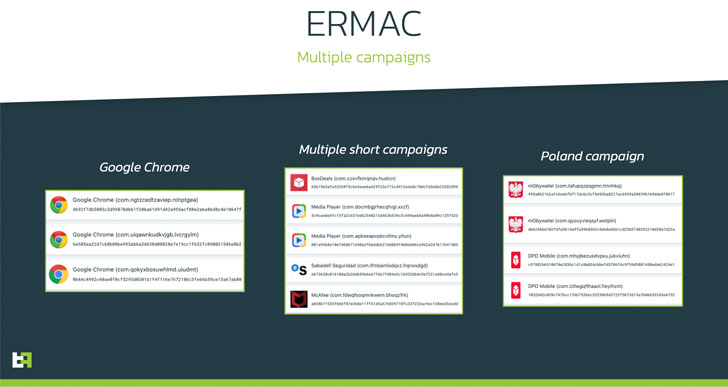
First campaigns involving ERMAC are believed to have begun in late
August under the guise of the Google Chrome app.
Since then, the attacks have expanded to include a range of apps
such as banking, media players, delivery services, government
applications, and antivirus solutions like McAfee[2].
Almost fully based on the notorious banking trojan Cerberus[3], the Dutch cybersecurity
firm’s findings come from forum posts made by an actor named
DukeEugene last month on August 17, inviting prospective customers
to “rent a new android botnet with wide functionality to a narrow
circle of people” for $3,000 a month.
DukeEugene is also known as the actor behind the BlackRock[4]
campaign that came to light in July 2020. Featuring an array of
data theft capabilities, the infostealer and keylogger originate
from another banking strain called Xerxes — which itself is a
strain of the LokiBot Android banking Trojan — with the malware’s
source code made public by its author around May 2019.
Cerberus, in September 2020, had its own source code released[5]
as a free remote access trojan (RAT) on underground hacking forums
following a failed auction that sought $100,000 for the
developer.
ThreatFabric also highlighted the cessation of fresh BlackRock
samples since the emergence of ERMAC, raising the possibility that
“DukeEugene switched from using BlackRock in its operations to
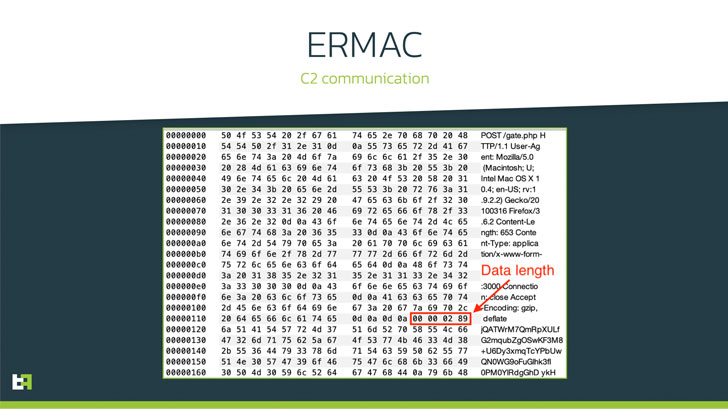
ERMAC.” Besides sharing similarities with Cerberus, the freshly
discovered strain is notable for its use of obfuscation techniques
and Blowfish[6]
encryption scheme to communicate with the command-and-control
server.
ERMAC, like its progenitor and other banking malware[7], is designed to steal
contact information, text messages, open arbitrary applications,
and trigger overlay attacks against a multitude of financial apps
to swipe login credentials. In addition, it has developed new
features that allow the malicious software to clear the cache of a
specific application and steal accounts stored on the device.
“The story of ERMAC shows one more time how malware source code
leaks can lead not only to slow evaporation of the malware family
but also bring new threats/actors to the threat landscape,” the
researchers said. “Although it lacks some powerful features like
RAT, it remains a threat for mobile banking users and financial
institutions all over the world.”