
Researchers on Monday took the wraps off a newly discovered
Linux and Windows re-implementation of Cobalt Strike
Beacon[1] that’s actively set its
sights on government, telecommunications, information technology,
and financial institutions in the wild.
The as-yet undetected version of the penetration testing tool —
codenamed “Vermilion Strike” — marks one of the rare Linux ports[2], which has been
traditionally a Windows-based red team tool heavily repurposed by
adversaries to mount an array of targeted attacks. Cobalt Strike
bills itself as a “threat emulation software[3],” with Beacon being the
payload engineered to model an advanced actor and duplicate their
post-exploitation actions.
“The stealthy sample uses Cobalt Strike’s command-and-control
(C2) protocol when communicating to the C2 server and has remote
access capabilities such as uploading files, running shell commands
and writing to files,” Intezer researchers said in a report[4]
published today and shared with The Hacker News.
The Israeli cybersecurity company’s findings come from an
artifact[5]
uploaded to VirusTotal on August 10 from Malaysia. As of writing,
only two anti-malware engines flag the file as malicious.
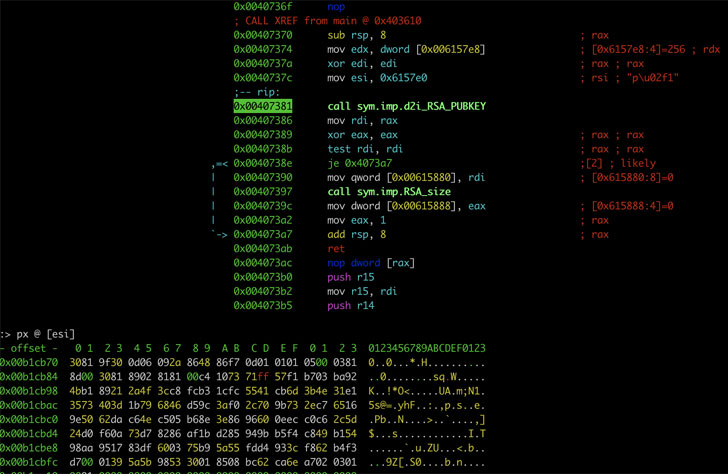
Once installed, the malware runs itself in the background and
decrypt the configuration necessary for the beacon to function,
before fingerprinting the compromised Linux machine and
establishing communications with a remote server over DNS or HTTP
to retrieve base64-encoded and AES-encrypted instructions that
allow it run arbitrary commands, write to files, and upload files
back to the server.
Interestingly, additional[6]
samples[7]
identified during the course of the investigation have shed light
on the Windows variant of the malware, sharing overlaps in the
functionality and the C2 domains used to remotely commandeer the
hosts. Intezer also called out the espionage campaign’s limited
scope, noting the malware’s use in specific attacks as opposed to
large-scale intrusions, while also attributing it to a “skilled
threat actor” owing to the fact that Vermilion Strike has not been
observed in other attacks to date.
“Vermilion Strike and other Linux threats remain a constant
threat. The predominance of Linux servers in the cloud and its
continued rise invites APTs to modify their toolsets in order to
navigate the existing environment,” the researchers said.
References
- ^
Cobalt
Strike Beacon (attack.mitre.org) - ^
rare
Linux ports (blog.cobaltstrike.com) - ^
threat
emulation software (www.cobaltstrike.com) - ^
report
(www.intezer.com) - ^
artifact
(www.virustotal.com) - ^
additional
(www.virustotal.com) - ^
samples
(www.virustotal.com)