Weaknesses in the implementation of TCP protocol in middleboxes[1]
and censorship infrastructure could be weaponized as a vector to
stage reflected denial of service (DoS) amplification attacks,
surpassing many of the existing UDP-based amplification factors to
date.
Detailed by a group of academics from the University of Maryland
and the University of Colorado Boulder at the USENIX Security
Symposium, the volumetric attacks take advantage of
TCP-non-compliance in-network middleboxes — such as firewalls,
intrusion prevention systems, and deep packet inspection (DPI)
boxes — to amplify network traffic, with hundreds of thousands of
IP addresses offering amplification factors[2]
exceeding those from DNS, NTP, and Memcached.
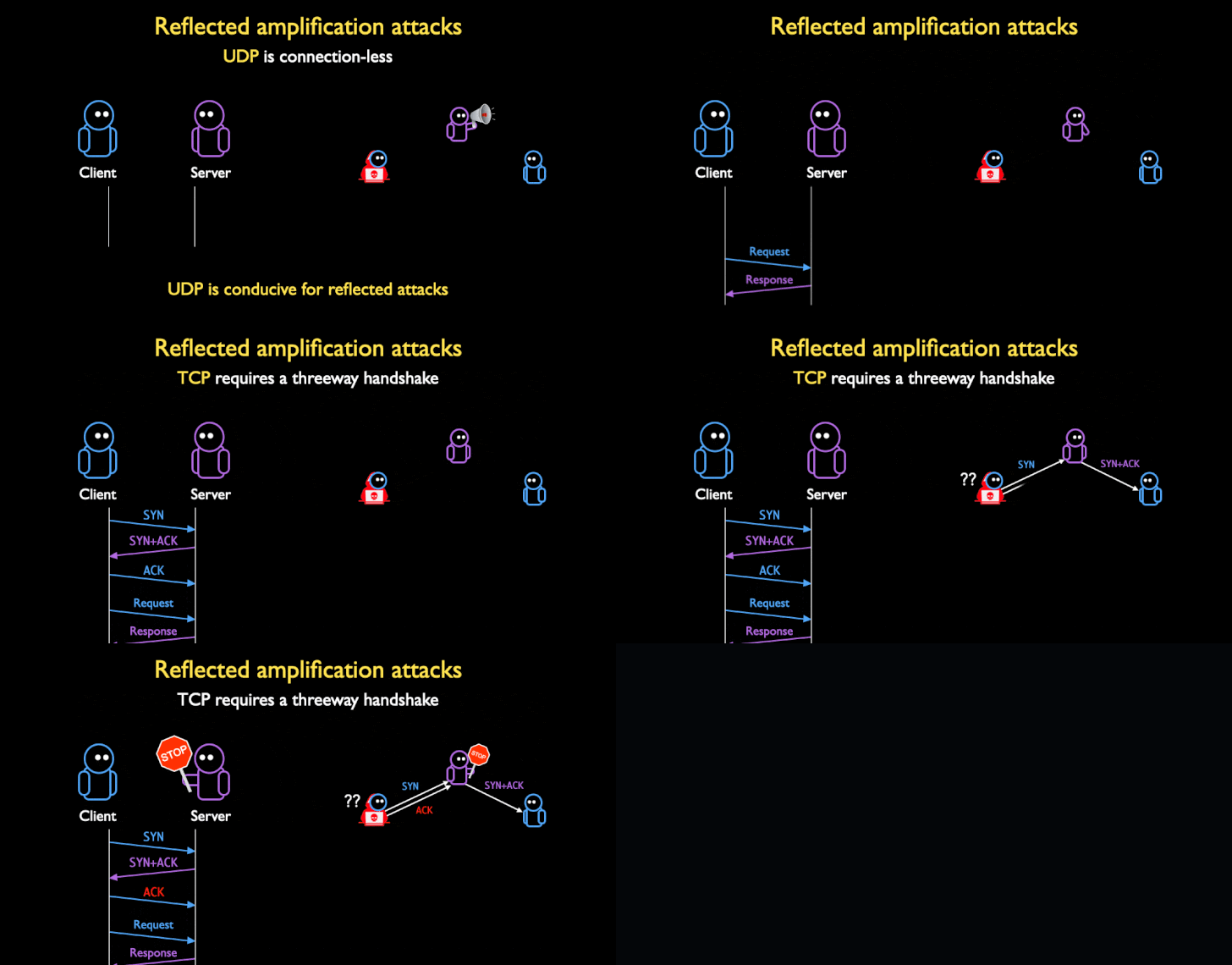
Reflected amplification attacks are a type of DoS attacks in
which an adversary leverages the connectionless nature of UDP
protocol with spoofed requests to misconfigured open servers in
order to overwhelm a target server or network with a flood of
packets, causing disruption or rendering the server and its
surrounding infrastructure inaccessible. This typically occurs when
the response from the vulnerable service is larger than the spoofed
request, which can then be leveraged to send thousands of these
requests, thereby significantly amplifying the size and bandwidth
issued to the target.
While DoS amplifications are traditionally UDP-based owing to
complications arising out TCP’s three-way handshake[3]
to set up a TCP/IP connection over an IP based network (SYN,
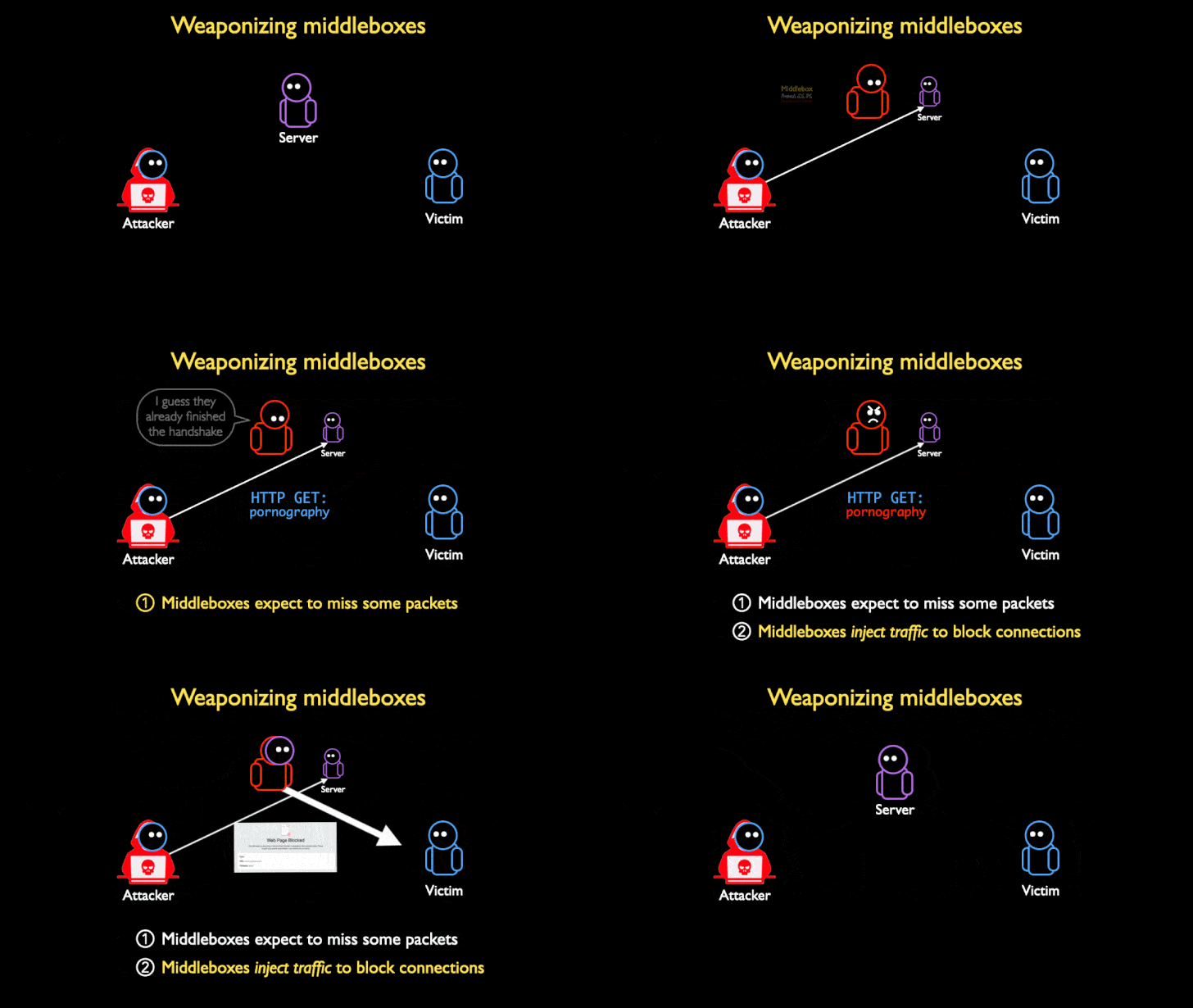
SYN+ACK, and ACK), the researchers found that a large number of
network middleboxes do not conform to the TCP standard, and that
they can “respond to spoofed censored requests with large block
pages, even if there is no valid TCP connection or handshake,”
turning the devices into attractive targets for DoS amplification
attacks.
“Middleboxes are often not TCP-compliant by design: many
middleboxes attempt [to] handle asymmetric routing, where the
middlebox can only see one direction of packets in a connection
(e.g., client to server),” the researchers said[4]. “But this feature opens
them to attack: if middleboxes inject content based only on one
side of the connection, an attacker can spoof one side of a TCP
three-way handshake, and convince the middlebox there is a valid
connection.”
What’s more, a series of experiments found that these amplified
responses come predominantly from middleboxes, including
nation-state censorship devices and corporate firewalls,
highlighting the role played by such infrastructure in enabling
governments to suppress access to the information within their
borders, and worse, allow adversaries to weaponize the networking
devices to attack anyone.
“Nation-state censorship infrastructure is located at high-speed
ISPs, and is capable of sending and injecting data at incredibly
high bandwidths,” the researchers said. “This allows an attacker to
amplify larger amounts of traffic without worry of amplifier
saturation. Second, the enormous pool of source IP addresses that
can be used to trigger amplification attacks makes it difficult for
victims to simply block a handful of reflectors. Nation-state
censors effectively turn every routable IP addresses (sic) within
their country into a potential amplifier.”
“Middleboxes introduce an unexpected, as-yet untapped threat
that attackers could leverage to launch powerful DoS attacks,” the
researchers added[5]. “Protecting the
Internet from these threats will require concerted effort from many
middlebox manufacturers and operators.”
References
- ^
middleboxes
(en.wikipedia.org) - ^
amplification factors
(us-cert.cisa.gov) - ^
three-way handshake
(developer.mozilla.org) - ^
said
(geneva.cs.umd.edu) - ^
added
(www.usenix.org)