
Web infrastructure and website security company Cloudflare last
month fixed a critical vulnerability in its CDNJS library that’s
used by 12.7% of all websites[1] on the internet.
CDNJS is a free and open-source content delivery network (CDN)
that serves about 4,041 JavaScript and CSS
libraries[2], making it the second most popular[3]
CDN for JavaScript after Google Hosted Libraries.
The weakness concerned an issue in the CDNJS library update
server that could potentially allow an attacker to execute
arbitrary commands, leading to a complete compromise.
The vulnerability was discovered and reported by security
researcher RyotaK on April 6, 2021. There is no evidence of
in-the-wild attacks abusing this flaw.
Specifically, the vulnerability works by publishing packages to
Cloudflare’s CDNJS using GitHub and npm, using it to trigger a
path traversal vulnerability[4], and ultimately trick
the server into executing arbitrary code, thus achieving remote
code execution.
It’s worth noting that the CDNJS infrastructure includes
features to automate library updates by periodically running
scripts on the server to download relevant files from the
respective user-managed Git repository or npm package registry.
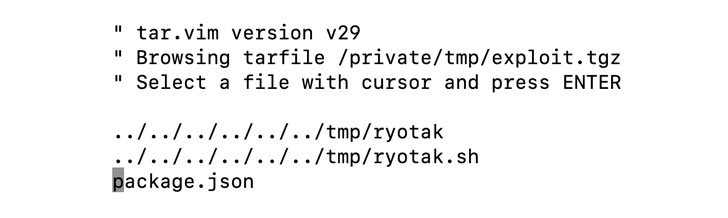
By uncovering an issue with how the mechanism sanitizes package
paths, RyotaK found[5]
that “arbitrary code can be executed after performing path
traversal from the .tgz file published to npm and overwriting the
script that is executed regularly on the server.”
In other words, the goal of the attack is to publish a new
version of a specially-crafted package to the repository, which is
then picked up the CDNJS library update server for publishing, in
the process copying the contents of the malicious package into a
regularly executed script file hosted on the server, thereby
gaining arbitrary code execution.
“While this vulnerability could be exploited without any special
skills, it could impact many websites,” RyotaK said. “Given that
there are many vulnerabilities in the supply chain, which are easy
to exploit but have a large impact, I feel that it’s very
scary.”
This is not the first time the security researcher has uncovered
critical flaws in the way updates to software repositories are
handled. In April 2021, RyotaK disclosed a critical vulnerability[6]
in the official Homebrew Cask repository could have been exploited
by an attacker to execute arbitrary code on users’ machines.
References
- ^
used by
12.7% of all websites (w3techs.com) - ^
4,041 JavaScript and CSS libraries
(cdnjs.com) - ^
second
most popular (w3techs.com) - ^
path
traversal vulnerability (en.wikipedia.org) - ^
found
(blog.ryotak.me) - ^
critical
vulnerability (thehackernews.com)