
Cybersecurity agencies in Australia and the U.S. are warning[1]
of an actively exploited vulnerability impacting ForgeRock’s OpenAM
access management solution that could be leveraged to execute
arbitrary code on an affected system remotely.
“The [Australian Cyber Security Centre] has observed actors
exploiting this vulnerability to compromise multiple hosts and
deploy additional malware and tools,” the organization said[2]
in an alert. ACSC didn’t disclose the nature of the attacks, how
widespread they are, or the identities of the threat actors
exploiting them.
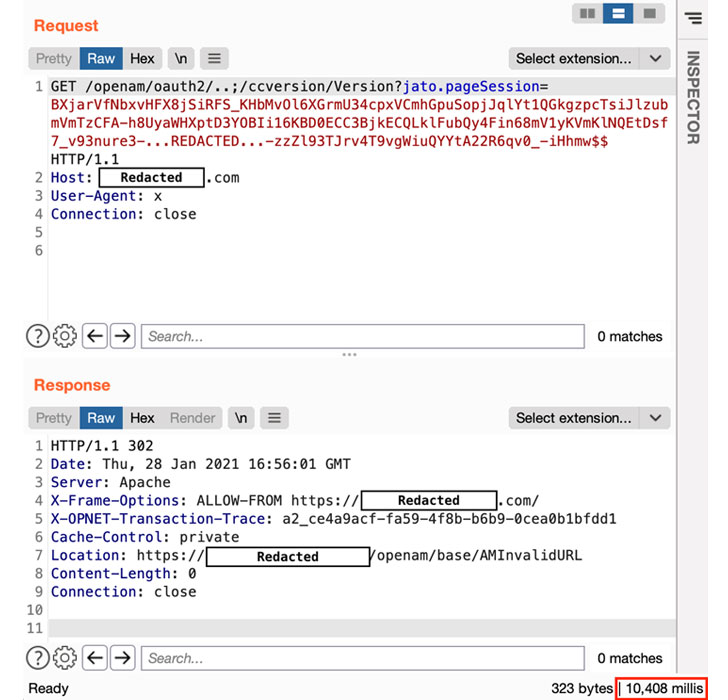
Tracked as CVE-2021-35464[3], the issue concerns a
pre-authentication remote code execution (RCE) vulnerability in
ForgeRock Access Manager identity and access management tool, and
stems from an unsafe Java deserialization[4] in the Jato framework
used by the software.
“An attacker exploiting the vulnerability will execute commands
in the context of the current user, not as the root user (unless
ForgeRock AM is running as the root user, which is not
recommended),” the San Francisco-headquartered software firm
noted[5]
in an advisory.
“An attacker can use the code execution to extract credentials
and certificates, or to gain a further foothold on the host by
staging some kind of shell (such as the common implant Cobalt
Strike),” it added.
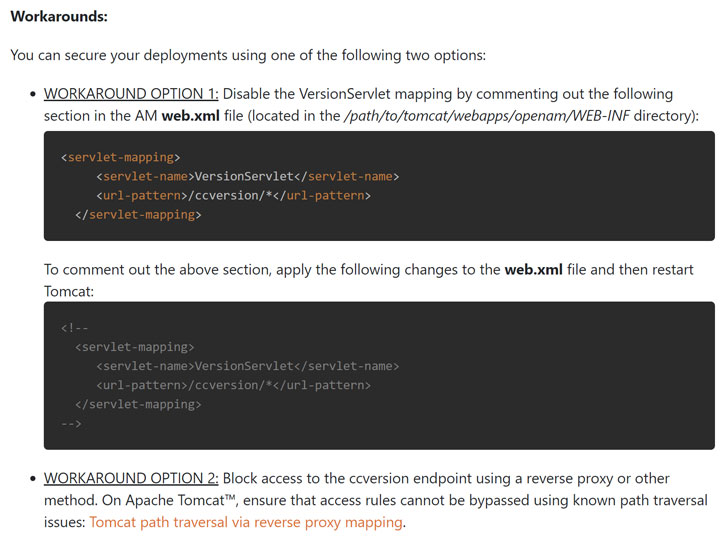
The vulnerability affects versions 6.0.0.x and all versions of
6.5, up to and including 6.5.3, and has been addressed in version
AM 7 released on June 29, 2021. ForgeRock customers are advised to
move quickly to deploy the patches to mitigate the risk associated
with the flaw.
References
- ^
warning
(us-cert.cisa.gov) - ^
said
(www.cyber.gov.au) - ^
CVE-2021-35464
(portswigger.net) - ^
unsafe
Java deserialization (owasp.org) - ^
noted
(backstage.forgerock.com)