An ongoing cyber-espionage operation with suspected ties to
China has been found targeting a Southeast Asian government to
deploy spyware on Windows systems while staying under the radar for
more than three years.
“In this campaign, the attackers utilized the set of Microsoft
Office exploits and loaders with anti-analysis and anti-debugging
techniques to install a previously unknown backdoor on victim’s
machines,” researchers from Check Point[1]
Research said in a report published today.
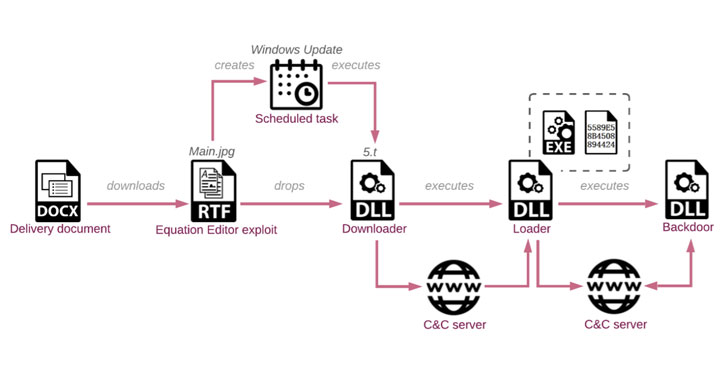
The infection chain works by sending decoy documents,
impersonating other entities within the government, to multiple
members of the Ministry of Foreign Affairs, which, when opened,
retrieves a next-stage payload from the attacker’s server that
contains an encrypted downloader. The downloader, in turn, gathers
and exfiltrates system information to a remote server that
subsequently responds back with a shellcode loader.
The use of weaponized copies of legitimate-looking official
documents also suggests that “the attackers first had to attack
another department within the targeted state, stealing and
weaponizing documents for use against the Ministry of Foreign
Affairs,” said Lotem Finkelsteen, head of threat intelligence at
Check Point.
The last link in the attack involves the loader establishing a
connection with the remote server to download, decrypt, and execute
an implant dubbed “VictoryDll_x86.dll” that’s capable of performing
file operations, capture screenshots, create and terminate
processes, and even shut down the infected machine.
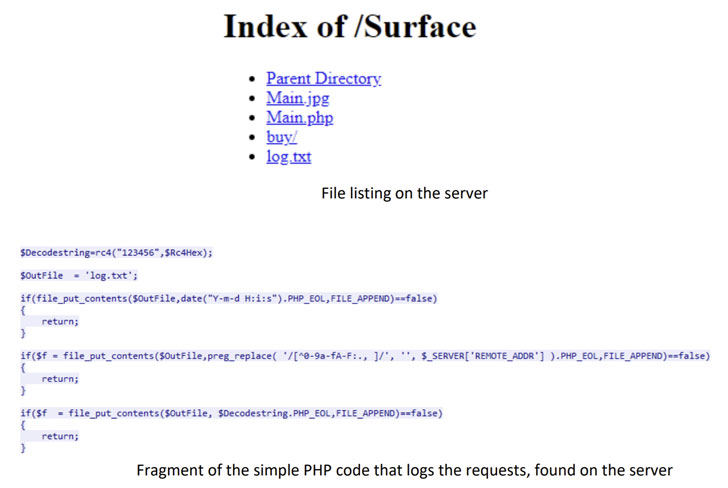
Check Point said the adversary placed significant effort into
hiding their activity by changing its infrastructure multiple times
since its development in 2017, with the backdoor receiving its own
fair share of revisions to make it more resilient to analysis and
decrease the detection rates at each stage.
The long-running campaign has been linked with “medium to high
confidence” to a Chinese advanced persistent threat (APT) group it
calls “SharpPanda” based on test versions of the backdoor dating
back to 2018 that were uploaded to VirusTotal from China and the
actor’s use of Royal Road RTF weaponizer, a tool that been used in
campaigns[2]
attributed to well-known Chinese threat groups since late 2018.
Several other clues point to this conclusion, including the fact
that the command-and-control (C2) servers returned payloads only
between 01:00 and 08:00 UTC, which the researchers suspect are the
working hours in the attackers’ country, and that no payloads were
returned by the C2 servers between May 1 and 5 — even during
working hours — which coincides with the Labor Day holidays in
China.
The development is yet another indication that multiple
cyberthreat groups believed to be working in support of China’s
long-term economic interests are continuing[3]
to hammer away at networks belonging to governments and
organizations, while simultaneously spending a great deal of time
refining the tools in their arsenal in order to hide their
intrusions.
“All the evidence points to the fact that we are dealing with a
highly-organized operation that placed significant effort into
remaining under the radar,” Finkelsteen said. “All in all, the
attackers, who we believe to be a Chinese threat group, were very
systematic in their approach.”
“The attackers are not only interested in cold data, but also
what is happening on a target’s personal computer at any moment,
resulting in live espionage. Although we were able to block the
surveillance operation for the Southeast Asian government
described, it’s possible that the threat group is using its new
cyber espionage weapon on other targets around the world,” he
added.
References
- ^
Check
Point (research.checkpoint.com) - ^
campaigns
(thehackernews.com) - ^
continuing
(thehackernews.com)