Google has announced a number of user-facing and under-the-hood
changes in an attempt to boost privacy and security, including
rolling out two-factor authentication automatically to all eligible
users and bringing iOS-styled privacy labels to Android app
listings.
“Today we ask people who have enrolled in two-step verification[1]
(2SV) to confirm it’s really them with a simple tap via a Google
prompt on their phone whenever they sign in,” the company said[2]. “Soon we’ll start
automatically enrolling users in 2SV if their accounts are
appropriately configured.”
Google Play To Get Apple-Like Privacy
Labels
The Google Play Store for Android is also getting a huge
overhaul on the privacy front. The search giant said it plans to
include a new safety section[3] for app listings that
highlights the type of data is collected and stored — such as
approximate or precise location, contacts, personal information,
photos and videos, and audio files — and how the data is used,
whether be it for providing app functionality, personalization, or
advertising.
The transparency measures into how apps use data echo a similar
push by Apple, which rolled out privacy labels[4]
in the App Store in December 2020 with an aim to condense an app’s
data collection practices in an easy-to-understand and
user-friendly format.
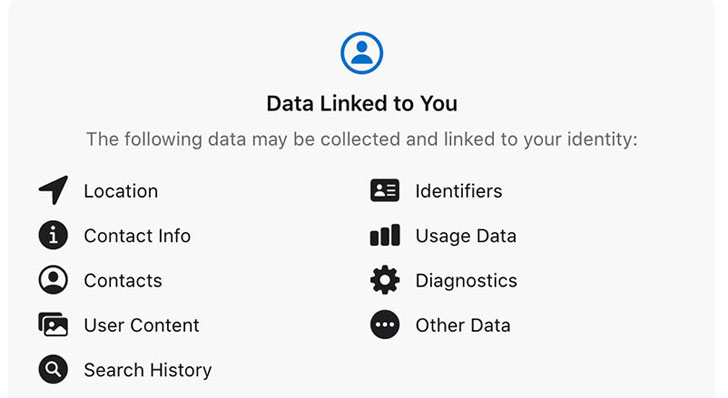
Interestingly, the enforcement goes beyond the privacy-oriented
nutrition information attached to each app entry, for the changes
will also require app developers, including Google, to provide
information about whether their apps adhere to security practices,
like data encryption, comply with Google’s policies[5]
around apps and games aimed at children, and explain why a specific
piece of data is being collected, or if users have a choice in
opting out of data sharing.
Another key difference is that the section will also highlight
whether an independent third-party has verified the app’s privacy
labels and whether users can request that their data be deleted
should they decide to uninstall the app.
The third-party verification appears to be a move to counter criticism[6]
like that faced by Apple for failing to vet apps that provided
“misleading or flat-out inaccurate” labels. The changes are
expected to go into effect in the second fiscal quarter of
2022.
Google Debuts Cosign for Verifying Container Images
Earlier this March, Google, Linux Foundation, and Red Hat
released a tool called Sigstore[7]
to secure software supply chains by allowing developers to sign
their code and for users to verify them to prevent software
supply-chain attacks like dependency confusion[8].
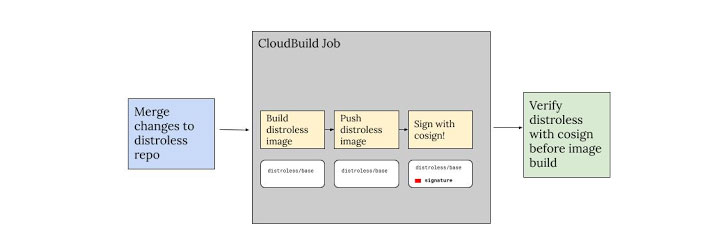
Now, the company is expanding[9]
on that effort with Cosign[10], a new command-line
tool that aims to simplify signing and verifying container images,
and as a consequence, prevent users from falling prey to
typosquatting attacks or “receive a malicious image if the
distroless build process was compromised.”
Google Chrome Gets Hardware-Enforced Exploit Protection
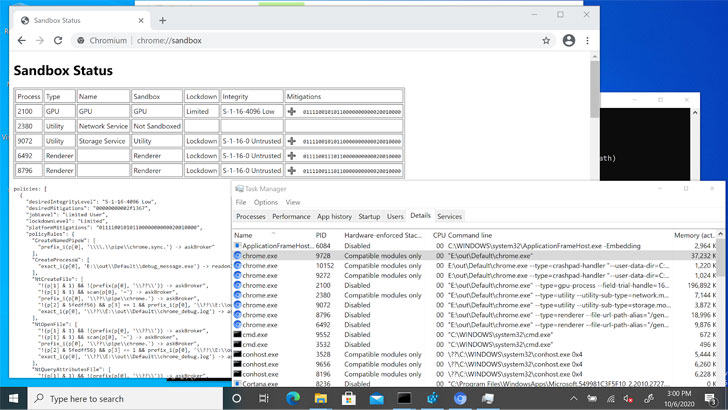
That’s not all. Google on Tuesday revealed[11] that Chrome 90
for Windows, which was released on April 13, 2021, comes
equipped with a new Windows 10 security feature called “Hardware-enforced Stack
Protection[12]” to safeguard the
memory stack from arbitrary code execution attacks.
“Enabling Hardware-enforced Stack Protection will layer with
existing and future measures to make exploitation more difficult
and so more expensive for an attacker,” Alex Gough of Chrome
Platform Security Team said.
References
- ^
two-step
verification (myaccount.google.com) - ^
said
(blog.google) - ^
safety
section (android-developers.googleblog.com) - ^
privacy
labels (thehackernews.com) - ^
Google’s
policies (developer.android.com) - ^
counter
criticism (www.washingtonpost.com) - ^
Sigstore
(security.googleblog.com) - ^
dependency confusion
(thehackernews.com) - ^
expanding
(security.googleblog.com) - ^
Cosign
(github.com) - ^
revealed
(security.googleblog.com) - ^
Hardware-enforced Stack Protection
(techcommunity.microsoft.com)