
Ivanti, the company behind Pulse Secure VPN appliances, has
released a security patch to remediate a critical security
vulnerability that was found being actively exploited in the wild
by at least two different threat actors.
Tracked as CVE-2021-22893[1]
(CVSS score 10), the flaw concerns “multiple use after free” issues
in Pulse Connect Secure that could allow a remote unauthenticated
attacker to execute arbitrary code and take control of the affected
system. All Pulse Connect Secure versions prior to 9.1R11.4 are
impacted.
The flaw came to light on April 20 after FireEye disclosed[2]
a series of intrusions targeting defense, government, and financial
organizations in the U.S. and elsewhere by leveraging critical
vulnerabilities in the remote access solution to bypass
multi-factor authentication protections and breach enterprise
networks.
The development promoted the U.S. Cybersecurity and
Infrastructure Security Agency (CISA) to issue an Emergency Directive[3]
urging federal agencies and civilian departments to mitigate any
anomalous activity or active exploitation detected on their
networks.
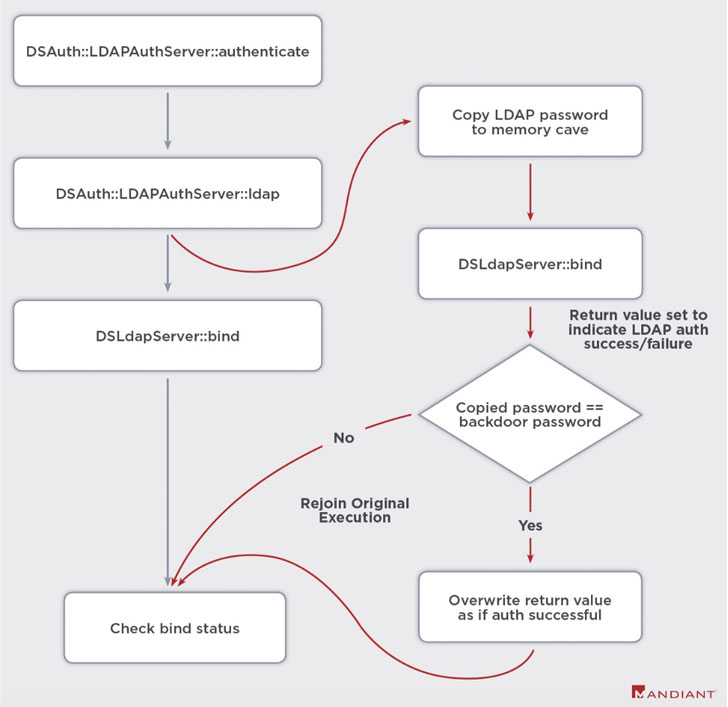
Following an investigation conducted in conjunction with FireEye
Mandiant, Ivanti said the attacks were observed on a “very limited
number” of customer systems. FireEye is tracking the activity under
two separate clusters UNC2630 and UNC2717 citing differences in the
malicious web shells that were dropped on the compromised
devices.
“As sophisticated threat actors continue their attacks on U.S.
businesses and government agencies, we will continue to work with
our customers, the broader security industry, law enforcement and
government agencies to mitigate these threats,” the Utah-based
software firm said[4].
“Companywide we are making significant investments to enhance
our overall cybersecurity posture, including a more broad
implementation of secure application development standards.”
Pulse Secure customers are advised to move quickly to apply the
update to ensure they are protected. The company has also released
a Pulse Connect Secure Integrity
Tool[5] to check for signs of
compromise and identify malicious activity on their systems.
References
- ^
CVE-2021-22893
(kb.pulsesecure.net) - ^
disclosed
(thehackernews.com) - ^
Emergency Directive
(www.cisa.gov) - ^
said
(blog.pulsesecure.net) - ^
Pulse
Connect Secure Integrity Tool
(kb.pulsesecure.net)