An ongoing malvertising campaign tracked as “Tag Barnakle” has
been behind the breach of more than 120 ad servers over the past
year to sneakily inject code in an attempt to serve malicious
advertisements that redirect users to rogue websites, thus exposing
victims to scamware or malware.
Unlike other operators who set about their task by infiltrating
the ad-tech ecosystem using “convincing personas” to buy space on
legitimate websites for running the malicious ads, Tag Barnakle is
“able to bypass this initial hurdle completely by going straight
for the jugular — mass compromise of ad serving infrastructure,”
said[1]
Confiant security researcher Eliya Stein in a Monday write-up.
The development follows a year after the Tag Barnakle actor was
found to have compromised nearly 60 ad servers[2] in April 2020, with the
infections primarily targeting an open-source advertising server
called Revive.
The latest slew of attacks is no different, although the
adversaries appear to have upgraded their tools to target mobile
devices as well. “Tag Barnakle is now pushing mobile targeted
campaigns, whereas last year they were happy to take on desktop
traffic,” Stein said.
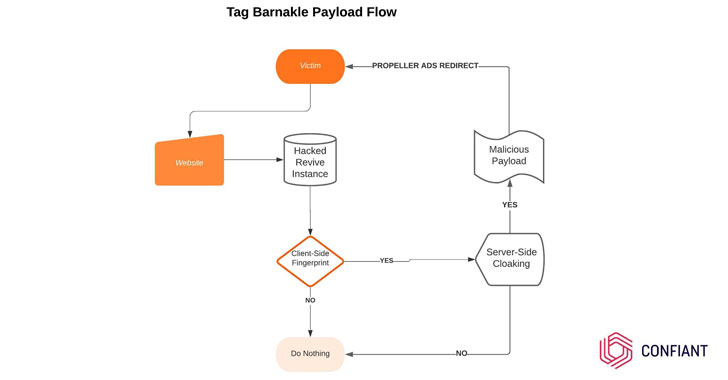
Specifically, the websites that receive an ad through a hacked
server carries out client-side fingerprinting to deliver a
second-stage JavaScript payload — click tracker ads — when certain
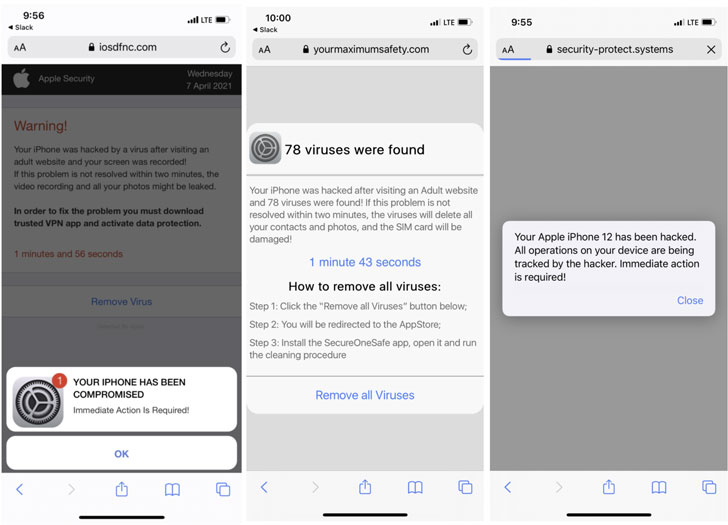
checks are satisfied, that then redirect users to malicious
websites, aiming to lure the visitors to an app store listing for
fake security, safety, or VPN apps, which come with hidden
subscription costs or hijack the traffic for other nefarious
purposes.
Given that Revive is used by a good number of ad platforms and
media companies, Confiant pegs the reach of Tag Barnakle in the
range of “tens if not hundreds of millions of devices.”
“This is a conservative estimate that takes into consideration
the fact that they cookie their victims in order to reveal the
payload with low frequency, likely to slow down detection of their
presence,” Stein said.
References
- ^
said
(blog.confiant.com) - ^
compromised nearly 60 ad servers
(blog.confiant.com)
Read more http://feedproxy.google.com/~r/TheHackersNews/~3/hOzKgHpYjXk/120-compromised-ad-servers-target.html