Apple’s upcoming iOS 14.5 update will come with a new feature
that will redirect all fraudulent website checks through its own
proxy servers as a workaround to preserve user privacy and prevent
leaking IP addresses to Google.
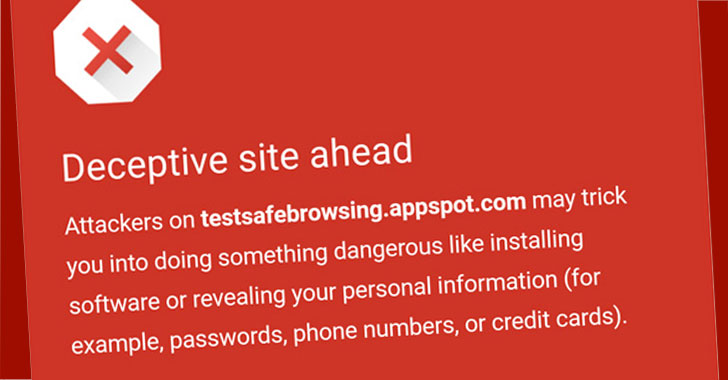
A built-in security-focused feature in the Safari browser,
“Fraudulent Website Warning[1],” alerts users about
dangerous websites that have been reported as deceptive, malicious,
or harmful.
To achieve this, Apple relies on Google Safe
Browsing[2] — or Tencent Safe
Browsing for users in Mainland China — a blocklist service that
provides a list of URLs for web resources that contain malware or
phishing content, to compare a hash prefix calculated from the
website address and check if the website is fraudulent.
Any match against the database will prompt Safari to request
Google or Tencent for the full list of URLs that match the hashed
prefix and subsequently block the user’s access to the site with a
warning.
While the approach ensures that the actual URL of a website a
user is attempting to visit is never shared with a safe browsing
provider, it does leak the IP address of the device from which the
check was made.
With iOS 14.5, all these verifications are expected to be
re-routed through an Apple-owned proxy server, thereby making all
requests appear as originating from the same IP address.
“In the new iOS beta, Safari does indeed proxy the service via
Apple servers to limit the risk of information leak,” said[3]
Maciej Stachowiak, head of WebKit engineering at Apple, last week
in a tweet.
The new change in iOS and iPadOS is part of a number of
privacy-oriented measures that Apple has been rolling out lately,
including mandating app developers to disclose their data
collection practices in App Store listings using “privacy nutrition labels[4].”
In addition, iOS 14.5 will also require apps to ask for users’
permission before tracking them across other apps and websites
using the device’s advertising identifier as part of a new
framework dubbed App Tracking Transparency[5].
iOS 14.5 is currently in beta and is slated to be released later
this spring.
References
- ^
Fraudulent Website Warning
(support.apple.com) - ^
Google Safe Browsing
(safebrowsing.google.com) - ^
said
(twitter.com) - ^
privacy
nutrition labels (developer.apple.com) - ^
App
Tracking Transparency (developer.apple.com)