
Two new Android surveillanceware families have been found to
target military, nuclear, and election entities in Pakistan and
Kashmir as part of a pro-India, state-sponsored hacking
campaign.
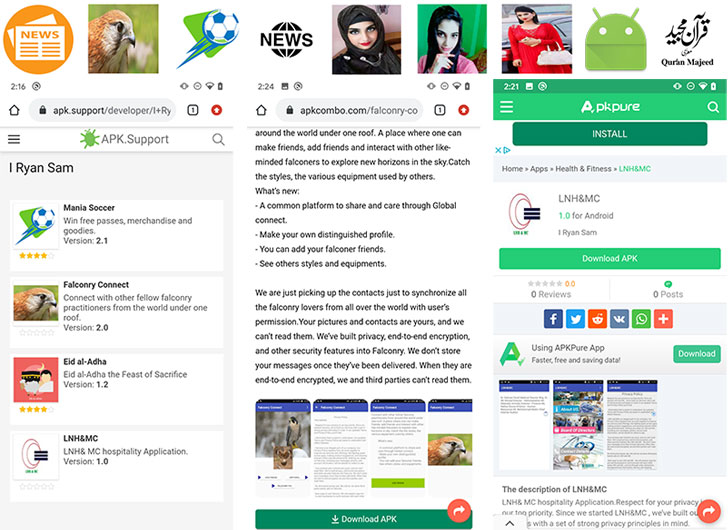
Dubbed Hornbill and Sunbird, the malware impersonates legitimate
or seemingly innocuous services to cover its tracks, only to
stealthily collect SMS, encrypted messaging app content, and
geolocation, among other types of sensitive information.
The findings published by Lookout is the result of an analysis
of 18GB of exfiltrated data that was publicly exposed from at least
six insecurely configured command-and-control (C2) servers located
in India.
“Some notable targets included an individual who applied for a
position at the Pakistan Atomic Energy Commission, individuals with
numerous contacts in the Pakistan Air Force (PAF), as well as
officers responsible for electoral rolls (Booth Level Officers)
located in the Pulwama district of Kashmir,” the researchers
said[1]
in a Wednesday analysis.
In all, the attacks targeted 156 victims with phone numbers from
India, Pakistan, and Kazakhstan over the last several years.
Lookout attributed the two tools to an advanced persistent
threat (APT) tracked as Confucius, a group known for its attacks[2]
on South Asian countries at least since 2013. The cybersecurity
firm called Hornbill a “passive reconnaissance tool.”
While Hornbill appears to be derived from the same code base as
a previously active commercial surveillance product known as
MobileSpy, SunBird has been traced to a group of Indian developers
behind another mobile tracking software called BuzzOut[3]. Clues uncovered by the
Lookout also point to the fact the operators of Hornbill worked
together at various Android and iOS app development companies
registered and operating in or near the Indian city of
Chandigarh.
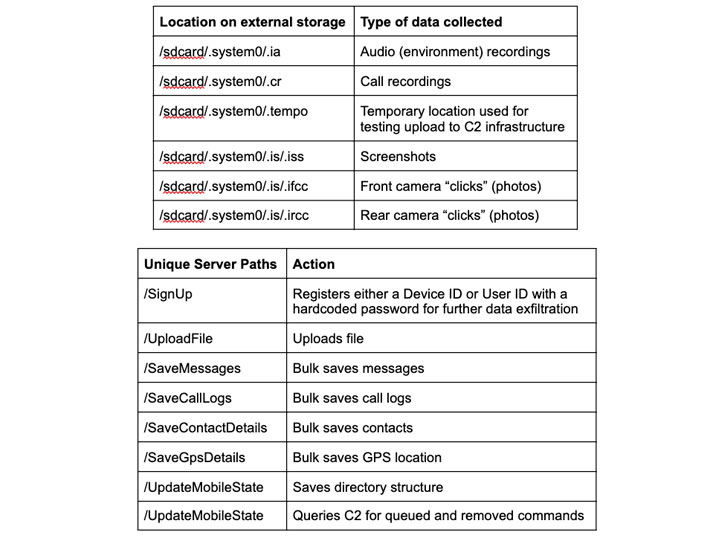
Both the pieces of spyware are equipped to amass a wide range of
data, such as call logs, contacts, system information, location,
photos stored on external drives, record audio and video, capture
screenshots, with a particular focus on plundering WhatsApp
messages and voice notes by abusing Android’s accessibility
APIs.
SunBird also differs from Hornbill in that the former features
remote access Trojan (RAT) functionality, allowing the attackers to
execute arbitrary commands on the target device. In addition, it’s
capable of exfiltrating browser histories, calendar information,
and even siphoning content from BlackBerry Messenger and IMO
instant messaging apps.
“Samples of SunBird have been found hosted on third-party app
stores, indicating one possible distribution mechanism,” the
researchers detailed. “Considering many of these malware samples
are trojanized – as in they contain complete user functionality —
social engineering may also play a part in convincing targets to
install the malware.”
Lookout identified Hornbill samples as recently as December
2020, indicating an active use of the malware since their discovery
in 2018. On the other hand, Sunbird seems to have been actively
deployed in 2018 and 2019, before the threat actor shifted to
another Android-based spyware product called ChatSpy[4]
last year.
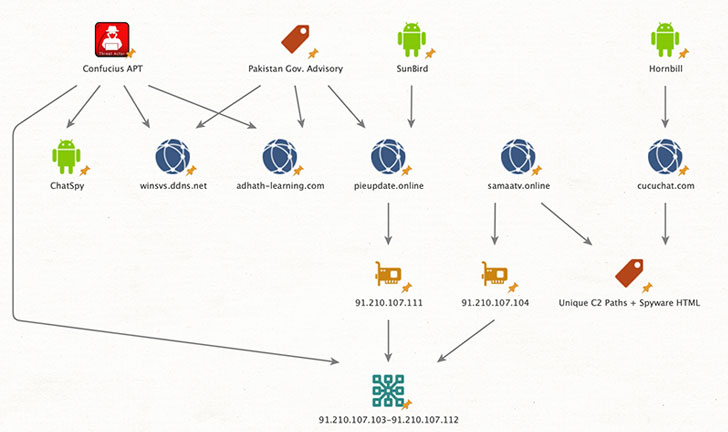
Interestingly, the C2 infrastructure shared by Hornbill and
SunBird reveals further connections with other stalkerware
operations conducted by the Confucius group — including a
publicly-accessible 2018 Pakistani government advisory warning of a
desktop malware campaign targeting officers and government
personnel — implying that the two tools are used by the same actor
for different surveillance purposes.
Although India has been a relatively new entrant in the spyware
and surveillance sector, Citizen Lab researchers last June outed[5]
a mercenary hack-for-hire group based in Delhi called BellTroX
InfoTech that aimed to steal credentials from journalists, advocacy
groups, investment firms, and an array of other high-profile
targets.
References
Read more http://feedproxy.google.com/~r/TheHackersNews/~3/yndzor9jawU/researchers-uncover-android-spying.html