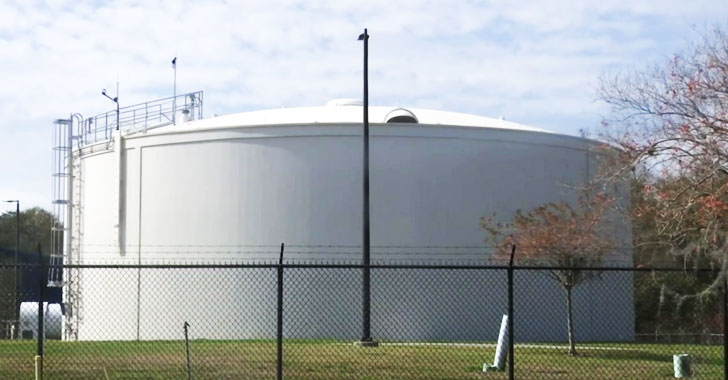
Hackers successfully infiltrated the computer system controlling
a water treatment facility in the U.S. state of Florida and
remotely changed a setting that drastically altered the levels of
sodium hydroxide (NaOH) in the water.
During a press conference held yesterday, Pinellas County
Sheriff Bob Gualtieri said an operator managed to catch the
manipulation in real-time and restored the concentration levels to
undo the damage.
“At no time was there a significant effect on the water being
treated, and more importantly the public was never in danger,”
Sheriff Gualtieri said[1]
in a statement.
The water treatment facility, which is located in the city of
Oldsmar and serves about 15,000 residents, is said to have been
breached for approximately 3 to 5 minutes by unknown suspects on
February 5, with the remote access occurring twice at 8:00 a.m. and
1:30 p.m.
The attacker briefly increased the amount of sodium hydroxide
from 100 parts-per-million to 11,100 parts-per-million using a
system that allows for remote access via TeamViewer, a tool that
lets users monitor and troubleshoot any system problems from other
locations.
“At 1:30 p.m., a plant operator witnessed a second remote access
user opening various functions in the system that control the
amount of sodium hydroxide in the water,” the officials said.

Sodium hydroxide, also known as lye, is a corrosive compound
used in small amounts to control the acidity of water. In high and
undiluted concentrations, it can be toxic and can cause irritation
to the skin and eyes.
It is not immediately known if the hack was done from within the
U.S. or outside the country. Detectives with the Digital Forensics
Unit said an investigation into the incident is ongoing.
Although an early intervention averted more serious
consequences, the sabotage attempt highlights the exposure of
critical infrastructure facilities and industrial control systems
to cyberattacks.
The fact that the attacker leveraged TeamViewer to take over the
system underscores the need for securing access with multi-factor
authentication and preventing such systems from being externally
accessible.
“Manually identify software installed on hosts, particularly
those critical to the industrial environment such as operator
workstations — such as TeamViewer or VNC,” said[2]
Dragos researcher Ben Miller. “Accessing this on a host-by-host
basis may not be practical but it is comprehensive.”
“Remote access requirements should be determined, including what
IP addresses, what communication types, and what processes can be
monitored. All others should be disabled by default. Remote access
including process control should be limited as much as
possible.”