proven to be a blessing in disguise for threat actors, who’ve taken
advantage of the opportunity to target victims with scams or
malware campaigns.
Now, according to a new report published by Check Point Research
today and shared with The Hacker News, hackers are exploiting the
COVID-19 outbreak to spread their own infections, including
registering malicious Coronavirus-related domains and selling
discounted off-the-shelf malware in the dark web.
“Special offers by different hackers promoting their ‘goods’ —
usually malicious malware or exploit tools — are being sold over
the darknet under special offers with ‘COVID19’ or ‘coronavirus’ as
discount codes, targeting wannabe cyber-attackers,” the
cybersecurity firm said.
COVID-19 Discounts: Exploit Tools for Sale
The report comes following an uptick in the number of malicious
coronavirus-related domains[2]
that have been registered since the start of January.
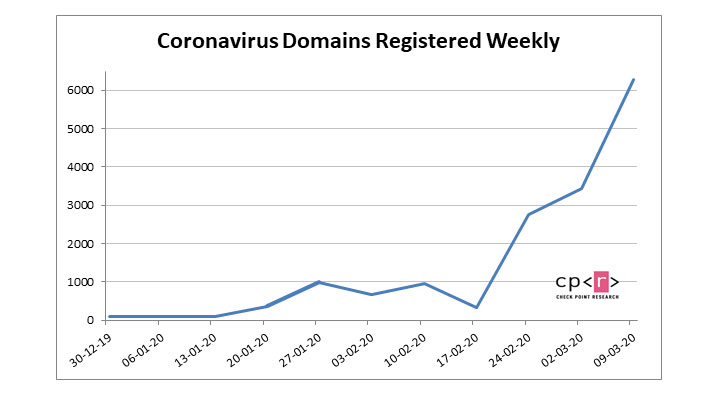
have noticed a huge increase in the number of domains registered —
the average number of new domains is almost 10 times more than the
average number found in previous weeks,” the researchers said. “0.8
percent of these domains were found to be malicious (93 websites),
and another 19 percent were found to be suspicious (more than 2,200
websites).”
Some of the tools available for purchase at a discounted price
include “WinDefender bypass” and “Build to bypass email and chrome
security.”

offering the service of hacking into Facebook account for a 15
percent discount with “COVID-19” promo code.
What’s more, a seller that goes by the name of “True Mac” is
selling a 2019 MacBook Air model for a mere $390 as a “corona
special offer.” It goes without saying the offer is a scam.
A Long List of Coronavirus-Themed Attacks
The latest development adds to a long list of cyberattacks against
hospitals[3]
and testing
centers[4], distribute malware such
as AZORuIt[5], Emotet[6], Nanocore
RAT[7] and TrickBot[8] via phishing campaigns
using malicious
links[9] and attachments, and
execute malware and ransomware
attacks[10] that aim to profit off
the global health concern.
- APT36, a Pakistani state-sponsored threat actor that targets
the defense, embassies, and the government of India, was found
running a spear-phishing campaign using Coronavirus-themed document
baits that masqueraded as health advisories to deploy the Crimson Remote
Administration Tool[11] (RAT) onto target
systems. - Researchers from security firm IssueMakersLab[12] uncovered a malware
campaign launched by North Korean hackers that used boobytrapped
documents detailing South Korea’s response to the COVID-19 epidemic
as a lure to drop BabyShark malware. Recorded
Future[13] observed, “at least
three cases where reference to COVID-19 has been leveraged by
possible nation-state actors.” - A COVID-19-themed malspam
campaign[14] targeting the
manufacturing, industrial, finance, transportation, pharmaceutical,
and cosmetic industries via Microsoft Word documents that exploits
a two-and-a-half-year-old Microsoft Office bug in Equation Editor
to install AZORult malware. The AZORult info stealer has also been
distributed using a fraudulent version of the Johns Hopkins
Coronavirus Map[15] in the form of a
malicious executable. - A fake real-time coronavirus tracking Android app, called
“COVID19
Tracker[16],” was found to abuse
user permissions to change the phone’s lock screen password and
install CovidLock
ransomware[17] in return for a $100
bitcoin ransom. - Another phishing attack, uncovered by Abnormal
Security[18], targeted students and
university staff with bogus emails in a bid to steal their Office
365 credentials by redirecting unsuspecting victims to a fake
Office 365 login page. - Comment spamming
attacks[19] on websites that
contained links to a seemingly innocuous coronavirus information
website but redirected users to dubious drug-selling
businesses. - Aside from malware-laden spam emails, F-Secure
researchers[20] have observed a new
spam campaign that aims to capitalize on the widespread mask
shortage to trick recipients into paying for masks, only to send
them nothing.
Staying Secure in the Time of COVID-19
It’s amply that these attacks exploit coronavirus fears and
people’s hunger for information about the outbreak. Given the
impact on the security of businesses and individuals alike, it’s
essential to avoid falling victim to online scams and practice good
digital hygiene:
- Businesses should ensure that secure remote
access technologies[21] are in place and
configured correctly, including the use of multi-factor
authentication, so that employees can conduct business just as
securely from home. - Individuals should keep away from using unauthorized personal
devices for work, and ensure “personal devices
will need to have the same level of security[22] as a company-owned
device, and you will also need to consider the privacy implications
of employee-owned devices connecting to a business network.” - Watch out for emails and files
received from unknown senders[23]. Most importantly,
check a sender’s email address for authenticity, don’t open unknown
attachments or click on suspicious links, and avoid emails that ask
them to share sensitive data such as account passwords or bank
information. - Use trusted sources, such as legitimate
government websites[24] — for up-to-date,
fact-based information about COVID-19.
References
- ^
coronavirus pandemic
(www.bing.com) - ^
malicious coronavirus-related
domains (blog.checkpoint.com) - ^
hospitals
(www.reuters.com) - ^
testing centers
(www.novinky.cz) - ^
AZORuIt
(www.proofpoint.com) - ^
Emotet
(blog.checkpoint.com) - ^
Nanocore RAT
(blog.talosintelligence.com) - ^
TrickBot
(nakedsecurity.sophos.com) - ^
malicious links
(www.trustwave.com) - ^
ransomware attacks
(www.riskiq.com) - ^
Crimson Remote Administration Tool
(blog.malwarebytes.com) - ^
IssueMakersLab
(twitter.com) - ^
Recorded Future
(www.recordedfuture.com) - ^
malspam campaign
(www.proofpoint.com) - ^
Johns Hopkins Coronavirus Map
(thehackernews.com) - ^
COVID19 Tracker
(www.domaintools.com) - ^
CovidLock ransomware
(www.zscaler.com) - ^
Abnormal Security
(abnormalsecurity.com) - ^
Comment spamming attacks
(www.imperva.com) - ^
F-Secure researchers
(blog.f-secure.com) - ^
secure remote access technologies
(www.pandasecurity.com) - ^
personal devices will need to have the
same level of security
(www.crowdstrike.com) - ^
emails and files received from unknown
senders (www.consumer.ftc.gov) - ^
legitimate government websites
(www.who.int)