
definition of the problem, the planning of the solution for the
problem, coding of the program, testing, and documentation.
It’s a meticulous process that cannot be completed without going
through all the essential points. In all of these, security must be
taken into account. As you come up with a solution to the problem
and write the code for it, you need to make sure security is kept
intact.
Cyber attacks are becoming more and more prevalent, and the
trend is unlikely to change in the foreseeable future. As
individuals, businesses, organizations, and governments become more
reliant on technology, cybercrime is expected to only grow.
Most of what people do in contemporary society involves the
internet, computers, and apps/software. It’s only logical for
programmers to be mindful of the security aspect of making
applications or software.
It’s not enough for programmers to produce something that works.
After all, they are competing for users to choose their software.
Many consumers are already becoming aware of the need for security
in the applications they are using.
Cyber-attacks have devastating consequences, from identity theft
to the hundreds of thousands worth of digital assets or lost
opportunities for businesses. Moreover, even when businesses don’t
suffer an actual attack, they can still be slapped with grueling
penalties like the 183 million GBP
fine[1] earlier this year to
British Airways because of compliance failures.
It greatly helps when programmers think like hackers, but
unfortunately, developers don’t receive much security training when
doing a computer science university degree or learning through
online training courses.
Companies are also aware of the importance of having an
effective security policy and well-trained staff, but they still
spend most of their time and money on adding separate layers of
cybersecurity defenses or recovering from cyber attacks.
To solve this problem at its core, the best strategy for the
companies is to train their development teams using platforms like
Adversary.io[2], where they can learn
best secure coding practices by understanding how hackers exploit
vulnerabilities.
This benefits not only the final output of the programming
process but also the enthusiasm and efficiency of software
developers.
Ponder on the following reasons why programmers should adopt the
mindset of hackers.
1. Incomparable Tenacity
Hackers are mostly self-taught experts in defeating security
systems. They are people who have the patience to attempt as many
times as possible to break a barrier that prevents them from doing
or getting something.
They don’t always rely on formal education when it comes to most
of the techniques they use, let alone the persistent determination
to break into networks or user accounts.
Hackers are simply tenacious. Generally, they learn everything
on their own. They don’t rely on others to spoonfeed new knowledge
to them, preferring to figure things out DIY style. If there’s
something they don’t know or understand, they go out of their way
to learn the ropes.
Hackers may not be necessarily fond of going through the hard
ways, but somehow they are compelled to take the more difficult
road since most of the things they do are not taught in the
classroom. The things they may want to try or do could also be
illegal and frowned upon by the conventions-abiding community of
programmers.
2. Doing Instead of Reading and Traditional Learning
It’s important for hackers to always have the drive to try as many
things in as many ways as possible to achieve their goals. They do
a lot of learning but not through books and lectures. It’s more
about accumulating new knowledge from their experiences.
Doing is given more priority over reading or attending lectures.
As Edgar Dale’s cone of
experience[3] puts it, people tend to
retain 5% of the knowledge they obtain from lectures, around 10%
from reading, and approximately 75% from trying out or doing the
things they seek to learn.
3. Anticipating Potential Security Breaches
The stereotype that hackers always think of breaking cyberattack
defenses is not entirely false. Yes, they have many other things in
mind, but they have a natural tendency to break the rules, take
advantage of weak security, and destroy established protective
systems.
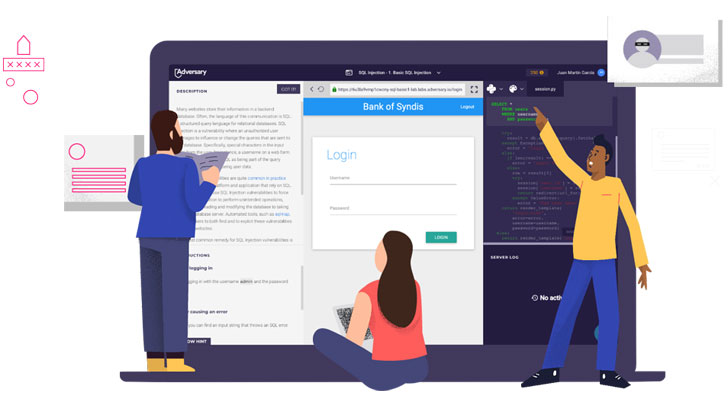
security weaknesses they might unwittingly create in the process of
programming.
Programmers who think like hackers[4] automatically think of
how they might get around a security protocol or exploit an
overlooked bug in an application.
They anticipate problems as they already carry in their minds
the intention to destroy the things they build. Their understanding
of offenses makes them more prepared in creating defenses.
4. Creative Thinking and Willingness to Break Out of the
Mold
Hackers are absolutely creative and resourceful. They may appear
averse to conventions, but they mostly remain organized in
innovative and atypical ways. They ceaselessly develop new ways to
achieve their goals. They don’t let stumbling blocks discourage
them. When they fail, the inherent tenacity gets them going.
The phrase “to break out of the mold” here does not imply that
programmers are free to consider breaking laws or adopting black
hat methods. The point is that programmers can do more when they
don’t let conventions or currently prevalent wisdom to dominate
their programming. They can solve problems faster when they are not
tied to the knowledge they have learned from school or traditional
books.
Who says hackers always try to do things illegally? Whenever
there’s an opportunity for them to do something legal but easier
and faster, you can bet that they would. Hackers are always on the
lookout for new vulnerabilities they can exploit.
This “exploitation” may not always be illegal. They may have
newly discovered a security defect or weakness that is not yet
outlawed or considered as a cybercrime. That’s why they never stop
learning and exploring to find ways that won’t entangle them with
the law before they resort to felonious options.
5. Having Fun
Programming is not an easy task when you think of it as a job. When
all you have in mind is the completion of the program according to
the milestones or deadlines, you will most likely suffer from the
pressure. You will not enjoy doing the things you do.
With hacking, there’s usually a sense of enthusiasm and
excitement. Hackers don’t attempt cracking into someone’s accounts
with a deadline in mind. They do it to achieve something, sometimes
randomly or different from the original goal. They always see
opportunities or positive things in whatever they do.
In Conclusion
Hackers (the black hat or criminal ones) are not role models. This
post does not seek to glorify them.
However, if programmers learn to think the way they do, they can
develop more secure applications. They can be more capable of
preventing security breaches.
If you’re thinking to get started immediately, you should check
out Adversary[5], an effective training platform
for programmers[6]
that offers hands-on learning through continuously growing labs and
a wide range of interactive content.
Moreover, programmers who have the mentality of a hacker are
unlikely to get tired of working with codes and are generally more
creative and persistent.
References
- ^
183 million GBP fine
(thehackernews.com) - ^
Adversary.io
(www.adversary.io) - ^
Edgar Dale’s cone of experience
(en.wikipedia.org) - ^
Programmers who think like hackers
(www.adversary.io) - ^
Adversary
(www.adversary.io) - ^
training platform for programmers
(www.adversary.io)
Read more http://feedproxy.google.com/~r/TheHackersNews/~3/Jsys2j9kQjM/cybersecurity-for-programmers.html