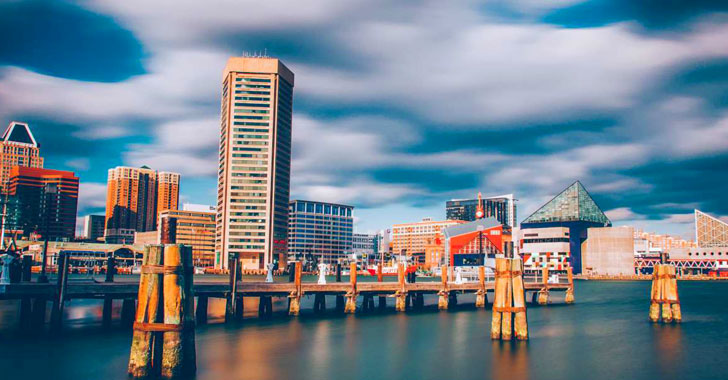
has been hit by a ransomware attack, affecting its computer network
and forcing officials to shut down a majority of its computer
servers as a precaution.
Ransomware works by encryption files and locking them up so
users can’t access them. The attackers then demand a ransom amount,
typically in Bitcoin digital currency, in exchange for the
decryption keys use to unlock the files.
The ransomware attack on the Baltimore City Hall took place on
Tuesday morning and infected the city’s technology systems with an
unknown ransomware virus, which according to government officials,
is apparently spreading throughout their network.
According to new Baltimore Mayor Bernard C. Jack Young, Baltimore
City’s critical public safety systems, such as 911, 311, emergency
medical services and the fire department, are operational and not
affected by the ransomware attack.
Young also says the city technology officials are working
diligently to determine the origin and extent of the cyber attack
that left large swaths of Baltimore City government paralyzed.
“At this time, we have seen no evidence that any personal data has
left the system,” Young tweeted[1]. “Out of an abundance of
precaution, the city has shut down the majority of its servers. We
will provide updates as information becomes available.”
disconnect their computers from the internet to prevent the
ransomware infection, and some departments even dismissed their
employees early.
Due to the network outages, the city’s Director of Public Works
told customers that their officials are unable to “take calls to
discuss water billing issues” for now, while the city’s Finance
Department employees said they could no longer accept cash
payments.
“The email outage has also taken down phone lines to Customer
Support and Services, so for now we’re unable to take calls to
discuss water billing issues. Sorry for the inconvenience,”
Baltimore’s Department of Public Works tweeted[2].
two impound lots at “Pulaski Facility (Main) and Fallsway Facility”
and the Right of Way Services Division were impacted “due to
Network/email outage.”
Though at this time it’s unclear how the ransomware got into the
Baltimore City’s computing systems or how much amount the attackers
have demanded as a ransom, Democratic Mayoral spokesperson Lester
Davis told the Baltimore Brew
that the city would not pay any ransom.
A similar ransomware attack hit the Baltimore City’s phone
system in March last year, shutting down automated dispatches for
911 and 311 calls for more than 15 hours.
Baltimore is not the first major U.S. city to be hit with a
ransomware attack. Last year, Atlanta was attacked by the SamSam
ransomware[5], eventually disrupting
the government operations.
The Department of Justice late last year indicted two
Iranian nationals[6]
for their role in creating and deploying the SamSam ransomware
against more than 200 victims, including Atlanta city government,
the Colorado Department of Transportation, several
hospitals[7] and educational
institutions.
References
- ^
tweeted
(twitter.com) - ^
tweeted
(twitter.com) - ^
tweeted
(twitter.com) - ^
Baltimore Brew
(www.baltimorebrew.com) - ^
SamSam ransomware
(thehackernews.com) - ^
indicted two Iranian nationals
(thehackernews.com) - ^
several hospitals
(thehackernews.com)
Read more http://feedproxy.google.com/~r/TheHackersNews/~3/hm6BHGn7ukI/baltimore-ransomware-cyberattack.html