- Discretionary access control (DAC)
- Mandatory access control (MAC)
- Role-based access control (RBAC)
- Rule-based access control (RuBAC)
Access Control Models Explained in Detail: PAM, MAC, DAC & RBAC
Access controls are responsible for determining who can access certain resources in an organization. Failure to restrict access can have great repercussions.
Table of Contents
Access Control Models
Access controls are responsible for determining who can access certain resources in an organization. Failure to restrict access can have great repercussions. In fact, 99% of all misconfigurations in the public cloud go unreported.
We’ll take a closer look at four of the most common access control models; PAM, MAC, DAC, and RBAC. We will also list the advantages and disadvantages of each access control model in the current evolving hybrid workplace.
Looking to secure your remote workforce?
What is Privileged Access Management (PAM)?
Privileged Access Management (PAM) is a set of security solutions that manages user privileges by allowing or denying access to resources based on the level of privilege assigned to each user.
74% of data breaches begin with privileged credential abuse. PAM ensures that credentials remain securely stored in a password vault and away from potential threat actors.
It is important to note that PAM is not a single product but rather a framework of modules that can be used to provide different levels of access control.
Advantages of PAM
Disadvantages of PAM
What is Role-Based Access Control (RBAC)?
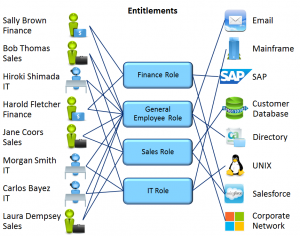
Role-based access control (RBAC) is a security approach that restricts access to users based on roles within the organization. RBAC is perhaps the precursor to the Zero Trust security model, which assigns role-based permissions and limits employee access to corporate resources in order to prevent data breaches.
It’s also important to point out that the cost of a breach without a Zero Trust approach in 2021 was $5.04 million but dropped down to $3.28 million when Zero Trust was implemented. Role-based access control is essential when securing remote access and preventing external attacks that can lead to major breaches.
Advantages of RBAC
Disadvantages of RBAC
What is Mandatory Access Control (MAC)?
MAC is a system-controlled access to objects based on the level of clearance assigned to each user. MAC differs from other access control models in that it does not rely on user permissions but rather on security labels assigned to each resource and is controlled by a delegated administrator.
Under MAC system controls, users cannot accidentally override a security policy as a system administrator sets all permissions. MAC systems are typically found in governments due to the high-level of security.
Advantages of MAC
Disadvantages of MAC
What is Discretionary Access Control (DAC)?
Discretionary access control is a security system that allows users to access resources based on their permissions. DAC is among the most common types of access control and relies on a hierarchical structure in which administrators are granted greater privileges than regular users.
Originally defined by the Trusted Computer System Evaluation Criteria (TCSEC) “as a means of restricting access to objects based on the identity of subjects and/or groups to which they belong.” DAC is based on access control lists (ACLs) to specific company resources. Discretionary access control is often discussed and paired with mandatory access control as both focus on securing the system from a higher level.
Advantages of DAC
Disadvantages of DAC
DAC vs MAC vs RBAC – And The Winner Is…
So, which access control model is the best? The answer is it depends on your organization’s needs. If you are looking for a reliable and secure option, RBAC is a good choice. If you are looking for a system that is easy to configure and manage, DAC is a good option. If you are looking for a system that is extremely secure, then MAC is ideal.
Discretionary access control (DAC) offers the most flexibility as it allows anyone to assign controls and permissions to users without the approval of the IT department. Security policies should be enforced before granting any type of authorization to anyone. Make sure everyone is up to date on policies.
How to Choose the Right Access Control to Implement in Your Organization
Every business is different. An enterprise will require much more extensive and complex access controls to secure thousands of employees, entire departments, and third-parties from sophisticated cyber attacks.
On the flip side, smaller businesses will have a lot more to worry about as they are far less equipped to handle a major breach. According to a recent study by Accenture, over 43% of SMEs are the target of a cyber attack. If the appropriate defensive measures aren’t set in place, they could very well be out of business. Another problem SMEs face is that many do not have dedicated IT staff and must outsource their security plan.
So, how does an organization choose a particular access control model? Let’s flash forward to the present, where Zero Trust has eclipsed traditional controls as it goes beyond the restrictions of a physical VPN and offers a more granular level of security that can benefit any business, regardless of size or industry sector. Let’s take a closer look at how Zero Trust has redefined modern day security.
Going Beyond Traditional Access Controls with Perimeter 81’s Zero Trust Approach
Zero trust security is a new approach to access control that goes beyond the traditional models of DAC, MAC, and RBAC. Zero trust security is based on the principle that users should not be granted access to resources until they have been authenticated and verified. This means that there is no trust hierarchy and all users are treated as equal. Perimeter 81’s award-winning ZTNA solution redefines network security and traditional access controls in today’s hybrid working landscape. Find out why organizations are leaving their legacy VPNs far behind. Learn how to radically simplify your cloud and network security with ZTNA post-pandemic and beyond. Evolve your network security today.
Access Control Models FAQ
[pdf-embedder url=”https://cybsec.ng/wp-content/uploads/2023/04/Access_Control_WP.pdf”]