
security updates for the Windows operating system and other
Microsoft products.
This month Windows users and system administrators need to
immediately take care of a total of 63 security vulnerabilities, of
which 12 are rated critical, 49 important and one moderate and one
low in severity.
Two of the vulnerabilities patched by the tech giant this month are
listed as publicly known at the time of release, and one flaw is
reported as being actively exploited in the wild by multiple
cybercriminal groups.
Zero-Day Vulnerability Being Exploited by Cyber Criminals
The zero-day vulnerability, tracked as CVE-2018-8589,
which is being exploited in the wild by multiple advanced
persistent threat groups was first spotted and reported by security
researchers from Kaspersky Labs.
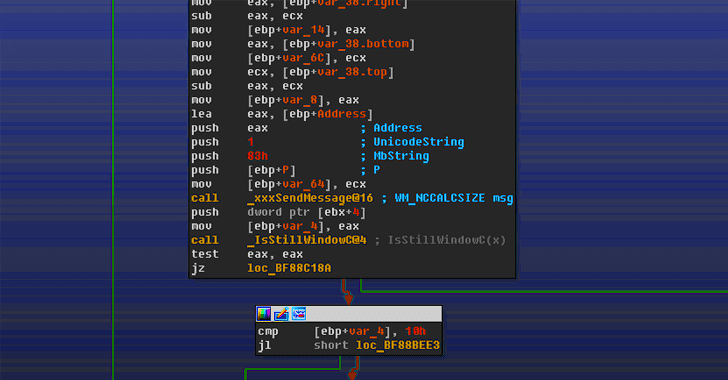
exploited successfully, could allow a malicious program to execute
arbitrary code in kernel mode and elevate its privileges on an
affected Windows 7, Server 2008 or Server 2008 R2 to take control
of it.
“The exploit was executed by the first stage of a malware installer
in order to gain the necessary privileges for persistence on the
victim’s system. So far, we have detected a very limited number of
attacks using this vulnerability,” Kaspersky said[2].
Two Publicly Disclosed Zero-Day Vulnerabilities
The other two publicly known zero-day vulnerabilities which were
not listed as under active attack reside in Windows Advanced Local
Procedure Call (ALPC) service and Microsoft’s BitLocker Security
Feature.
The flaw related to
ALPC[3], tracked as CVE-2018-8584[4], is a privilege
escalation vulnerability that could be exploited by running a
specially crafted application to execute arbitrary code in the
security context of the local system and take control over an
affected system.
Advanced local procedure call (ALPC) facilitates high-speed and
secure data transfer between one or more processes in the user
mode.
The second publicly disclosed vulnerability, tracked as CVE-2018-8566,
exists when Windows improperly suspends BitLocker Device
Encryption, which could allow an attacker with physical access to a
powered-off system to bypass security and gain access to encrypted
data.
BitLocker was in headlines earlier this month for a separate
issue that could expose Windows
users encrypted data[6]
due to its default encryption preference and bad encryption on
self-encrypting SSDs.
Microsoft did not fully address this issue; instead, the company
simply provided a guide on how to manually change BitLocker default
encryption choice.
November 2018 Patch Tuesday: Critical and Important Flaws
Out of 12 critical, eight are memory corruption vulnerabilities in
the Chakra scripting engine that resides due to the way the
scripting engine handles objects in memory in the Microsoft Edge
internet browser.
All the 8 vulnerabilities could be exploited to corrupt memory,
allowing an attacker to execute code in the context of the current
user. To exploit these bugs, all an attacker needs to do is
tricking victims into opening a specially crafted website on
Microsoft Edge.
Rest three vulnerabilities are remote code execution bugs in the
Windows Deployment Services TFTP server, Microsoft Graphics
Components, and the VBScript engine. All these flaws reside due to
the way the affected software handles objects in memory.
The last critical vulnerability is also a remote code execution
flaw that lies in Microsoft Dynamics 365 (on-premises) version 8.
The flaw exists when the server fails to properly sanitize web
requests to an affected Dynamics server.
If exploited successfully, the vulnerability could allow an
authenticated attacker to run arbitrary code in the context of the
SQL service account by sending a specially crafted request to a
vulnerable Dynamics server.
| Windows Deployment Services TFTP Server Remote Code Execution Vulnerability |
CVE-2018-8476 | Critical |
| Microsoft Graphics Components Remote Code Execution Vulnerability |
CVE-2018-8553 | Critical |
| Chakra Scripting Engine Memory Corruption Vulnerability | CVE-2018-8588 | Critical |
| Chakra Scripting Engine Memory Corruption Vulnerability | CVE-2018-8541 | Critical |
| Chakra Scripting Engine Memory Corruption Vulnerability | CVE-2018-8542 | Critical |
| Chakra Scripting Engine Memory Corruption Vulnerability | CVE-2018-8543 | Critical |
| Windows VBScript Engine Remote Code Execution Vulnerability |
CVE-2018-8544 | Critical |
| Chakra Scripting Engine Memory Corruption Vulnerability | CVE-2018-8555 | Critical |
| Chakra Scripting Engine Memory Corruption Vulnerability | CVE-2018-8556 | Critical |
| Chakra Scripting Engine Memory Corruption Vulnerability | CVE-2018-8557 | Critical |
| Chakra Scripting Engine Memory Corruption Vulnerability | CVE-2018-8551 | Critical |
| Microsoft Dynamics 365 (on-premises) version 8 Remote Code Execution Vulnerability |
CVE-2018-8609 | Critical |
| Azure App Service Cross-site Scripting Vulnerability | CVE-2018-8600 | Important |
| Windows Win32k Elevation of Privilege Vulnerability | CVE-2018-8589 | Important |
| BitLocker Security Feature Bypass Vulnerability | CVE-2018-8566 | Important |
| Windows ALPC Elevation of Privilege Vulnerability | CVE-2018-8584 | Important |
| Team Foundation Server Cross-site Scripting Vulnerability | CVE-2018-8602 | Important |
| Microsoft Dynamics 365 (on-premises) version 8 Cross Site Scripting Vulnerability |
CVE-2018-8605 | Important |
| Microsoft Dynamics 365 (on-premises) version 8 Cross Site Scripting Vulnerability |
CVE-2018-8606 | Important |
| Microsoft Dynamics 365 (on-premises) version 8 Cross Site Scripting Vulnerability |
CVE-2018-8607 | Important |
| Microsoft Dynamics 365 (on-premises) version 8 Cross Site Scripting Vulnerability |
CVE-2018-8608 | Important |
| Microsoft RemoteFX Virtual GPU miniport driver Elevation of Privilege Vulnerability |
CVE-2018-8471 | Important |
| DirectX Elevation of Privilege Vulnerability | CVE-2018-8485 | Important |
| DirectX Elevation of Privilege Vulnerability | CVE-2018-8554 | Important |
| DirectX Elevation of Privilege Vulnerability | CVE-2018-8561 | Important |
| Win32k Elevation of Privilege Vulnerability | CVE-2018-8562 | Important |
| Microsoft SharePoint Elevation of Privilege Vulnerability | CVE-2018-8572 | Important |
| Microsoft Exchange Server Elevation of Privilege Vulnerability |
CVE-2018-8581 | Important |
| Windows COM Elevation of Privilege Vulnerability | CVE-2018-8550 | Important |
| Windows VBScript Engine Remote Code Execution Vulnerability |
CVE-2018-8552 | Important |
| Microsoft SharePoint Elevation of Privilege Vulnerability | CVE-2018-8568 | Important |
| Windows Elevation Of Privilege Vulnerability | CVE-2018-8592 | Important |
| Microsoft Edge Elevation of Privilege Vulnerability | CVE-2018-8567 | Important |
| DirectX Information Disclosure Vulnerability | CVE-2018-8563 | Important |
| MSRPC Information Disclosure Vulnerability | CVE-2018-8407 | Important |
| Windows Audio Service Information Disclosure Vulnerability | CVE-2018-8454 | Important |
| Win32k Information Disclosure Vulnerability | CVE-2018-8565 | Important |
| Microsoft Outlook Information Disclosure Vulnerability | CVE-2018-8558 | Important |
| Windows Kernel Information Disclosure Vulnerability | CVE-2018-8408 | Important |
| Microsoft Edge Information Disclosure Vulnerability | CVE-2018-8545 | Important |
| Microsoft SharePoint Information Disclosure Vulnerability | CVE-2018-8578 | Important |
| Microsoft Outlook Information Disclosure Vulnerability | CVE-2018-8579 | Important |
| PowerShell Remote Code Execution Vulnerability | CVE-2018-8256 | Important |
| Microsoft Outlook Remote Code Execution Vulnerability | CVE-2018-8522 | Important |
| Microsoft Outlook Remote Code Execution Vulnerability | CVE-2018-8576 | Important |
| Microsoft Outlook Remote Code Execution Vulnerability | CVE-2018-8524 | Important |
| Microsoft Word Remote Code Execution Vulnerability | CVE-2018-8539 | Important |
| Microsoft Word Remote Code Execution Vulnerability | CVE-2018-8573 | Important |
| Microsoft Excel Remote Code Execution Vulnerability | CVE-2018-8574 | Important |
| Microsoft Project Remote Code Execution Vulnerability | CVE-2018-8575 | Important |
| Microsoft Outlook Remote Code Execution Vulnerability | CVE-2018-8582 | Important |
| Windows Search Remote Code Execution Vulnerability | CVE-2018-8450 | Important |
| Microsoft Excel Remote Code Execution Vulnerability | CVE-2018-8577 | Important |
| Internet Explorer Memory Corruption Vulnerability | CVE-2018-8570 | Important |
| Microsoft JScript Security Feature Bypass Vulnerability | CVE-2018-8417 | Important |
| Windows Security Feature Bypass Vulnerability | CVE-2018-8549 | Important |
| Microsoft Edge Spoofing Vulnerability | CVE-2018-8564 | Important |
| Active Directory Federation Services XSS Vulnerability | CVE-2018-8547 | Important |
| Team Foundation Server Remote Code Execution Vulnerability | CVE-2018-8529 | Important |
| Yammer Desktop Application Remote Code Execution Vulnerability |
CVE-2018-8569 | Important |
| Microsoft Powershell Tampering Vulnerability | CVE-2018-8415 | Important |
| .NET Core Tampering Vulnerability | CVE-2018-8416 | Moderate |
| Microsoft Skype for Business Denial of Service Vulnerability |
CVE-2018-8546 | Low |
This month’s security update also covers 46 important
vulnerabilities in Windows, PowerShell, MS Excel, Outlook,
SharePoint, VBScript Engine, Edge, Windows Search service, Internet
Explorer, Azure App Service, Team Foundation Server, and Microsoft
Dynamics 365.
Users and system administrators are strongly advised to apply
the above security patches as soon as possible in order to keep
hackers and cyber criminals away from taking control of their
systems.
For installing security patch updates, head on to Settings →
Update & security → Windows Update → Check for updates, or you can
install the updates manually.
References
- ^
CVE-2018-8589
(portal.msrc.microsoft.com) - ^
said
(securelist.com) - ^
flaw related to ALPC
(thehackernews.com) - ^
CVE-2018-8584
(portal.msrc.microsoft.com) - ^
CVE-2018-8566
(portal.msrc.microsoft.com) - ^
expose Windows users encrypted data
(thehackernews.com)
Read more http://feedproxy.google.com/~r/TheHackersNews/~3/NeH14WMe4wg/microsoft-patch-tuesday-updates.html