
Misconfigurations in multiple Android apps leaked sensitive data
of more than 100 million users, potentially making them a lucrative
target for malicious actors.
“By not following best-practices when configuring and
integrating third-party cloud-services into applications, millions
of users’ private data was exposed,” Check Point researchers said
in an analysis published today and shared with The Hacker News.
“In some cases, this type of misuse only affects the users,
however, the developers were also left vulnerable. The
misconfigurations put users’ personal data and developer’s internal
resources, such as access to update mechanisms, storage, and more
at risk.”
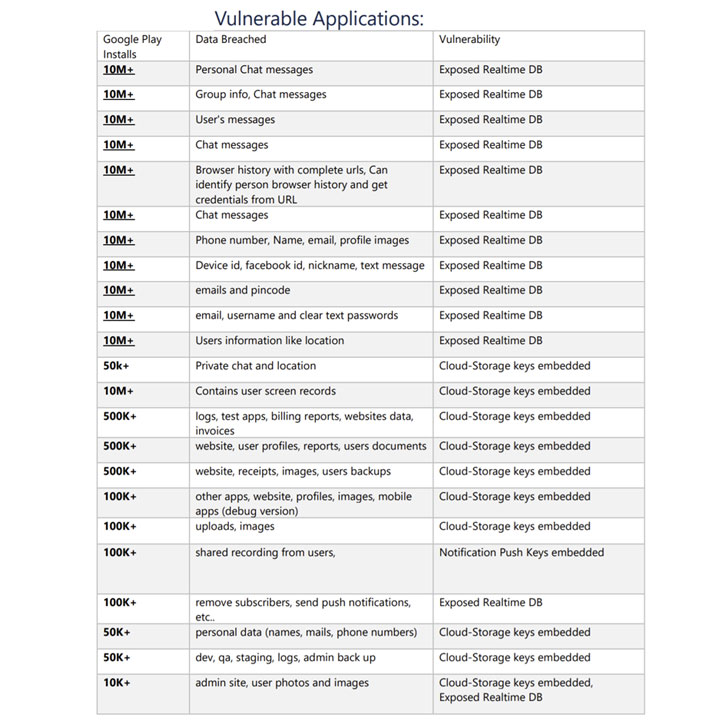
The findings come from a study of 23 Android applications
available in the official Google Play Store, some of which have
downloads ranging from 10,000 to 10 million, such as Astro
Guru, iFax, Logo Maker, Screen Recorder, and
T’Leva.
According to Check Point, the issues stem from misconfiguring
real-time databases, push notification, and cloud storage keys,
resulting in spillage of emails, phone numbers, chat messages,
location, passwords, backups, browser histories, and photos.

By not securing the database behind authentication barriers, the
researchers said they were able to obtain data belonging to users
of Angolan taxi app T’Leva, including messages exchanged between
drivers and passengers as well as riders’ full names, phone numbers
and destination and pick-up locations.
What’s more, the researchers found that app developers embedded
keys required for sending push notifications and accessing cloud
storage services straight into the apps. This could not only make
it easier for bad actors to send a rogue notification to all users
on behalf of the developer, but could also be exploited even to
direct unsuspecting users to a phishing page, thus becoming an
entry point for more sophisticated threats.
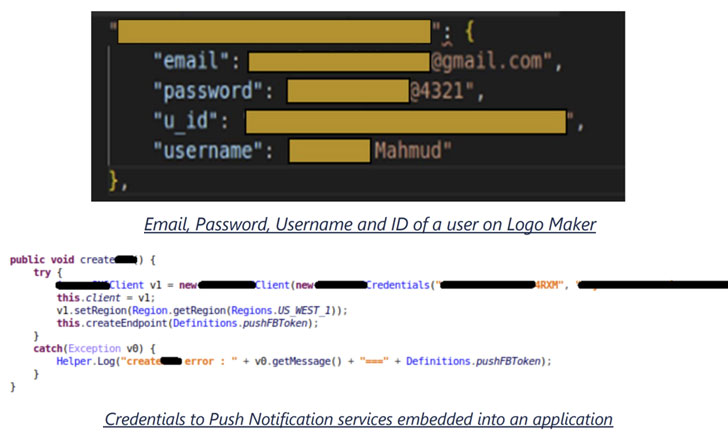
Embedding cloud storage access keys into the apps, likewise,
opens the door to other attacks wherein an adversary could get hold
of all data stored in the cloud — a behavior that was observed in
two apps, Screen Recorder and iFax, thereby giving the researchers
the ability to access screen recordings and faxed documents.
Check Point notes that only a few of the apps changed their
configuration in response to responsible disclosure, implying users
of other apps continue to remain susceptible to possible threats
like fraud and identity theft, not to mention leverage the stolen
passwords to gain access to other accounts fraudulently.
“Ultimately, victims become vulnerable to many different attack
vectors, such as impersonations, identify theft, phishing and
service swipes,” said Aviran Hazum, Check Point’s manager of mobile
research, adding the study “sheds light on a disturbing reality
where application developers place not only their data, but their
private users’ data at risk.”
Read more http://feedproxy.google.com/~r/TheHackersNews/~3/6CFMP63bgDI/these-23-android-apps-expose-over.html